Rethinking the University Prospectus: How to Capture Gen Z’s Attention
Published on: December 5, 2025
Last update: March 12, 2026
Prospective students today belong to Gen Z – a generation that’s fluent in digital content and knows exactly what they want.
They spend over 2.5 hours per day on social media, rapidly filtering through content to find what resonates. They engage deeply with material that’s interactive and mobile-friendly.
This creates a real opportunity for universities: the traditional static prospectus, whether it’s a PDF or printed brochure, simply can’t deliver the experience Gen Z expects.
But interactive prospectuses can.
When universities meet students in their native digital environment with a dynamic and easy to navigate flipbook, engagement changes.
This article explores how to modernize your prospectus strategy to connect with Gen Z prospects effectively, with practical recommendations for higher ed marketers and admissions teams. And how can you do all your creatives using Flipsnack.

Table of contents
- Why static PDFs don’t help your university when it comes to Gen Z
- Moving from PDF brochures to interactive prospectuses
- Start with Flipsnack: What to include in your digital prospectus
- Why should you use Flipsnack for your interactive prospectuses
- 5 prospectus templates to get you started
- Next steps for your university: create interactive prospectuses with Flipsnack
Why static PDFs don’t help your university when it comes to Gen Z
Not long ago, sending a PDF prospectus via email or handing out printed catalogs was standard practice. But student habits have fundamentally changed. Gen Z candidates are the first to be born into a fully digitized world, and reading on-screen is second nature to them.
They research schools online across multiple devices and expect personalized, interactive experiences. A static PDF, no matter how beautiful, feels cumbersome on a smartphone and fails to deliver the immediacy and engagement this generation expects.
Several trends underscore the decline of static prospectuses:
1. Mobile unfriendliness
Traditional PDFs aren’t built for phones. Zooming and scrolling through large files is frustrating, causing many students to abandon them entirely. Gen Z consumes content mobile-first. If your prospectus doesn’t work seamlessly on a small screen, it won’t get read.
💡Tip: With Flipsnack, you can set your prospectus for vertical scroll to work perfectly on mobile devices. We’ll talk more about this in a minute.
2. Short attention span due to lack of interactivity
PDFs are essentially digital printouts—no video, no audio, no interactive elements. You can only add links to a PDF, and Gen Z expects to interact with content, not just read it. Static text and images can’t compete with the rich media experiences they’re used to.
3. Outdated (and costly, if you print it)
By the time a prospectus is designed, printed, and distributed, some information may already be out of date. Even digital PDFs have this problem—once you send the file or make it available for download, you lose control. Need to update a deadline or add new scholarship details? You’ll have to create and redistribute an entirely new version, and students who already downloaded the old file won’t see the changes.
Print adds even more challenges: production and shipping costs pile up, turnaround times stretch longer, and the environmental impact grows. Meanwhile, digital prospectuses update in real-time at a fraction of the cost.
💡Takeaway: Gen Z’s digital-first habits require a new approach. To capture their attention, universities need to replace static PDFs with dynamic digital viewbooks that deliver information the way this generation prefers to consume it.
Moving from PDF brochures to interactive prospectuses
The solution is to transform the prospectus into an interactive digital viewbook—a web-based publication that blends rich media, personalization, and immediate calls-to-action.
Unlike a static brochure, an interactive viewbook or prospectus is a living, immersive experience. Students can scroll, click, watch, and respond, actively engaging with your content rather than passively reading. This approach aligns perfectly with Gen Z’s expectations and behaviors.
The good news? You don’t need a massive budget or a development team to make this happen. Platforms like Flipsnack are specifically designed to help universities create these interactive experiences quickly and easily.
Start with Flipsnack: What to include in your digital prospectus
Before diving into design tools, think strategically about your content. Gen Z students care about different things than previous generations, and your prospectus should reflect that.
Lead with experience, not requirements
Don’t bury campus life content on page 40. Start with what makes your campus unique—student testimonials, day-in-the-life videos, campus culture. Save academic requirements and course catalogs for later. Students need to feel something before they’ll dig into the details.
Make it scannable
Gen Z skims first, reads later. Use short paragraphs, pull quotes from students, bold subheadings, and plenty of white space. If a page looks like a wall of text, they’ll skip it.
Show, don’t just tell
Replace generic descriptions with visuals and rich media.
- Don’t say “state-of-the-art facilities”—show a 360° lab tour.
- Don’t say “vibrant campus community”—embed a video from a real student event.
Let students see themselves on campus.
Include clear next steps
Don’t wait until the end to tell students how to take action. Scatter CTAs throughout: “Schedule a campus visit,” “Chat with a current student,” “Check out this program.” Make it easy for them to move from interest to action while they’re still engaged.
Keep it current
Digital prospectuses should feel alive. Highlight upcoming events, recent news, or current student achievements. If your content could have been written three years ago, it needs refreshing.

Why should you use Flipsnack for your interactive prospectuses
Flipsnack makes it easy for university marketing teams to create the kind of interactive, mobile-friendly prospectuses Gen Z actually wants to engage with. Here’s what makes it work:
1. Launch fast without design skills
Creating an interactive prospectus with Flipsnack doesn’t require advanced technical skills or weeks of design work. The platform’s Design Studio offers a drag-and-drop editor and a library of professional templates, making it remarkably simple to design or update a prospectus even if you’re not a graphic designer. You can start from scratch or customize a pre-made template to match your school’s branding. Fonts, colors, logos, and layouts are all editable in just a few clicks. For busy admissions and marketing teams, this ease of use is vital.
Plus, Flipsnack supports collaboration, so multiple team members can work together in one workspace – commenting, editing, and ensuring content accuracy before publication. The result is a faster turnaround and the flexibility to update content at any time (no more waiting for the next print run to fix a typo or add a late-breaking scholarship opportunity).
2. Mobile-optimized so students actually read it
Flipsnack’s HTML5-based flipbooks display beautifully on any screen—desktop, tablet, or phone. Students can navigate easily with clickable tables of contents and internal links, creating the app-like experience they expect.
💡Tip: Since Gen Zs consume a lot of content on their mobile devices, you can set your prospectus to a Smart View so it adapts to the screen it’s displayed on.
3. Show your campus, don’t just describe it
Embed videos, audio clips, image galleries, GIFs, interactive maps, and virtual tours directly into your pages. Let students watch a video tour of the campus, explore a 360° view of a dorm room, or hear from current students—all within the prospectus itself. This multimedia approach keeps them engaged and helps them actually experience your campus before visiting.
4. Capture interest while students are engaged
Flipsnack turns prospectuses into two-way conversations. You can easily add interactive questions, quizzes, or forms anywhere in the flipbook. For example, a business school prospectus might include a “Which program is right for you?” quiz or a mini questionnaire to gather a reader’s interests.
You can also embed contact forms and call-to-action buttons (e.g., “Request more info” or “Apply Now”) directly into the pages. This means students can express interest or sign up for a campus tour without ever leaving the prospectus.
5. Track engagement to improve your strategy
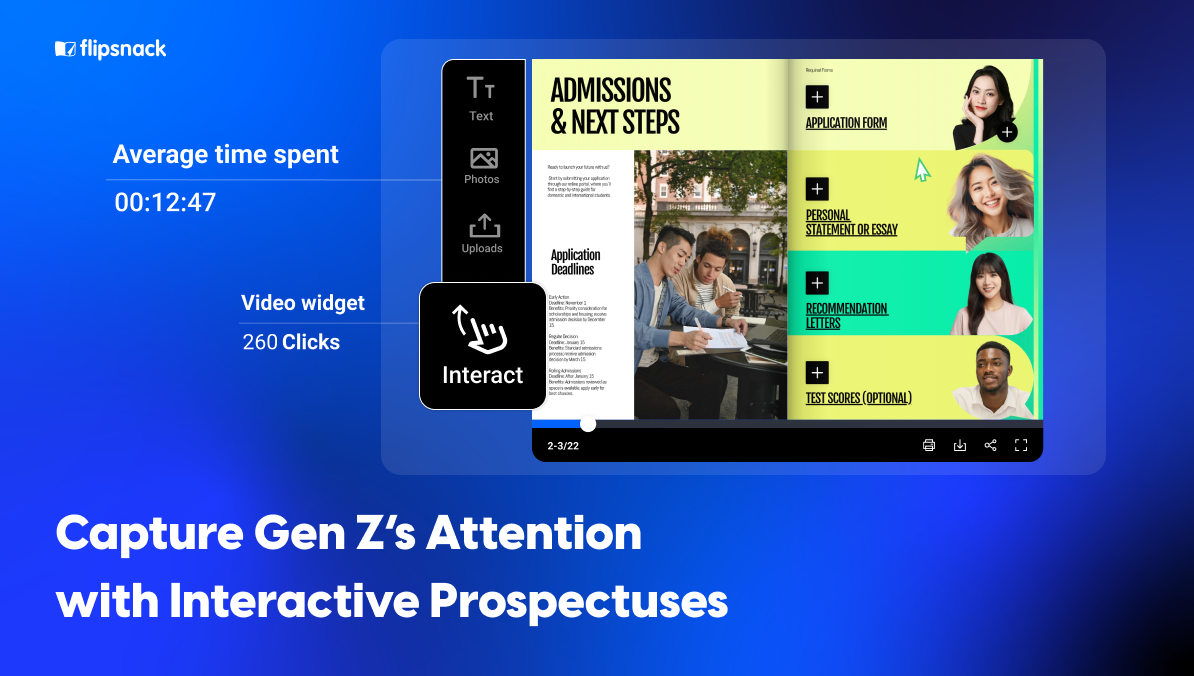
Track how students interact with your prospectus: how many opened it, which pages they spent the most time on, and what content drew their attention.
You can even track clicks on embedded links or form submissions. Such data is gold for understanding what resonates with Gen Z readers. If you notice students consistently dropping off before reaching your application CTA, or if a key program page gets very little attention, you’ll know where to improve your content strategy.
Essentially, Flipsnack gives you feedback that was impossible with traditional print prospectuses or a simple PDF.
6. Build excitement, not just awareness
Transform your prospectus from a one-way information dump into an engaging, personalized journey.
Gen Z students don’t just read, they explore. With clickable elements, embedded media, and interactive feedback mechanisms, a Flipsnack prospectus invites exploration. This interactive approach not only holds attention better but also helps build an emotional connection.
For example, embedding a Matterport virtual campus tour or a day-in-the-life student video can make a prospect feel the campus vibe, building excitement and trust before they even visit.
You’ll have everything you need to inform and impress in equal measure, delivering the polished digital experience Gen Z expects.
5 prospectus templates to get you started
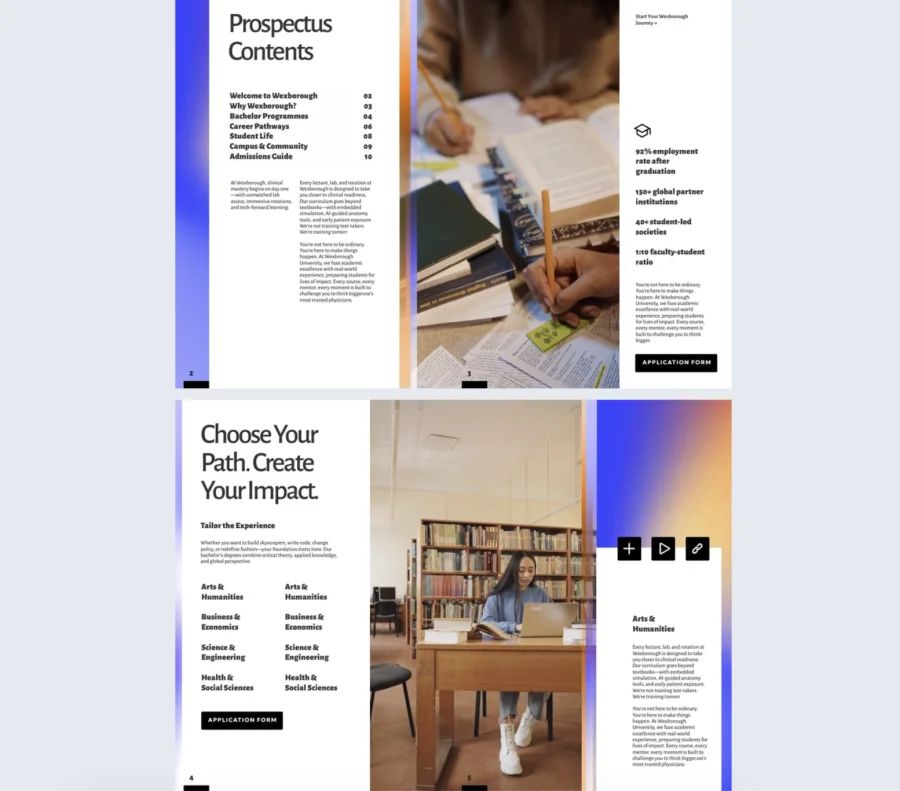
Undergraduate Prospectus Template
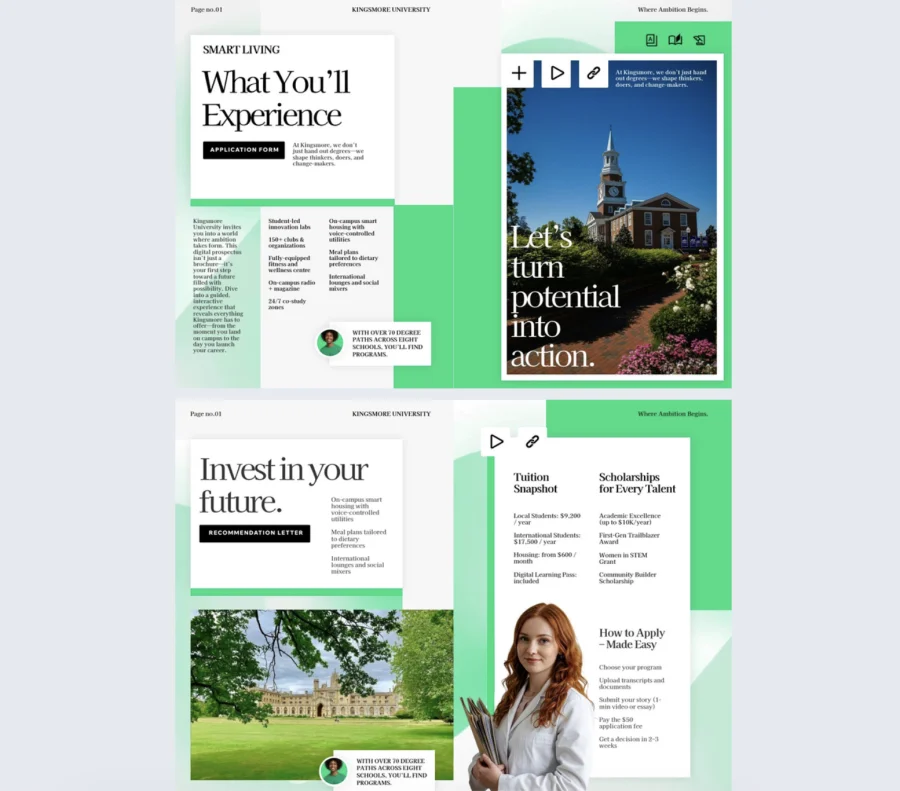
This undergraduate prospectus template uses a clean editorial layout with bold gradient accents to present degree options, student life, and admissions details in a way that feels modern and easy to follow. It combines strong visuals with interactive elements, which makes it a solid choice for schools that want to turn a standard prospectus into a more engaging digital experience.
Best for: It works well for admissions teams, university marketing departments, and recruitment agencies that need to attract prospective undergraduate students with clear, student friendly content. It is especially useful for promoting bachelor programs, campus culture, support services, and the overall student journey from interest to application.
Real world application: Use this template for undergraduate prospectuses, recruitment campaigns, faculty overviews, or admissions materials that need to inform students while also encouraging action. It is also useful for guiding school leavers through program choices, student life, career pathways, and application steps in one clear format.
Common mistakes to avoid: Do not fill the prospectus with too much institutional language or long blocks of copy, because future students want clear benefits and quick answers. It is also important not to focus only on academic offerings, since student life, support, and outcomes often matter just as much in the decision process.
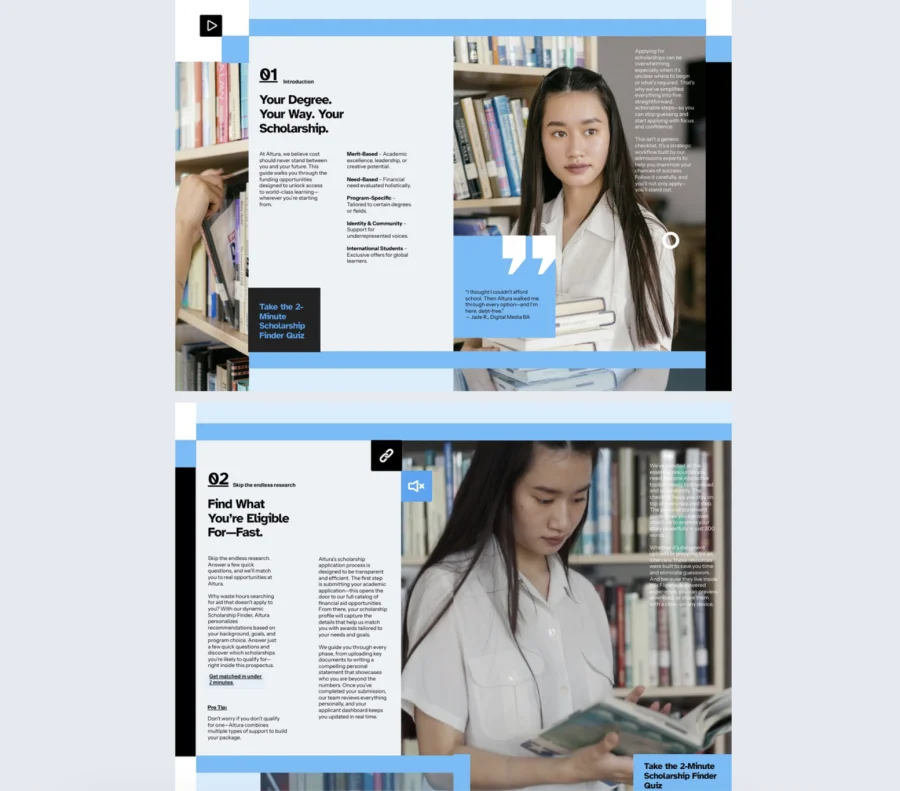
Interactive Scholarship Prospectus Template
This scholarship prospectus template uses a clean black, white, and blue layout to present financial aid information in a way that feels clear, practical, and easy to navigate. It is designed to help students move from confusion to action by surfacing eligibility, deadlines, and next steps in a more guided format.
Best for: It works well for financial aid offices, universities, scholarship providers, and education teams that need to explain funding options without overwhelming students. It is especially useful for content focused on award types, eligibility rules, application steps, and budget planning.
Real world application: Use this template for scholarship guides, financial aid prospectuses, admissions support materials, or student facing resources that need to make funding information easier to understand. It is also useful for helping students compare options, prepare documents, and take the next step with more confidence.
Common mistakes to avoid: Do not bury the most important details under long explanations, because students usually need quick clarity on deadlines, eligibility, and required documents. It is also important not to make the content feel too generic, since funding guidance works better when it feels specific, helpful, and realistic.
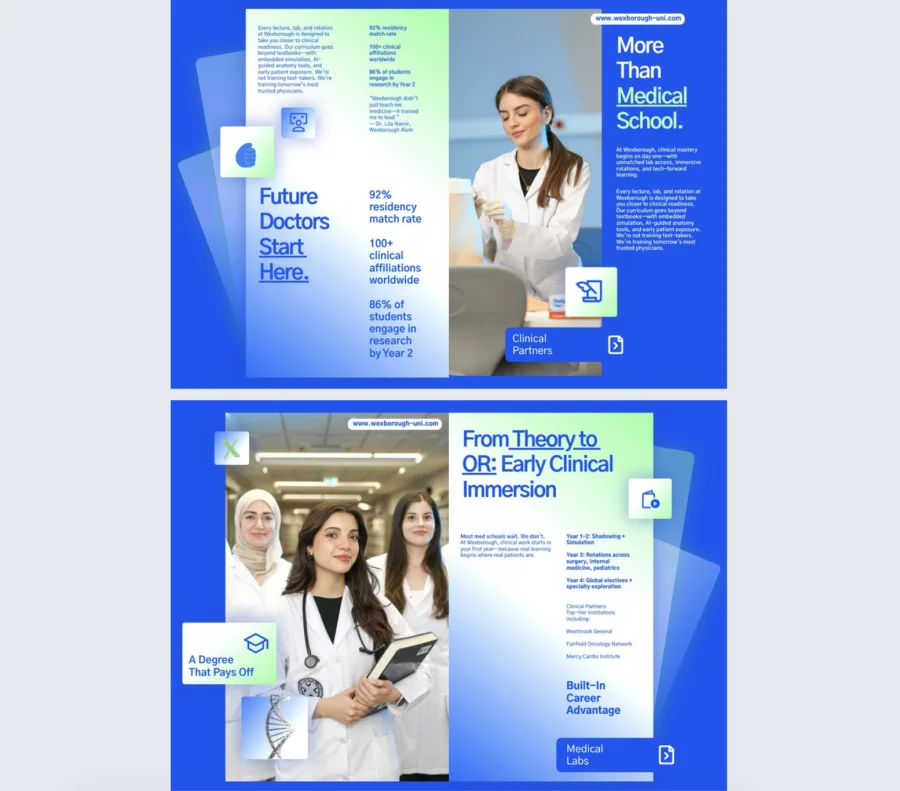
Interactive Medical School Prospectus Example
This medical school prospectus template uses a bold blue layout with clean panels and layered visuals to present clinical training, research access, and program value in a way that feels modern and easy to follow. It is built to help schools turn complex academic information into a digital experience that feels more engaging and informative for future applicants.
Best for: It works well for medical schools, admissions teams, and higher education marketers that need to attract prospective students with clear, credible content. It is especially useful for presenting program highlights, lab facilities, clinical partnerships, and early hands on learning opportunities.
Real world application: Use this template for medical school prospectuses, recruitment campaigns, or program overviews that need to show both academic quality and student outcomes. It is also useful for guiding applicants through key strengths such as residency match rates, clinical exposure, research opportunities, and career readiness.
Common mistakes to avoid: Do not rely too much on visuals without explaining what makes the program different, because applicants need substance as much as style. It is also important not to focus only on prestige, since many students want practical details about training, support, and long term opportunities.
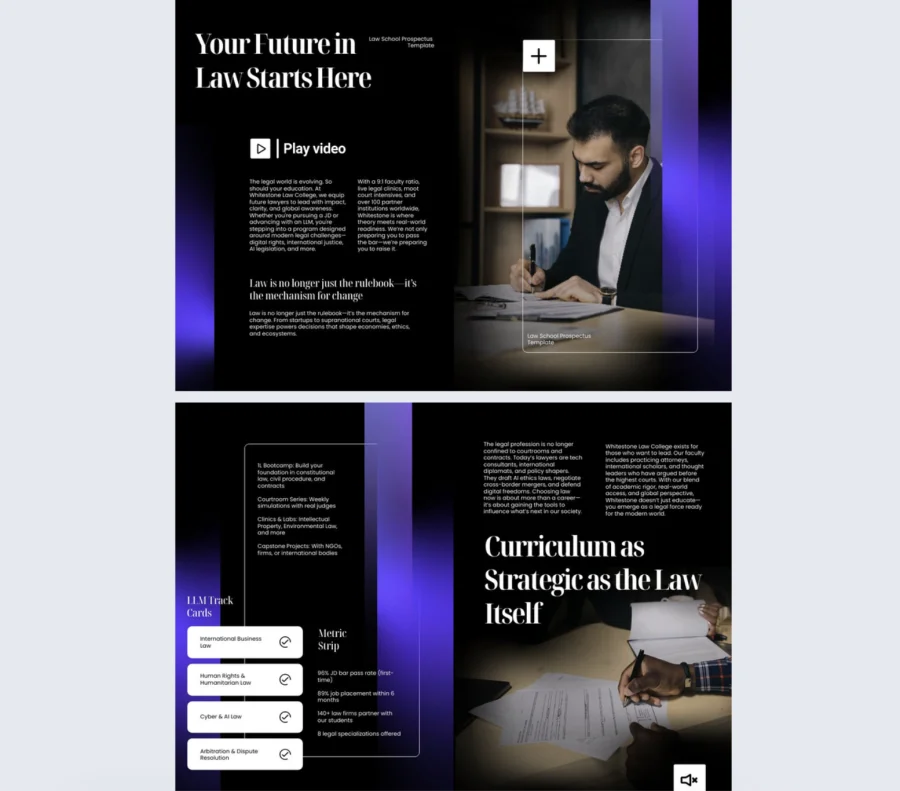
Interactive Law School Prospectus Template
This law school prospectus template uses a dark, high contrast layout with purple accents to present legal education in a way that feels premium, focused, and easy to navigate. It helps schools combine program details, faculty highlights, and proof points in a format that feels more engaging than a standard brochure.
Best for: It works well for law faculties, admissions teams, and higher education marketers that need to attract JD or LLM candidates with clear, credible information. It is especially useful for promoting course tracks, entry requirements, career outcomes, and the overall value of a law program.
Real world application: Use this template for law school prospectuses, recruitment campaigns, program overviews, or admissions materials that need to move students from interest to inquiry. It is also useful for showing curriculum structure, faculty expertise, practical learning opportunities, and application deadlines in one clear digital format.
Common mistakes to avoid: Do not make the content too formal or text heavy, because prospective students still need quick answers and clear reasons to keep reading. It is also important not to focus only on prestige, since applicants also want practical details about courses, support, and career paths.
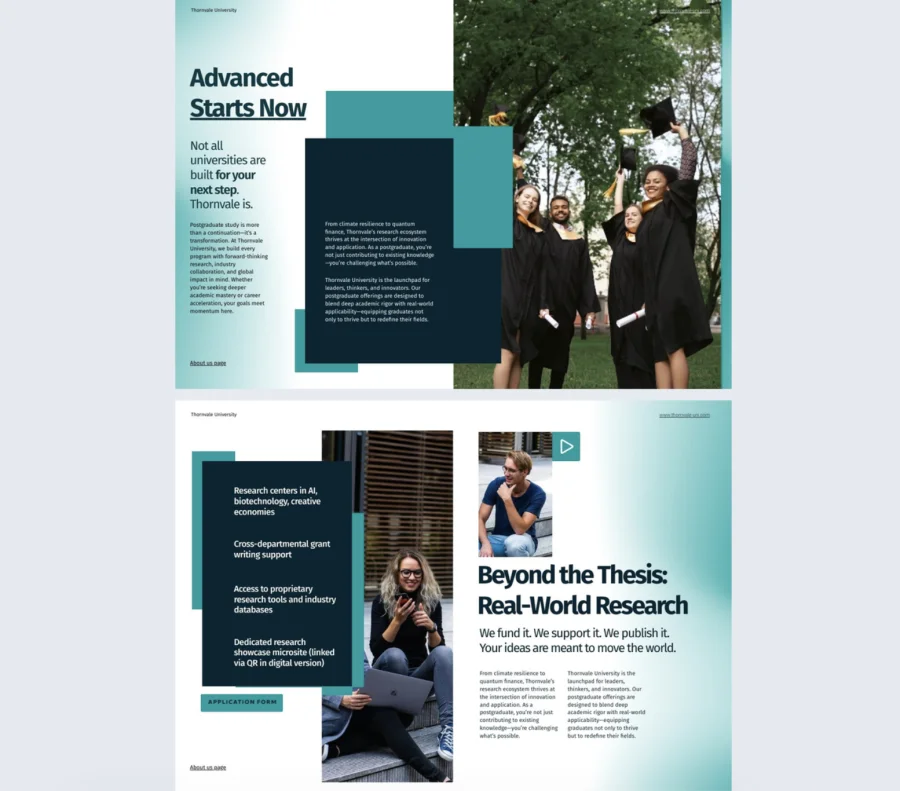
Postgraduate Prospectus Template
This postgraduate prospectus template uses a clean academic layout with teal accents to present advanced study options in a way that feels modern, clear, and credible. It is designed to help universities showcase research, funding, and program value without making the content feel too dense or formal.
Best for: It works well for graduate schools, university marketing teams, and department admissions teams that need to attract master’s and PhD applicants with clear, engaging content. It is especially useful for promoting research strengths, funding opportunities, faculty support, and the overall postgraduate experience.
Real world application: Use this template for postgraduate prospectuses, department recruitment materials, program overviews, or admissions campaigns that need to guide prospective students from interest to inquiry. It is also useful for showing how advanced degrees connect to research impact, career growth, and real academic opportunities.
Common mistakes to avoid: Do not overload the pages with generic academic language or long explanations, because postgraduate applicants want specific information they can act on. It is also important not to focus only on course content, since research access, funding, supervision, and outcomes often play a major role in the final decision.
Next steps for your university: create interactive prospectuses with Flipsnack
Gen Z expects more than static PDFs and printed brochures. They want interactive, mobile-optimized experiences that let them explore your campus on their terms. The universities that adapt will capture attention—and enrollments—while others watch engagement decline.
Start by auditing your current prospectus: Is it mobile-friendly? Does it include video and interactive elements? Can students take action without leaving the page? Can you update it in real-time? Identify the gaps, then prioritize the changes that will have the biggest impact.
Tools like Flipsnack make it possible to launch an interactive prospectus in weeks, not months—without a massive budget or technical team. Your prospective students are digital natives who consume content differently than any generation before them.
The traditional prospectus served universities well for decades, but it no longer connects with the students you’re trying to reach. Meet them where they are.