Digital Catalog Management for Hotels: One Link, Hundreds of Properties, Always Current
Published on: April 7, 2026
There’s a binder sitting in the back office of almost every hotel you’ve ever stayed in. It holds the product catalog, the decoration standards, the F&B guidelines. Someone printed it, someone couriered it, and someone filed it — probably six months ago. Whether anyone has opened it since is anyone’s guess.
For a single property, that’s an inconvenience. For a hotel group managing hundreds of locations across multiple brands, it’s a real operational problem. When a product line changes, when a price updates, when brand standards shift, the binder doesn’t know. Neither does the property team relying on it.
The hospitality industry moved catalogs from print to PDF years ago, and that solved the printing cost. It didn’t solve much else. The PDF lands in an inbox, gets downloaded once, and sits on a desktop. The next version arrives and nobody is sure which one is current. The file is too large to send through the booking platform. And there is still no way to know if the team in room 12B actually read the new decoration guidelines or just clicked “save.”
This is the gap that a living digital catalog fills. Not a guest-facing brochure or a marketing flipbook, but the working document that keeps distributed hospitality teams aligned — on products, on standards, on what’s in and what’s out.
This article is about what that shift looks like in practice: why the printed binder broke down, why PDF only moved the problem, and what hotels and franchise management companies running hundreds of properties are doing instead.
What a hospitality catalog actually is
When most people hear “hotel catalog,” they picture a guest-facing brochure. The spa menu on the nightstand, the room service booklet, the activities guide at the front desk. Those exist, and they matter. But they are not what this article is about.
The catalogs that cause the most operational headaches in hospitality are the ones guests never see.
They are the FF&E specification catalog that tells a property exactly which furniture, fixtures, and equipment meet brand standards. The decoration guide that a franchise operator uses when refurbishing guest rooms across 40 locations.
The seasonal F&B catalog that goes out to chefs and food and beverage managers every quarter, listing approved products, approved suppliers, and current pricing. The SOP manual distributed to Directors of Engineering across an entire brand’s managed portfolio. The amenity catalog that a purchasing team sends to procurement contacts at 300 properties, hoping they order the right shampoo.
These are working documents. They are used by the people who buy things, maintain things, prepare things, and build things inside a hotel. Their audience is not a guest browsing in a quiet moment. It is a general manager under pressure, a purchasing coordinator working a spreadsheet, a chef who needs to know what’s approved before Friday’s order.
What makes them different from guest-facing content is the distribution problem. A guest brochure lives in one place. An internal operational catalog needs to reach dozens, sometimes hundreds, of people across locations that may be in different countries. And they’re run by different ownership groups, and operating under different levels of brand oversight. Getting the right version to the right people, and knowing they actually used it, is where the challenge begins.
Why print broke first, and why PDF didn’t fix it
Print made sense when hotel portfolios were smaller and brand standards changed slowly. A single print run, delivered by courier to each property, kept everyone aligned for a season. It was expensive and slow, but it worked well enough.
Then portfolios grew. Brands expanded through franchising. A management company that once operated 30 hotels was now managing 300. At that scale, print stopped being slow and expensive and became simply impossible. Consider what a single catalog update requires when distributed across hundreds of properties:
- Reprinting the full catalog or inserting updated pages
- Coordinating courier delivery to every location, including international ones
- Confirming receipt at each property
- Hoping the old version gets thrown away
Nobody could solve that with a bigger print budget. So the industry moved to PDF.
PDF’s role in digital catalog management
PDF felt like the natural fix. No printing costs, no courier fees, near-instant distribution. Send it once, it arrives everywhere. The problem is that PDF solved the wrong part of the problem. It eliminated the cost of print without addressing what actually made the printed catalog useful: the fact that everyone had the same version, whether they wanted it or not.
With PDF, every person who downloaded the catalog had their own copy, frozen at the moment they clicked download. When the next version arrived, the situation looked something like this:
- Some properties updated their copy promptly
- Others kept working from the version they downloaded six months ago
- A few never opened the new file at all
- Nobody at the center could tell which was which
There were practical problems on top of the version chaos. F&B catalogs and FF&E specification documents tend to be large files, and large files create their own set of friction:
- Files above a certain size cannot be sent through standard email
- Booking and procurement platforms like Cvent have strict file size limits
- Downloading and storing multiple large files across a team becomes a management problem in itself
And across all of it, the most persistent problem remained invisible. Nobody knew what was being read. A team could spend weeks producing a new product catalog, distribute it to 300 properties, and receive no signal about whether anyone opened it, which sections were useful, or which pages were never touched. In the words of Rebecca Ford, Brand Marketing Manager at Nothing Bundt Franchising:
We update that just based off of if there’s any changes to the decoration. So we usually only touch that maybe a couple of times a year. But knowing that we are able to so nimbly change things, we may change it more frequently just based off of learnings hey, nobody clicks on this. Maybe we move that to the back since it’s so much easier to make those changes as opposed to a printed book.
Rebecca Ford, Brand Marketing Manager
The scale problem — franchise companies and distributed teams
Here is a number worth sitting with: Marriott directly manages roughly 20% of the hotels operating under its brands. The other 80% are franchised, run by independent ownership groups and management companies that can operate anywhere from a handful of properties to several hundred.
That structure changes the catalog problem entirely.
For a managed property, corporate can enforce standards directly. For a franchised one, the catalog has to do the work on its own. It gets sent, it lands somewhere in an inbox, and what happens next is largely invisible to the people who made it. A franchise management company running 300 hotels might distribute a new F&B product catalog and have no reliable way of knowing:
- Which properties opened it
- Which ones are still using last quarter’s version
- Which sections are actually influencing purchasing decisions
The cost of that invisibility is brand inconsistency. Properties order the wrong products, use outdated pricing, or skip the new decoration guidelines entirely, not out of defiance but simply because nothing in the process demanded their attention.
This is the core operational gap that a living digital catalog addresses. When the catalog exists as a single, always-current link rather than a downloaded file, version control stops being a problem. When it includes page-level analytics, the silence breaks. The team at the center can finally see what is being used, what is being ignored, and where the gaps are, across every property, all at once.
What a living digital catalog looks like
The shift from a static PDF to a digital catalog is easier to describe through what changes day-to-day than through a list of features.
A purchasing coordinator at a franchise property no longer downloads a file. They bookmark a link. When the catalog updates, the link stays the same and the content changes behind it. There is no “which version do I have” question because there is only one version.
For the team managing the catalog, an update that previously required a new PDF, a new email, and a prayer that everyone downloaded now takes minutes. Change the page, save, done. Every property sees the update the next time they open the link.
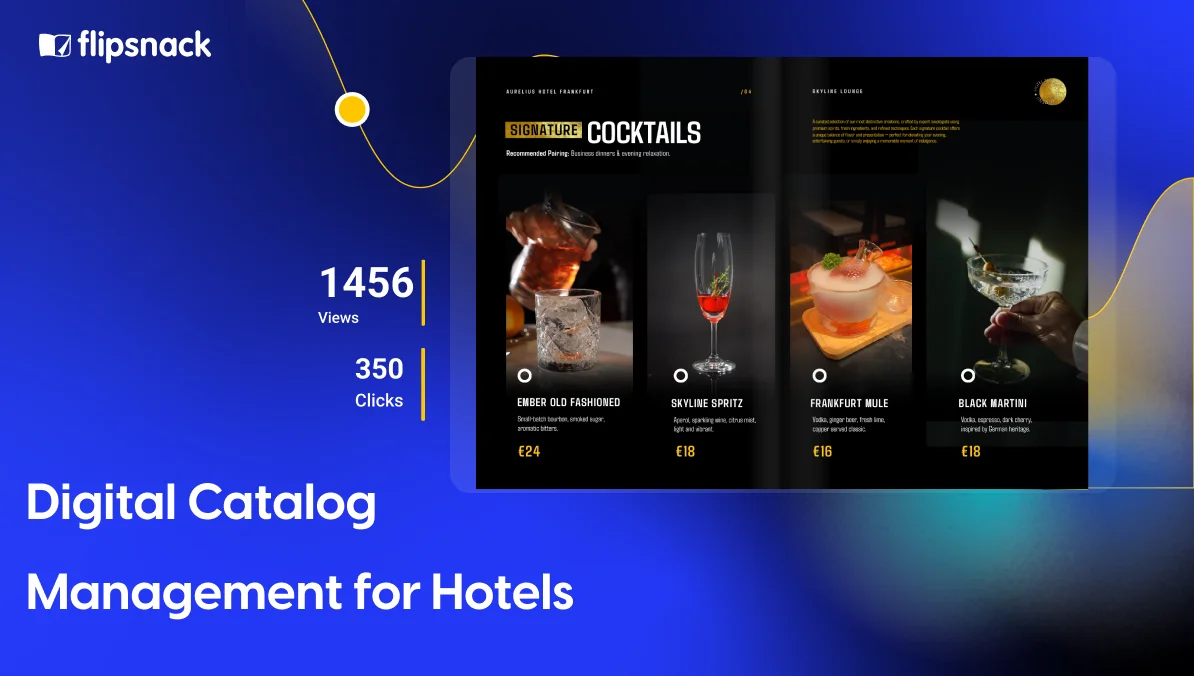
The analytics layer is where the real operational shift happens. Instead of sending a catalog into silence, teams can see:
- Which sections get the most attention
- Which pages are consistently skipped
- Which properties are engaging and which have never opened it
That is what Rebecca Ford was describing. It sounds simple, but it represents a feedback loop that has never existed in print or PDF.
When you can see that a section is being ignored, you can act on it. Reorganise the catalog, follow up with the properties that haven’t engaged, or reconsider whether that content is useful at all.
For multi-location hospitality operations, that feedback loop is not a nice-to-have. It is the difference between knowing your brand standards are landing and hoping they are.
Use cases across hospitality contexts
The internal catalog problem shows up differently depending on the type of hospitality operation. Here are four contexts where it tends to be most acute.
Franchise food service A food and beverage catalog distributed to chefs and F&B managers across dozens of franchise properties needs to be updated seasonally, sometimes more often when suppliers change or prices shift. The teams receiving it are busy and not looking for a document to read — they need something they can navigate quickly, find the relevant section, and act on. A static PDF sent by email does not meet that bar.
Luxury hotel groups FF&E and decoration catalogs for managed luxury properties carry significant brand stakes. A property using off-spec furniture or non-approved suppliers is a brand consistency problem, not just a procurement one. When the catalog is a live document with access controls, the right version reaches the right teams and older versions simply stop being accessible.
Cruise and resort groups Activity and experience catalogs for guest services and concierge teams change seasonally and often at short notice. A digital catalog means those teams are never working from last season’s offering list, and management can see at a glance which properties have engaged with the update.
Engineering and facilities This is the least visible use case and often the most important one. SOP manuals, compliance documents, and operational standards distributed to Directors of Engineering across a large managed portfolio are exactly the kind of content that gets downloaded once and forgotten. Analytics reveal which properties are engaging and which need a follow-up.
How to get started
The most common question from hospitality teams considering this shift is not about the technology. It is about ownership. Who is responsible for the catalog — marketing, operations, procurement? And who maintains it once it is live?
The honest answer is that it depends on the catalog type. An F&B product catalog usually sits with procurement or the food and beverage team. A decoration and FF&E guide tends to be owned by brand standards or design. An operational SOP manual lives with operations or facilities. The digital format does not change who owns the content — it just makes the maintenance easier and the distribution trackable.
In terms of getting started, most teams find the transition straightforward:
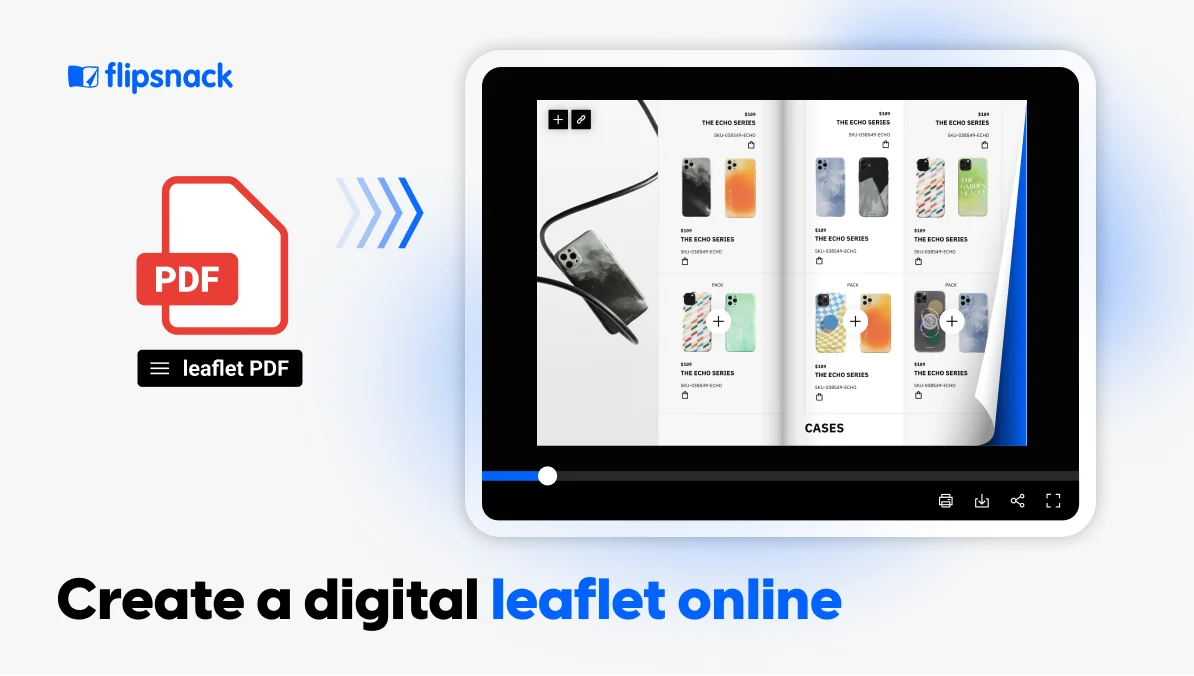
- Existing PDFs can be uploaded directly and converted into a navigable digital catalog in minutes
- Access can be controlled by property, by brand, or by role — useful for franchise operations where not every property should see every catalog
- Updates are made centrally and reflected immediately, with no redistribution required
- Analytics are available from day one, so teams get a baseline picture of engagement with the first version they publish
The adoption question — will our teams actually use it — tends to answer itself over time. When the link is the only version that exists, and it is always current, the friction of finding and opening the right document drops enough that usage follows naturally. The analytics make that visible, which in turn makes the catalog easier to improve.
Conclusion
The printed binder was never really the problem. It was a reasonable solution for a smaller, slower industry. The problem arrived when portfolios scaled into the hundreds, brands expanded through franchising, and the people responsible for keeping everyone aligned no longer had the tools to know whether their work was landing.
PDF moved the catalog off paper. It did not move it forward. Version chaos, file size limits, and zero visibility into what was being read meant the underlying problem stayed exactly where it was.
A living digital catalog does not just solve the distribution challenge. It closes the feedback loop that print and PDF never could. When a team can see that a section is being ignored across 200 properties, that is not just a design note. It is an operational signal. It is the difference between assuming brand standards are being followed and actually knowing.
For hospitality groups managing multiple locations, that visibility is not a feature. It is the foundation of consistent, scalable operations. The catalog is the product. How it gets distributed, updated, and tracked is now a decision worth making deliberately.