How to Use Interactive Sales Content to Improve Your Funnel Conversion
Last updated: February 11, 2026
Published on: November 18, 2024
Your sales team is losing deals to boring PDFs.
While your competitors are sending interactive sales content that captures attention and tracks engagement, your prospects are clicking away from static presentations that offer zero insight into what they actually care about.
The problem isn’t your product or your sales team’s expertise—it’s your content format. Unlike an interactive flipbook ,static PDFs and PowerPoint decks can’t personalize experiences, track engagement metrics like view time and click-through rates, or integrate with your CRM to show which prospects are actually interested.
Modern buyers expect interactive experiences. They want to click, explore, and engage with sales materials on their own terms. When you send a static PDF, you’re flying blind—no data on what sections they viewed, how long they spent on your pricing page, or whether they even opened it at all.
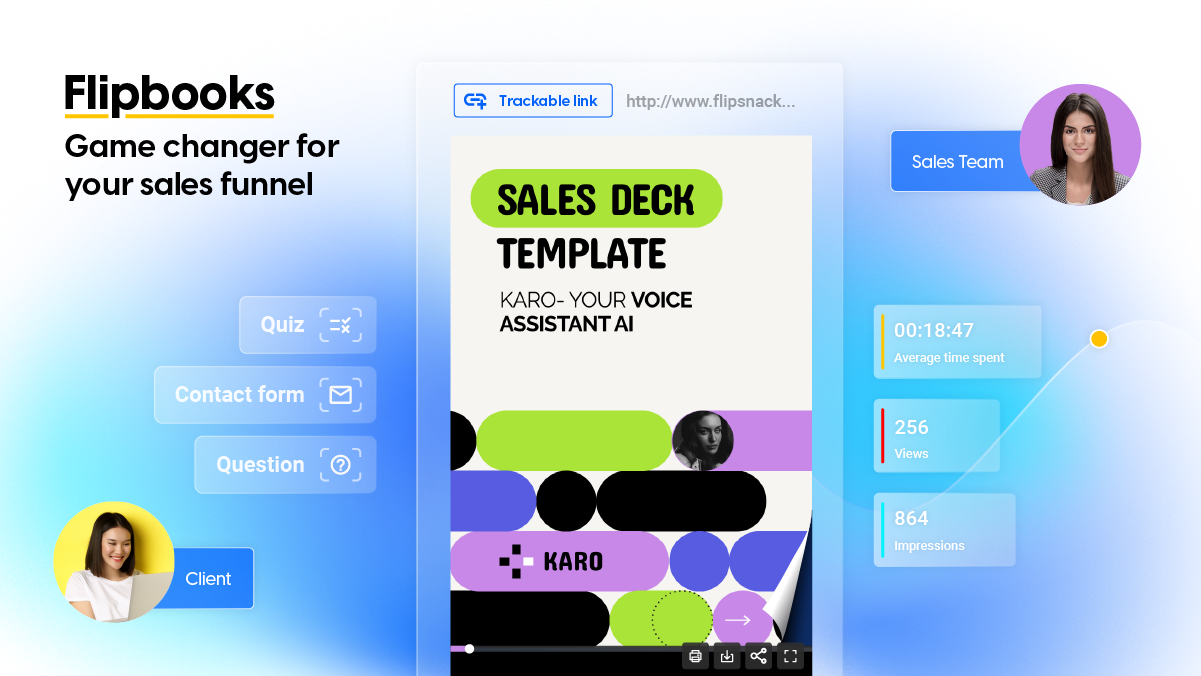
Interactive sales content changes everything. With the right level of interactivity, personalization options, and analytics depth, you can track every prospect interaction, tailor content to their specific needs, and actually measure which sales materials drive conversion rates.
In this guide, you’ll discover how to transform your static sales collateral into interactive experiences that move prospects through your funnel—with real engagement metrics, strategic CTA placement, and the automation support your team needs to scale.
Table of contents
- The cost of static sales content
- What makes sales content actually convert
- Static vs interactive sales materials
- What type of sales content works at each funnel stage
- How to create interactive sales content
- Track the metrics that matter in your funnel
- Start creating interactive content for your sales funnel
- Frequently asked questions
The cost of static sales content
Static PDFs are killing your conversion rates. Here’s what happens when you send a traditional PDF proposal or presentation: you hit send and hope for the best. No way to know if they opened it. No data on which pages they viewed. No insight into what made them bounce.
Research shows that interactive content generates 2x more conversions than static content. Yet most sales teams still rely on PDFs that offer zero engagement metrics.
The problems stack up fast:
- You’re flying blind. Without view time data or click-through rates, you can’t tell if prospects spent 30 seconds or 30 minutes with your materials. You don’t know if they skipped your pricing page or studied every detail.
- Personalization is impossible. Static PDFs look the same for every prospect. You can’t adjust content based on their industry, company size, or specific pain points. Every lead gets the same generic experience.
- Follow-up is guesswork. When should you reach out? What should you say? Without analytics depth showing which sections resonated, your follow-up emails are shots in the dark.
- Mobile experience suffers. PDFs aren’t optimized for device compatibility. Prospects on phones pinch, zoom, and give up. Poor mobile experience means lost opportunities.
The cost translates into lost deals and wasted time creating content you can’t measure or improve.
What makes sales content actually convert
Three elements separate sales content that converts from content that gets ignored: interactivity, personalization, and measurable engagement.
1. Interactivity keeps prospects engaged
Interactive sales content invites action. Instead of passively scrolling, prospects can:
- Click through product galleries
- Watch embedded videos
- Explore interactive pricing calculators
- Navigate custom content paths
This level of interactivity transforms one-way presentations into two-way conversations.
The difference is dramatic. Static PDFs get skimmed in under 2 minutes. Interactive content holds attention for 8-10 minutes on average. Every click, scroll, and video play signals genuine interest—data you can actually use.
2. Personalization speaks to specific needs
Generic content gets generic results. Personalization options let you tailor three critical elements:
- Messaging and value propositions by industry
- Case studies matching their company size
- CTAs based on funnel stage
A retail buyer sees retail examples. An enterprise CFO sees ROI calculators and security credentials.
Smart CTA placement adapts too. Show “Request Demo” to engaged prospects who’ve viewed product pages multiple times. Show “Download Spec Sheet” to those still in research mode. The content format stays the same, but the experience feels custom-built.
3. Analytics turn guesswork into strategy
Real conversion rate improvement comes from knowing what works. Analytics depth shows you:
- Which sections get the most view time
- Which CTAs drive click-through rates
- Where prospects drop off
CRM integration connects this engagement data directly to your pipeline.
When you know a prospect spent 5 minutes on your case studies page, your follow-up becomes surgical: “I noticed you were looking at our retail success stories—want to discuss how we could drive similar results for you?” That’s the conversion advantage: content that adapts, measures, and improves with every interaction.
Static vs interactive sales materials
| Criteria | Static PDFs | Interactive sales content |
| Engagement metrics | None—no tracking available | View time, click patterns, impressions, lead form data |
| Personalization | One version fits all | Dynamic content by industry, role, stage |
| CTA placement | Fixed in document | Adaptive, based on behavior |
| CRM integration | Manual tracking required | Automatic engagement sync |
| Sharing methods & access control | Email attachments or links Anyone with file can share | Trackable, secure sharing links Password protection, expiration dates |
| Conversion rate tracking | Impossible to measure | Direct attribution to pipeline |
What type of sales content works at each funnel stage
Different funnel stages require different content formats and levels of interactivity. Here’s what converts at each stage:
Top of funnel: Build awareness with educational content
At this stage, prospects are researching problems, not solutions. Your content should educate without pushing for a sale.
Best content types for TOFU:
- Interactive catalogs showcasing your product range
- Digital magazines with industry insights and trends
- Educational guides with embedded videos
- Resource libraries prospects can explore at their own pace
The goal is engagement, not conversion. Track view time and which topics get the most attention. This data tells you what pain points matter most to your audience.
Keep CTA placement subtle here—”Learn More” or “Explore Related Content” works better than “Request Demo.”
Middle of funnel: Prove value with specific examples
MOFU prospects know their problem and are evaluating solutions. Now you need to prove you can solve it better than competitors.
High-converting content for MOFU:
- Case studies with embedded customer testimonials
- Interactive product guides showing features in action
- Comparison sheets (your solution vs. alternatives)
- ROI calculators with personalization options
Analytics depth becomes critical here. When prospects spend 10 minutes exploring your case studies, they’re serious. CRM integration lets your sales team see this engagement and follow up strategically.
Device compatibility matters more at this stage—prospects often review content on phones during commutes or between meetings.
Bottom of funnel: Close deals with personalized materials
BOFU prospects are ready to buy. They need final proof and clear next steps.
Content that closes deals:
- Personalized proposals tailored to their specific needs
- Interactive pricing sheets they can adjust based on variables
- Implementation timelines showing exactly what happens after signing
- Security and compliance documentation with access control
This is where conversion rate tracking proves its value. You’ll see exactly which pricing options prospects explored, which objections they researched, and when they’re ready for your call.
Smart sharing methods with access control let you know the moment a prospect opens your proposal—and when they share it with decision-makers.
Finally, this personalization helps sales professionals target the specific pain points of each buyer persona, adding value to each conversation.
Match content format to funnel stage
The level of interactivity should increase as prospects move down the funnel. Early stage content invites exploration. Late stage content drives decisions with personalization and clear CTAs.
Track engagement metrics at every stage. When you see a prospect move from reading your TOFU content to spending time with MOFU case studies, that’s your signal to reach out.
How to create interactive sales content
Turning static sales materials into interactive experiences doesn’t require a complete content overhaul. The right platform gives you the tools to add interactivity, personalization, and analytics to your existing content. Advanced flipbooks can also be used to create interactive paths that guide prospects through different stages of content; depending on their choices. Here’s what types of interactivity you can add with Flipsnack:
Embed videos directly in your content
Video embedding transforms traditional documents into multimedia experiences. Instead of linking out to YouTube or Vimeo, embed product demos, customer testimonials, or explainer videos right where prospects need them.
When a prospect watches your 3-minute product demo embedded in your proposal, you’ll see it in your analytics. That view time data tells you they’re seriously evaluating your solution.
Add clickable hotspots to product images
Hotspots turn static product photos into interactive experiences. Click on a feature to see detailed specs. Click on a use case to see pricing. This level of interactivity lets prospects explore at their own pace while you track which features generate the most clicks.
Create shoppable catalogs
For product-based sales, shoppable elements bridge the gap between browsing and buying. Prospects can click products to see pricing, add items to wishlists, or request quotes—all without leaving your content.
The conversion rate improvement is measurable. When prospects can interact with products instead of just viewing them, engagement jumps significantly.
Enable social sharing
Built-in social sharing expands your reach beyond the initial contact. When a prospect shares your interactive catalog with their team, you get visibility into new stakeholders. The sharing method tracks who viewed the content and for how long.
This is especially powerful for complex B2B sales where multiple decision-makers need to review your materials.
Use polls and surveys for feedback
Embedded polls and surveys turn content into conversations. Ask prospects which features matter most. Survey them about their biggest challenges. Their responses give you real-time personalization data.
When someone indicates that “integration capabilities” are their top priority, you know exactly what to emphasize in your follow-up.
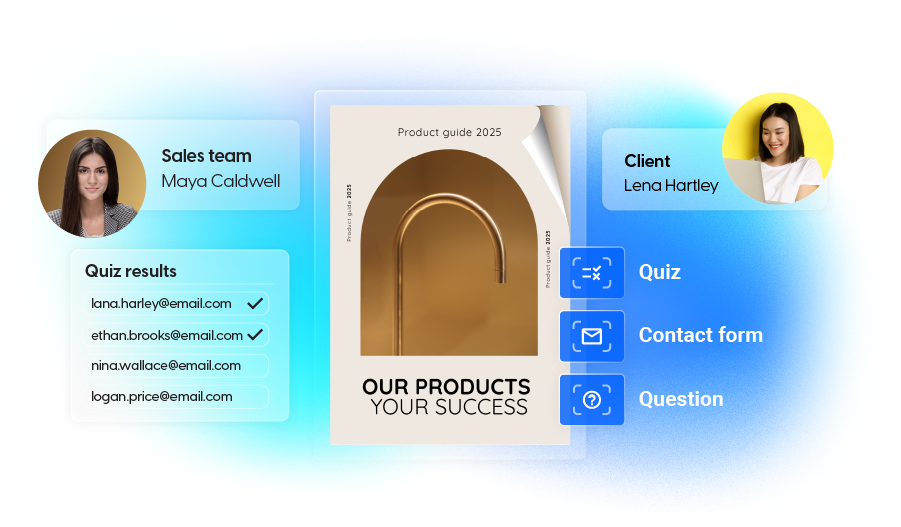
Add lead capture forms
Strategic form placement captures intent at the right moment. After a prospect explores your pricing page for 5 minutes, prompt them to “Get a Custom Quote.” After they watch your product demo, offer to “Schedule a Walkthrough.”
CRM integration ensures these leads flow directly into your pipeline with full context about what content they engaged with.
In the final stages of creation, sales content can be routed to the appropriate stakeholders for approval, with clear notifications and status updates throughout. This reduces bottlenecks and helps maintain momentum in the sales cycle; ensuring that content is approved and distributed in a timely manner.
Integration with sales enablement tools
Interactive sales content becomes even more powerful when integrated with your existing sales stack. CRM integration connects content engagement directly to your pipeline, giving sales teams real-time updates on how prospects interact with materials.
This integration ensures your team always has a consolidated, up-to-date view of engagement levels. When a prospect spends 10 minutes exploring your pricing options, that data flows into your CRM automatically—no manual logging required.
The real advantage is automation support. Specific actions within your interactive content can trigger automated workflows:
- A prospect fills out a lead capture form → automated email follow-up sends instantly
- Someone views your proposal three times → notification alerts the sales rep to call
- A stakeholder shares content with their team → CRM flags the account as high-intent
This ensures no prospect slips through the cracks. Each potential lead gets nurtured appropriately based on their actual behavior, not arbitrary timelines. Because your follow-ups are triggered by real engagement data, your sales conversations can address specific customer pain points they’ve already shown interest in—making every interaction more relevant and more likely to convert.
Track the metrics that matter in your funnel
Creating interactive sales content is step one. Measuring what works is how you actually improve conversions.
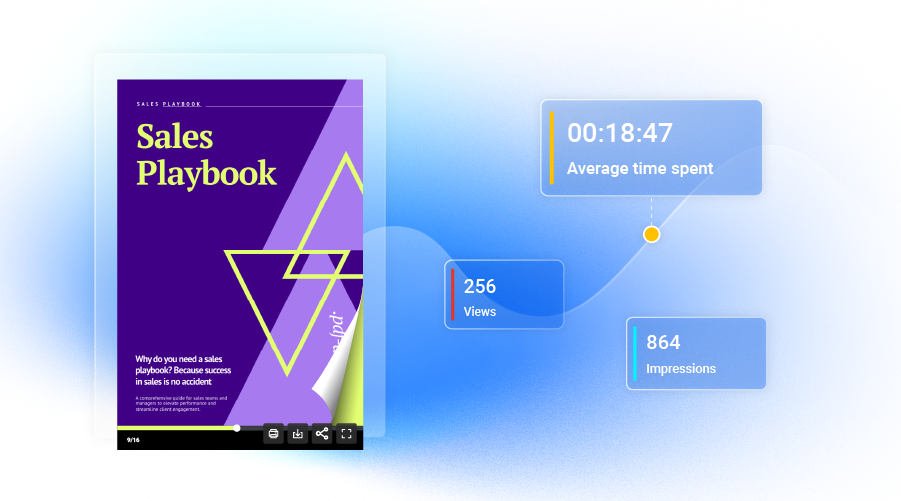
View time by section
See which pages hold attention. If prospects spend 5 minutes on case studies but only 30 seconds on pricing, you know what interests them. Lead with the content that works.
- Click-through rates on CTAs
Test where you place your calls to action. A “Request Demo” button at the end might get 2% clicks. The same button after your best case study could get 15%. Move CTAs to where prospects are most engaged. - See which content closes deals
Track which materials turn prospects into customers—your product catalog, your case studies, or your proposals? If case studies convert at 20% and catalogs convert at 5%, create more case studies. - Engagement patterns
One view or multiple visits? When prospects return to your content repeatedly, they’re seriously interested. Set alerts for repeat viewers.
Connect engagement to revenue
CRM integration turns content data into pipeline insights:
- See which content pieces influenced closed deals
- Find where prospects drop off in your funnel
- Score leads by engagement, not just job titles
- Prove ROI by connecting content views to revenue
The behavioral data collected from your interactive content helps you prioritize leads based on actual engagement, not just demographics. A prospect who views your pricing page three times and watches your product demo is signaling higher intent than someone who skimmed page one. Use this engagement depth to focus your team’s energy on prospects most likely to close.
When a $50K deal views your proposal 8 times before signing, you know that content worked.
Improve future publications based on data
Use analytics to optimize:
- Test personalization – Send two versions to different prospects. See which performs better.
- Fix drop-off points – If 80% of people leave at page 3, rewrite page 3.
- Time your follow-ups – Call within 24 hours of high engagement. Wait longer for light engagement.
Winning sales teams measure their content like any other channel. Every interactive piece tells you what prospects care about and when they’re ready to buy. Feed this engagement data into your usable business analytics to refine targeting, improve messaging, and increase conversion rates across future campaigns.
Start creating interactive content for your sales funnel
Static sales content costs you deals every day. Prospects bounce from boring PDFs. Sales teams guess at follow-up timing. Marketing can’t prove which materials actually drive revenue.
Interactive sales content solves all three problems. With the right level of interactivity, personalization options, and analytics depth, you transform generic documents into conversion machines that track engagement, adapt to prospects, and prove ROI.
The shift doesn’t require rebuilding your entire content library. Start with your highest-value assets—proposals, product catalogs, case studies. Add interactivity, enable tracking, and measure what happens.
Your competitors are already sending interactive experiences. The question isn’t whether to upgrade your sales content—it’s whether you can afford to keep losing deals to better content.
Frequently asked questions
Interactive sales content includes digital materials like catalogs, proposals, and presentations that allow prospects to click, explore, and engage rather than passively read. This includes embedded videos, clickable hotspots, forms, and shoppable elements that turn static PDFs into two-way experiences.
Interactive content generates 2x more conversions than static PDFs because it keeps prospects engaged longer, provides personalization options, and gives sales teams analytics on what prospects care about. When you know a prospect spent 5 minutes on your pricing page, your follow-up becomes strategic instead of guesswork.
Focus on view time by section, click-through rates on CTAs, conversion rates by content type, and engagement patterns over time. The most valuable insight comes from CRM integration that connects content engagement directly to closed deals.
Use a digital publishing platform to upload your PDFs and add interactive elements like embedded videos, clickable hotspots, lead capture forms, and social sharing. Look for platforms with analytics depth and CRM integration so you can track engagement and prove ROI.