How to Build a 2026 Visitor Guide: From Static PDF to Interactive Digital Experience Assets
Published on: February 26, 2026
The “Official Visitor Guide” is reclaiming its spot as the most trusted resource in tourism. As AI-generated travel content floods the web, high-value guests are returning to tourism boards as the definitive source of truth. But the era of the static, 50-page PDF is over. Today, a successful destination marketing brochure must do more than look good — it must function as a living, interactive guide that works as hard as the team behind it.
To stay competitive, DMOs are moving away from passive documents toward interactive tools designed to solve modern challenges. Whether you’re building a travel destination guide from scratch or digitizing an existing print run, the goal is the same: bridge the gap between inspiration and action.
By shifting to a digital-first approach, you gain something static PDFs can never give you — content analytics. You can see exactly how guests interact with your guide, which regions capture their attention, and where interest drops off. This isn’t just about making a prettier visitor guide; it’s about creating a high-performance marketing tool that generates measurable, reportable impact.
Table of contents
The strategic shift from static guides to interactive digital experiences
For decades, the visitor guide was a “print-and-forget” project. In 2026, the mandate for Tourism Boards has changed. You are no longer just publishers — you are data managers. To meet the goals of Regenerative Growth, your content needs to be as agile as the travelers using it.
Prioritizing regional dispersal through tactical design
The modern travel destination guide is a tool for balance. Rather than a linear list of attractions, the layout should be built around “Hub and Spoke” itineraries — encouraging visitors to stay in a primary hub while spending their time and budget in the surrounding spoke regions.
One practical way to support this: use live links instead of printed URLs. A guest browsing a digital guide can view a rural partner’s live menu or book a ticket directly from the page they’re reading, removing the friction that causes drop-off before they ever leave the hub.
Meeting the technical requirements of 2026
Behind the beautiful imagery of a destination marketing brochure lie two technical necessities that are no longer optional.
The AI factor: AI-driven search engines now prioritize structured data. If your guide’s content is trapped in an untagged PDF, it’s effectively invisible to AI travel agents and search tools that high-value guests increasingly rely on.
The accessibility mandate: High-value guests include the “Purple Pound” — the significant and often underserved market of travelers with accessibility requirements. Ensuring your guide meets WCAG 2.2 standards is a core requirement for any public-sector DMO, both legally and commercially.
Why your platform choice matters for your 2026 work plan
Understanding the need for regional dispersal and WCAG 2.2 accessibility is only half the battle. The other half is having the technical capability to deliver both without doubling your team’s workload.
Most DMOs find themselves stuck between two inadequate options: static PDFs that offer no engagement data, and expensive custom-coded web apps that are difficult to maintain and update. Flipsnack sits in the middle — a publishing platform built specifically for teams that need to produce professional, interactive content without relying on developers for every update.
Rather than replacing your existing design workflow, Flipsnack layers interactivity and tracking on top of what you already produce. Your guide stays yours — it just stops being a dead file and starts being a live, measurable asset.
How to build a high-performance visitor guide with Flipsnack
1. Upload and transform your existing PDF assets
Start by uploading your existing PDF destination guide into Flipsnack. The platform converts it into a responsive, web-based flipbook with its own live URL — a single source of truth for your content. When a partner’s details change or a seasonal event is added, you update once in the background. No resending links, no re-uploading files to your website.
2. Layer in brand-aligned interactivity
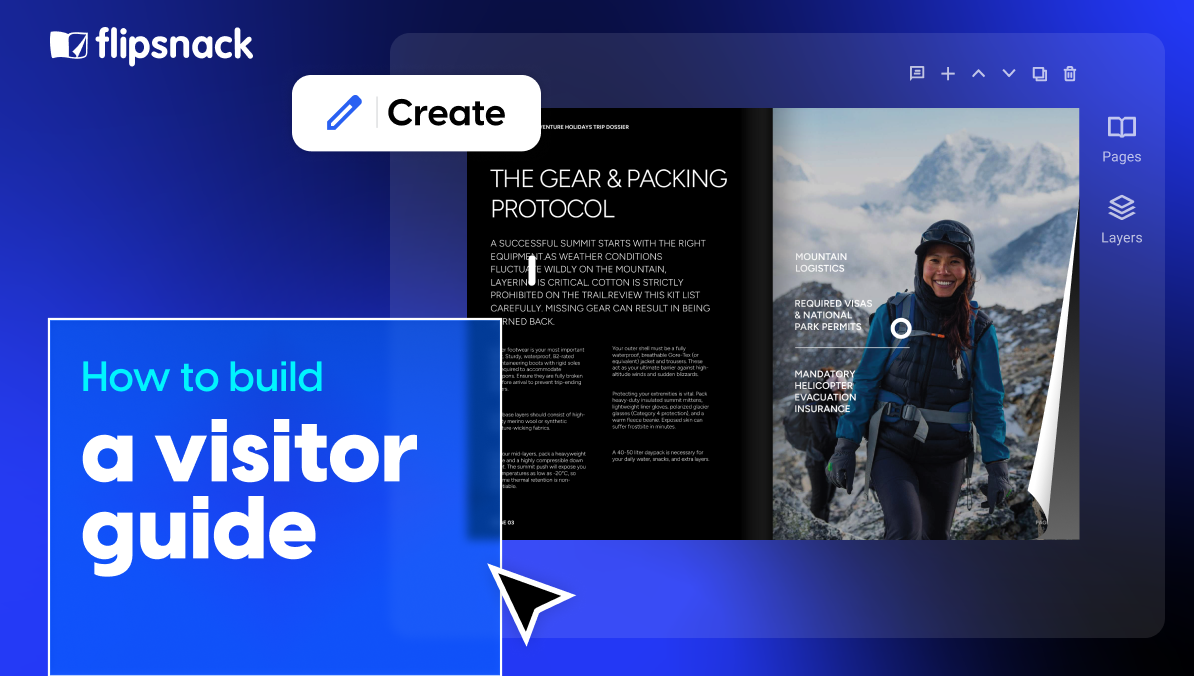
Once your guide is digital, you can use the drag-and-drop editor to move beyond the limitations of print and turn a passive reader into an active visitor:
- Multimedia integration: Embed drone footage of rural landscapes or ambient soundscapes to capture the feel of your region.
- Direct conversion: Add “Book Now” buttons that link directly to hotel partners or booking engines.
- Interactive regional dispersal maps: Turn static map illustrations into navigational tools by adding clickable pins to lesser-known villages or trails, giving guests an immediate path to explore beyond the usual hotspots.
3. Bridge the inclusion gap with a native accessibility audit
Flipsnack’s built-in accessibility editor lets you audit your guide internally rather than outsourcing to agencies. You can define reading orders for screen readers, add descriptive alt-text to images, and ensure your guide meets WCAG 2.2 standards — making your destination genuinely accessible to the Purple Pound and fulfilling your public-sector obligations at the same time.
4. Deploy across your visitor ecosystem
A great visitor guide only works if it reaches travelers at the right moment. Flipsnack gives you multiple ways to distribute:
- Web embedding: Place the guide directly on your homepage as a native part of the site.
- QR codes: Generate codes for physical touchpoints like airports, train stations, and hotel lobbies.
- Social sharing: Share specific pages or highlights on social media to drive traffic back to the full guide.
5. Turn engagement data into board-ready insights
This is where a digital guide earns its place in your 2026 work plan. Instead of reporting total downloads, you can show stakeholders exactly what your content is doing:
- Engagement heatmaps: Identify which regional pages capture the most attention and where readers drop off.
- Click-through tracking: Measure exactly how many referrals you’re sending to local business partners.
- Reporting: Bring hard engagement data to board meetings and prove the direct impact of your guide on regional dispersal.
Future-proofing your destination’s digital presence
In 2026, the Official Visitor Guide is more than a souvenir — it’s the strategic backbone of your destination’s marketing. By moving away from static files, you solve the three biggest challenges facing modern DMOs: driving regional dispersal, ensuring WCAG 2.2 accessibility, and generating the content analytics you need to prove your impact.
The transition doesn’t require a complete overhaul of your workflow. It requires a smarter platform — one that bridges the gap between the content you already create and the data your board needs to see.
Ready to see what your visitor guide could look like? Explore Flipsnack’s destination guide templates and start building your 2026 interactive experience in minutes.
And if your team also produces annual reports or stakeholder newsletters, read our next guide on turning your heaviest documents into your most trackable assets.