Retail Management Software: Top Solutions to Streamline Modern Retail Operations
Published: January 26, 2026
Why Do You Need Retail Management Software?
Retail operations have grown increasingly complex as businesses require inventory management, pricing strategies, in-store execution, workforce coordination, and customer experience across multiple channels. Traditional spreadsheets and disconnected systems are no longer sufficient to manage today’s fast-paced retail environments. As competition intensifies and consumer expectations rise, retailers need centralized, data-driven platforms to maintain operational consistency and profitability.
This is where retail management software becomes indispensable. These tools unify critical retail functions into integrated platforms that provide visibility, automation, and actionable insights. From pricing intelligence to store audits and queue management, modern retail management software helps retailers scale efficiently while maintaining control across locations.
Ultimately, retail management software increases operational efficiency, strengthens customer experience, and allows retailers to scale without proportional increases in complexity or cost.
Comparison of Retail Management Software
| Tool | Best For | Standout Features | G2 Rating | Capterra Rating | Pricing |
|---|---|---|---|---|---|
| Flipsnack | Retail documentation & digital catalogs | Interactive catalogs, playbooks, and analytics | ⭐ 4.6 | ⭐ 4.6 | Free plan available; paid plans start at $14–$35/month; enterprise pricing available |
| Quant Software | Enterprise retail planning | AI forecasting, merchandise analytics | ⭐ 4.5 | ⭐ 4.6 | Custom / enterprise quote-based pricing |
| Price2Spy | Pricing intelligence | Competitor price monitoring | ⭐ 4.7 | ⭐ 4.6 | Custom pricing based on number of products and competitors |
| Prisync | Dynamic pricing optimization | Automated repricing rules | ⭐ 4.6 | ⭐ 4.5 | Plans start at ~$99/month |
| Qminder | In-store queue management | Real-time customer flow analytics | ⭐ 4.8 | ⭐ 4.7 | Starts at ~$429/month per location |
| Bindy | Store execution & task management | Audits, task tracking, photo verification | ⭐ 4.5 | ⭐ 4.4 | Custom pricing based on store count and features |
| SafetyCulture | Store audits & compliance | Mobile inspections and corrective actions | ⭐ 4.6 | ⭐ 4.6 | Free plan available; paid plans start at $24/user/month |
| Lightspeed Retail | POS & inventory management | Multi-store inventory visibility | ⭐ 4.4 | ⭐ 4.5 | Plans typically range from $89–$289/month per location |
| Shopify POS | Omnichannel retail operations | Online and in-store data synchronization | ⭐ 4.3 | ⭐ 4.5 | POS Lite included with Shopify plans (from $39/month); POS Pro $89/location/month |
| NetSuite Retail | Enterprise retail ERP | End-to-end retail operations management | ⭐ 4.2 | ⭐ 4.1 | Custom/ enterprise quote-based pricing |
Industry research consistently shows that retailers using integrated management platforms outperform peers in execution consistency, inventory turnover, and customer satisfaction.
Retail management software increasingly incorporates AI-driven analytics, automation, and predictive insights to help retailers operate at scale. AI enables demand forecasting, dynamic pricing, workforce optimization, and real-time performance alerts across store networks. As retailers expand omnichannel strategies, AI-powered retail platforms ensure agility, accuracy, and personalized customer experiences.
Top Retail Management Software Tools
Flipsnack
Best For: Digital retail documentation, store communication, and interactive catalogs
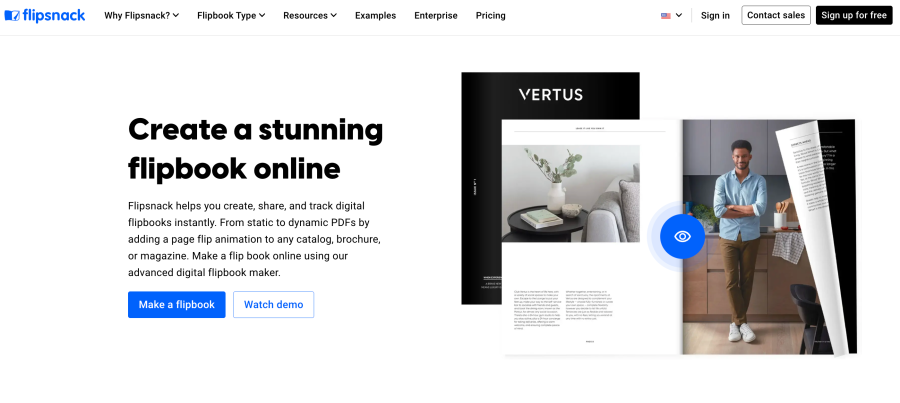
Flipsnack is a versatile retail management software tool that helps retailers create, manage, and distribute digital documents such as digital catalogs, store manuals, playbooks, retail magazines, and internal guides. It enables retail teams to centralize operational documentation and ensure consistent communication across locations.
By transforming static PDFs into interactive, trackable publications, Flipsnack improves engagement and accessibility for both staff and customers. Retailers use Flipsnack to support merchandising execution, training, and omnichannel marketing initiatives.

Key Features:
- Interactive Digital Catalogs – Converts product catalogs into engaging, shoppable experiences.
- Retail Playbooks & Manuals – Centralizes store guidelines, SOPs, and training materials.
- Analytics & Engagement Tracking – Measures how teams and customers interact with content.
- Brand Control – Ensures consistent branding across all retail documents.
- Easy Distribution – Shares content via QR codes, links, or embedded formats.
Ratings
G2: 4.6 stars
Capterra: 4.6 stars
Pricing
Free plan available
Paid plans start at $14–$35/month
Enterprise pricing available
Quant Software
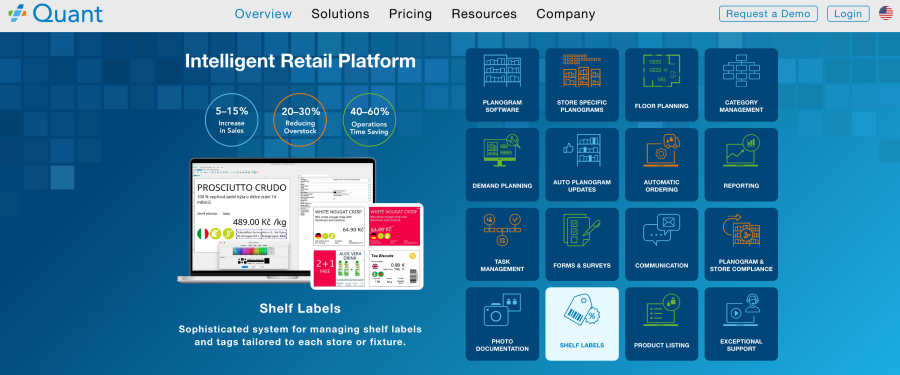
Best For: Enterprise retailers and data-driven planning teams
Quant Software is a powerful retail management software platform focused on advanced analytics, forecasting, and merchandise planning. It helps retailers optimize assortments, pricing, and inventory through AI-powered demand modeling.
Designed for large retail organizations, Quant enables scenario planning and performance benchmarking across regions and stores. Its analytics-driven approach supports smarter strategic decisions.
Key Features:
- Demand Forecasting – Uses AI models to predict sales and optimize inventory levels.
- Merchandise Planning – Aligns assortment strategies with consumer demand.
- Retail Analytics – Provides deep insights across categories and locations.
- Scenario Modeling – Evaluates outcomes of pricing and assortment changes.
Ratings
G2: 4.5 stars
Capterra: 4.6 stars
Pricing
Custom/enterprise quote-based pricing
Price2Spy
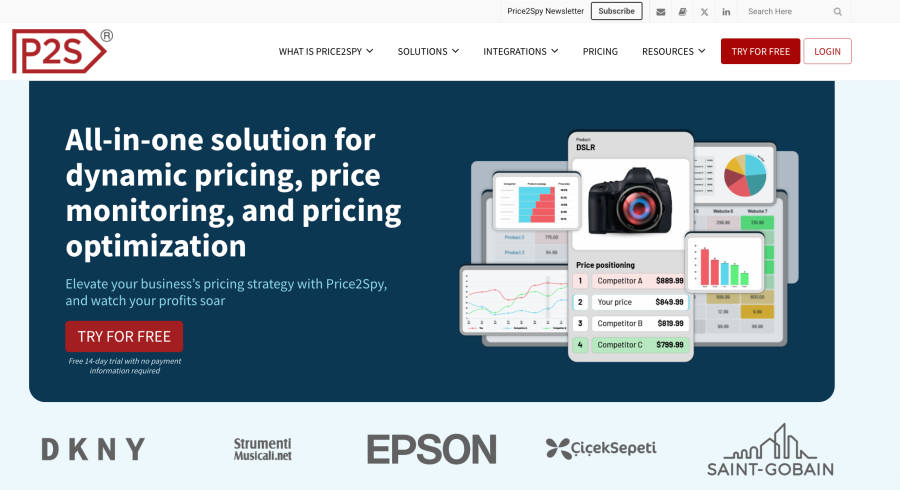
Best For: Competitive pricing analysis
Price2Spy specializes in pricing intelligence for retailers operating in competitive markets. The platform tracks competitor prices, promotions, and availability across online channels.
Retailers use Price2Spy to refine pricing strategies and protect margins. It integrates seamlessly with existing retail systems.
Key Features:
- Competitor Monitoring – Tracks prices across multiple competitors automatically.
- Price Alerts – Notifies teams of significant price changes.
- Dynamic Pricing Support – Enables data-backed repricing decisions.
- Reporting Dashboards – Visualizes pricing trends and performance.
Ratings
G2: 4.7 stars
Capterra: 4.6 stars
Pricing
Custom pricing based on the number of products and competitors
Prisync
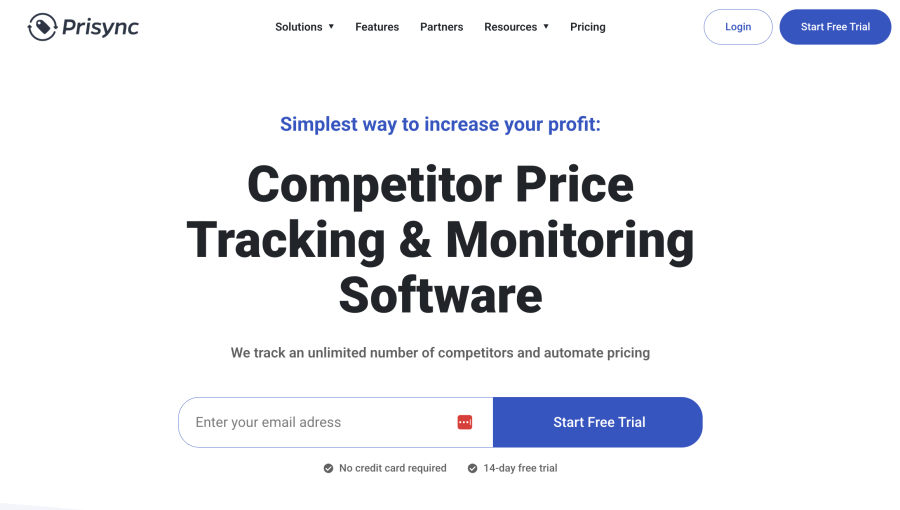
Best For: Automated pricing optimization
Prisync is a retail management software tool designed for dynamic pricing and competitor analysis. It allows retailers to monitor competitor pricing in real time and adjust prices automatically.
Prisync is particularly valuable for omnichannel retailers balancing online and in-store pricing. Its automation reduces manual pricing efforts.
Key Features:
- Dynamic Repricing – Automates price adjustments based on predefined rules.
- Competitor Tracking – Monitors unlimited competitors.
- Pricing Analytics – Identifies margin opportunities.
- Integration Support – Works with major e-commerce platforms.
Ratings
G2: 4.6 stars
Capterra: 4.5 stars
Pricing
Plans start at $99/month
Qminder
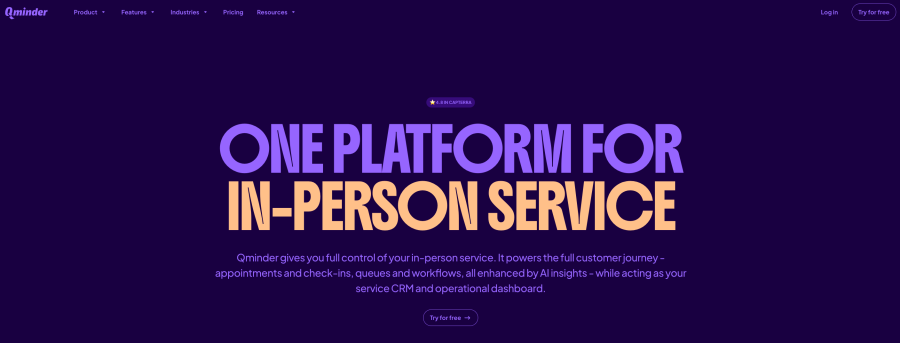
Best For: In-store customer flow management
Qminder helps retailers manage queues and improve in-store customer experience. The platform provides real-time data on wait times, service efficiency, and customer traffic.
Retailers use Qminder to reduce congestion and optimize staffing. It is especially effective for high-traffic retail locations.
Key Features:
- Queue Analytics – Tracks wait times and service speed.
- Customer Flow Insights – Identifies peak traffic patterns.
- Staff Performance Metrics – Measures service efficiency.
- Real-Time Dashboards – Displays live queue status.
Ratings
G2: 4.8 stars
Capterra: 4.7 stars
Pricing
Starts at $429/month per location
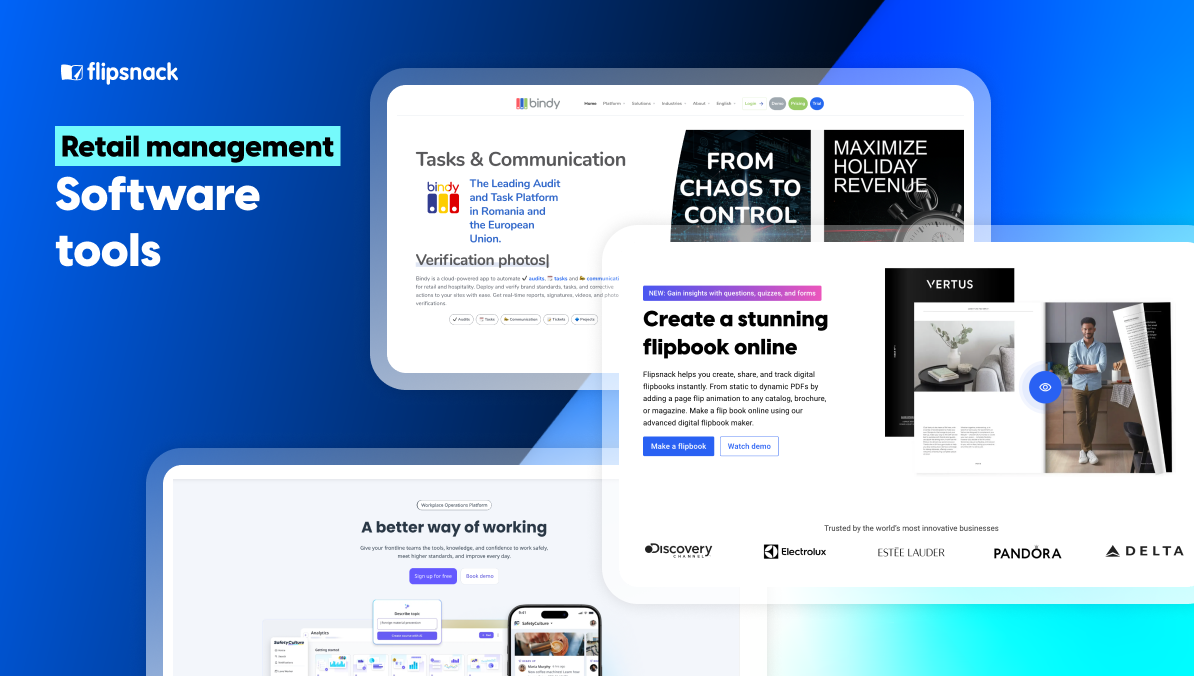
Bindy
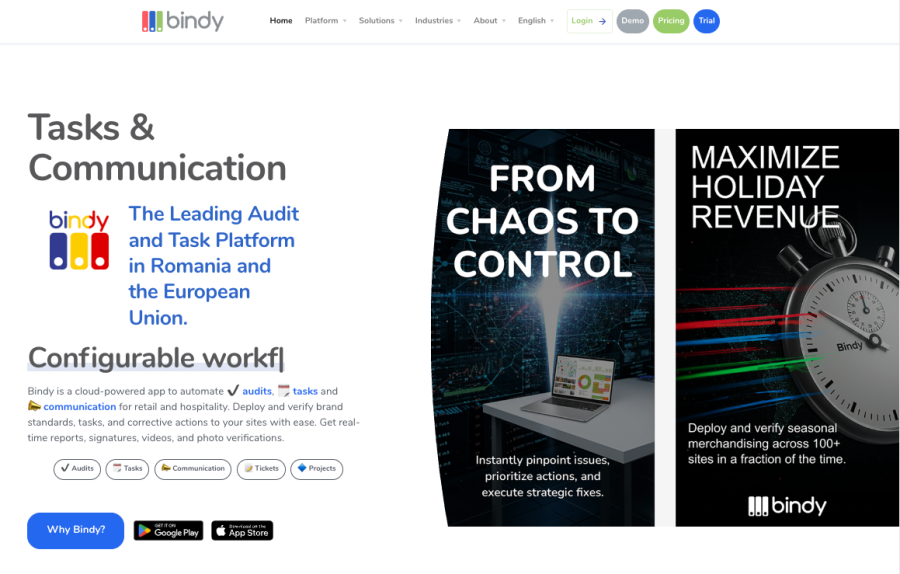
Best For: Retail execution and store task management
Bindy is a retail execution platform that ensures consistent in-store operations across locations. It enables retailers to manage tasks, audits, and communications from a central system.
Bindy improves accountability and execution quality at the store level. Multi-location retailers widely use it.
Key Features:
- Task Management – Assigns and tracks store-level tasks.
- Store Audits – Conducts standardized inspections.
- Photo Verification – Confirms visual merchandising compliance.
- Performance Dashboards – Tracks execution KPIs.
Ratings
G2: 4.5 stars
Capterra: 4.4 stars
Pricing
Custom pricing based on store count and features
SafetyCulture
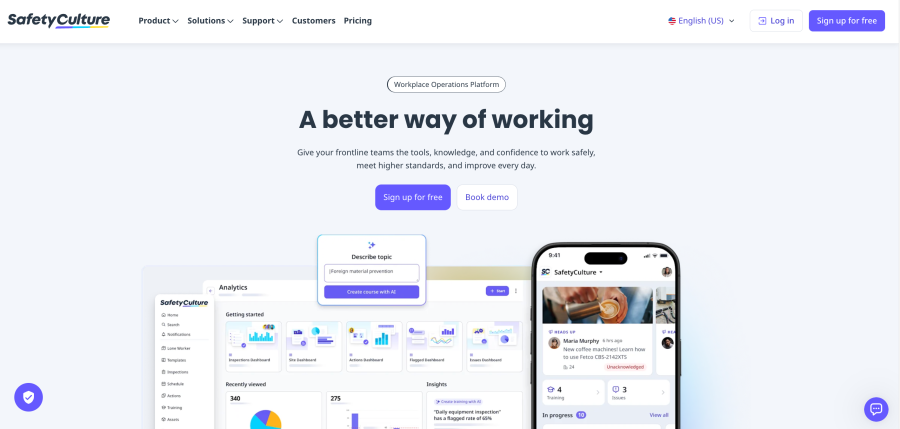
Best For: Store audits and compliance
SafetyCulture (iAuditor) provides mobile-first inspection and audit capabilities for retail operations. It helps retailers standardize safety, quality, and compliance checks.
The platform enables frontline teams to report issues instantly. SafetyCulture supports continuous improvement initiatives.
Key Features:
- Digital Inspections – Replaces paper-based audits.
- Issue Reporting – Flags risks in real time.
- Corrective Actions – Tracks resolution workflows.
- Analytics & Reports – Identifies recurring issues.
Ratings
G2: 4.6 stars
Capterra: 4.6 stars
Pricing
Free plan available
Paid plans start at $24/user/month
Lightspeed Retail
Best For: POS and inventory management
Lightspeed Retail combines POS, inventory, and reporting into one platform. It supports multi-store retailers with centralized data and real-time inventory visibility.
Lightspeed is ideal for retailers seeking operational clarity. Its scalability supports growing retail brands.
Key Features:
- Inventory Management – Tracks stock across locations.
- POS System – Handles in-store transactions.
- Retail Analytics – Provides sales and performance insights.
- Multi-Store Support – Centralized control for chains.
Ratings
G2: 4.4 stars
Capterra: 4.5 stars
Pricing
Plans typically range from $89–$289/month per location
Shopify POS
Best For: Omnichannel retail management
Shopify POS bridges online and physical retail operations. It allows retailers to manage inventory, customers, and orders across channels.
Shopify POS is particularly popular with omnichannel-first brands. Its ecosystem supports scalability and integrations.
Key Features:
- Unified Inventory – Syncs online and in-store stock.
- Customer Profiles – Centralized customer data.
- Mobile POS – Supports flexible selling.
- Integration Ecosystem – Connects with retail apps.
Ratings
G2: 4.3 stars
Capterra: 4.5 stars
Pricing
POS Lite included with Shopify plans (from $39/month)
POS Pro $89/location/month
NetSuite Retail
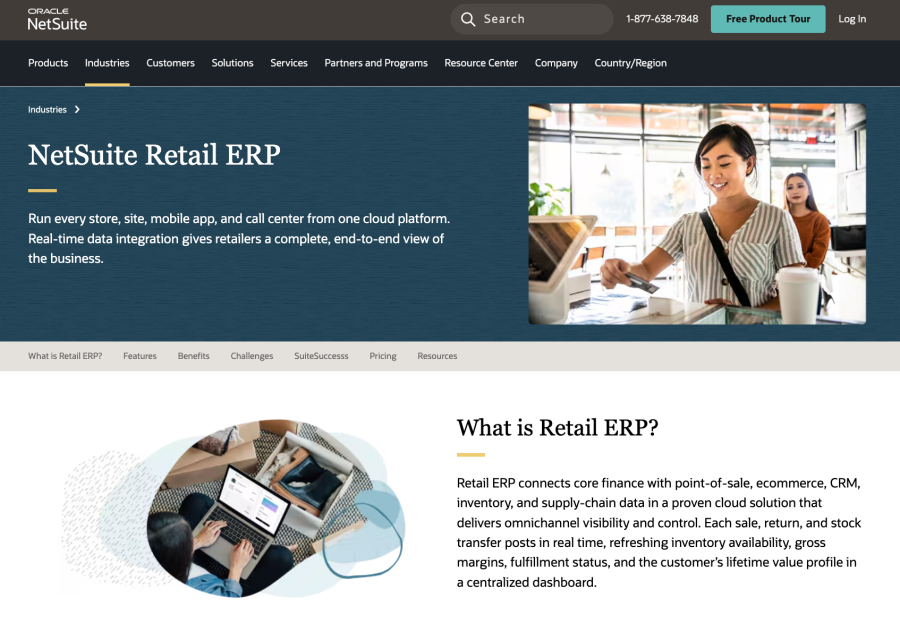
Best For: Enterprise retail ERP
NetSuite Retail offers an end-to-end ERP solution for large retail organizations. It unifies inventory, finance, CRM, and supply chain operations.
NetSuite supports complex retail environments with global operations. It is ideal for enterprise-scale retailers.
Key Features:
- Retail ERP – Integrates finance and operations.
- Supply Chain Management – Improves inventory flow.
- Advanced Reporting – Real-time performance data.
- Scalability – Supports global retail networks.
Ratings
G2: 4.2 stars
Capterra: 4.1 stars
Pricing
Custom ERP pricing varies by modules and scale
Category Picks
| Category | Tool | Why It Wins |
| Retail Documentation & Playbooks | Flipsnack | Centralizes interactive catalogs, SOPs, training manuals, and branded documents |
| Enterprise Retail Planning | Quant Software | AI-driven forecasting and scenario-based merchandise planning |
| Pricing Intelligence | Price2Spy | Accurate competitor tracking and pricing alerts |
| Dynamic Pricing Automation | Prisync | Rule-based repricing for margin protection |
| In-Store Experience | Qminder | Real-time queue analytics and staffing optimization |
| Store Execution | Bindy | Task accountability and visual merchandising control |
| Compliance & Inspections | SafetyCulture | Mobile audits with real-time corrective actions |
| Omnichannel POS | Shopify POS | Unified online and offline inventory and customer data |
| Enterprise ERP | NetSuite Retail | End-to-end control of finance, inventory, and supply chain |
Combining multiple retail management software tools allows retailers to address pricing, execution, analytics, and customer experience holistically.
Conclusion
Retail management software has become a strategic necessity for modern retailers navigating complex, multi-channel operations. The right tools empower retailers to gain visibility, improve execution, and make data-driven decisions at scale. From pricing intelligence to store audits and customer flow management, each platform addresses a critical operational challenge.
By combining complementary retail management software solutions, retailers can build agile, efficient, and resilient operations. As the retail landscape continues to evolve, investing in the right technology stack will define long-term success.
FAQs
What is retail management software used for?
Retail management software is used to centralize and optimize retail operations such as inventory, pricing, store execution, and customer experience. These tools replace manual processes with automated workflows and real-time data. Retailers use them to maintain consistency across locations. Over time, they improve efficiency, visibility, and profitability.
How does retail management software improve efficiency?
Retail management software automates repetitive tasks like audits, pricing updates, and reporting. It provides real-time insights that reduce delays in decision-making. By centralizing data, teams spend less time reconciling systems. This results in faster execution and reduced operational overhead.
Is retail management software suitable for small businesses?
Yes, many retail management software platforms are designed for small and mid-sized retailers. Cloud-based solutions like POS and pricing tools offer scalable pricing models. Small businesses benefit from better visibility without enterprise-level complexity. The key is selecting tools aligned with growth goals.
Can retail management software support omnichannel retail?
Modern retail management software is built to support omnichannel strategies. These platforms unify inventory, customer data, and pricing across online and offline channels. This ensures consistent experiences for customers regardless of where they shop. Omnichannel support is now a core requirement for competitive retailers.
What should retailers look for when choosing retail management software?
Retailers should evaluate scalability, integration capabilities, analytics depth, and ease of use. It’s important to align software features with operational priorities such as pricing, execution, or inventory. Vendor support and reporting flexibility are also critical. A modular approach often delivers the best long-term value.