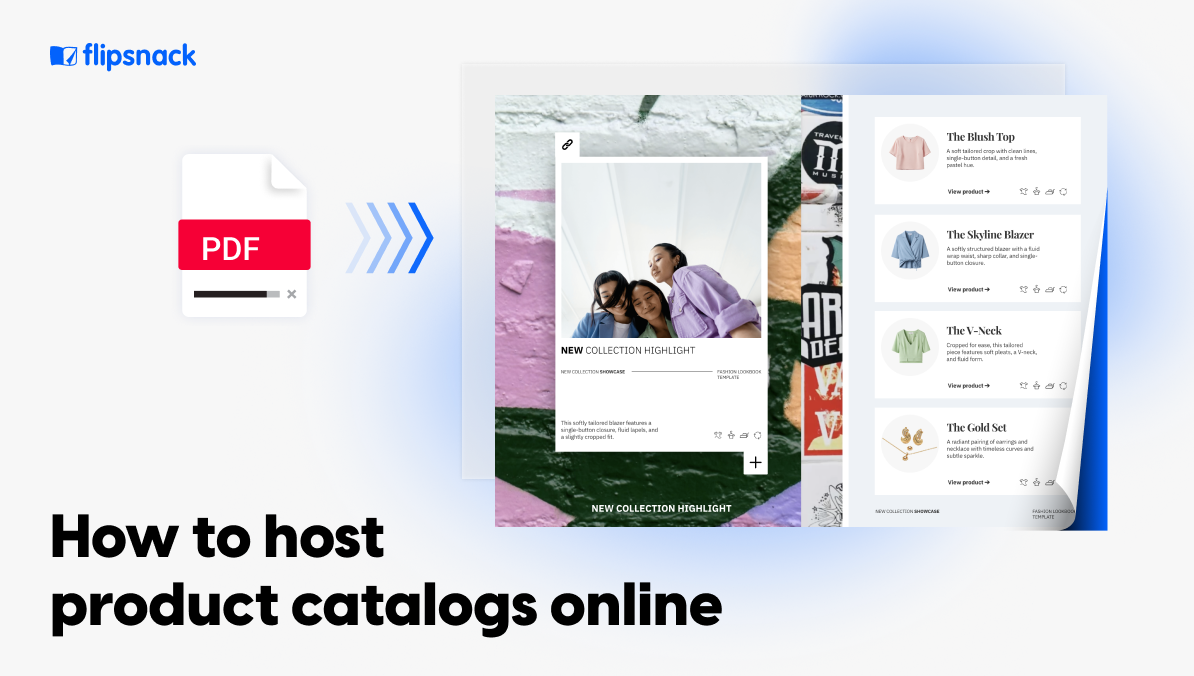
Product Catalog Hosting: Security, Scalability & Revenue Impact
Published on: February 20, 2026
If you’re researching product catalog hosting, you’re not simply looking for a way to upload a PDF.
You’re trying to solve a structural problem inside your organization.
Your marketing team may want to embed catalogs in campaigns and track performance. Your sales team may need to share private catalogs with B2B buyers. Your IT department may be concerned about security, compliance, and server load. Or maybe your e-commerce team wants a shoppable catalog experience that connects directly to product pages and inventory.
Uploading a static PDF to your website used to be enough. Today, it creates more problems than it solves.
Modern product catalog hosting is no longer about storage. It’s about infrastructure, security, performance, interactivity, analytics, and scalability. Companies that treat product catalog hosting as a strategic system, not just a file upload, gain measurable advantages in engagement, efficiency, and revenue.
This guide explains what product catalog hosting really means, why traditional approaches fall short, how SaaS catalog hosting platforms like Flipsnack solve those issues, and how to implement secure, interactive product catalog hosting step by step.
What product catalog hosting means today
Product catalog hosting refers to publishing, managing, securing, and distributing a digital catalog through a cloud-based hosting platform.
It goes beyond uploading a PDF catalog to a server.
Traditional self-hosted models involve placing a PDF catalog on a company’s CMS or internal server. While technically hosted, these catalogs are static. They lack interactivity, built-in analytics, secure access control, real-time updates, and scalable architecture.
Modern product catalog hosting platforms operate differently. Theyconvert PDF catalogs into interactive catalogs or flipbooks, host them in secure cloud environments, and provide advanced capabilities, including:
- SSL encryption and secure infrastructure
- Password protection and role-based access
- SSO integration for enterprise environments
- Fast CDN delivery and mobile optimization
- Analytics dashboard and tracking
- E-commerce integration and shoppable tags
- Spreadsheet sync and inventory automation
- Custom domain support and white-labeled branding
Instead of distributing files, companies publish interactive digital catalogs that function as measurable, conversion-focused assets.
From a marketing perspective, this means campaign visibility and lead generation.
From a sales enablement perspective, it means engagement tracking and personalized distribution.
From an IT security perspective, it means GDPR compliance and access control.
From an e-commerce perspective, it means integration-friendly infrastructure tied directly to product pages and SKUs.
Product catalog hosting has evolved into strategic infrastructure.

The limitations of self-hosted catalogs
Many companies still rely on self-hosted PDF catalogs stored on internal servers or subdomains.
At first glance, this seems cost-effective. But the hidden limitations become clear as scale increases.
Self-hosted catalogs require internal server management. IT teams must configure SSL encryption, manage CDN optimization, ensure mobile compatibility, and handle scalability manually. Analytics require external tools. Security policies must be custom-built.
Updates are inefficient. When retailers update product information in real time, self-hosted models require re-exporting and re-uploading entire files.
For wholesale catalogs and private B2B buyers, access control becomes complicated. Managing user permissions manually across large buyer groups increases risk.
Searchers comparing free vs paid catalog hosting often discover that the operational cost of self-hosting is higher than expected once infrastructure, security, and maintenance are factored in.
This is why many companies shift toward SaaS platforms for product catalog hosting.
SaaS product catalog hosting: Why the model scales
SaaS catalog hosting platforms provide cloud-based, scalable architecture built specifically for digital catalog distribution.
Instead of relying on internal servers, businesses upload PDF catalogs to a hosting platform where they’re automatically converted into interactive flipbooks. The infrastructure delivers fast CDN performance, ensures mobile-friendly responsiveness, and scales without IT teams managing servers.
Platforms like Flipsnack follow this SaaS model. PDF catalogs become interactive, embeddable digital catalogs hosted on a secure cloud infrastructure. Performance optimization, mobile compatibility, and scalable delivery are managed automatically.
Admins control access permissions centrally. Enterprises secure catalogs with password protection, SSO integration, and role-based access. Teams track engagement through built-in analytics dashboards to understand how B2B buyers interact with product pages and SKUs.
Instead of regenerating files, spreadsheet import and spreadsheet sync enable dynamic updates. Inventory automation keeps information accurate, while API access supports integration with e-commerce systems and CMS platforms.
For B2B catalog hosting, SaaS platforms like Flipsnack deliver enterprise scalability without increasing IT burden. Marketing, sales, ecommerce, and operations teams work from a centralized system, aligning workflows rather than fragmenting them.
SaaS product catalog hosting turns distribution into a secure, scalable, revenue-supporting infrastructure.
Hosting product catalogs vs. emailing a PDF catalog
| Criteria | Email PDF Catalog Attachment | E-commerce integration |
| File delivery | File size limit restrictions; attachments blocked or compressed | No file size concerns; fast cloud-based delivery |
| Tracking capability | No analytics or engagement visibility | Built-in analytics dashboard with views, clicks, and time spent |
| Access control | Uncontrolled forwarding; no visibility | Password protection, private links, role-based access, SSO integration |
| Viewing experience | Heavy downloads; static PDF viewing | Fast-loading, interactive web-based experience |
| Content updates | Must resend updated versions; version confusion | Real-time updates without changing the link |
| Interactivity | Static document; no shoppable elements | Interactive catalog with shoppable tags and clickable product pages |
| Ecommerce integration | No direct SKU linking | Direct integration with ecommerce systems and product pages |
| Branding | Generic PDF viewer; limited control | Custom domain support, white-label options, branded experience |
| Device compatibility | Often desktop-focused; poor mobile experience | Fully responsive, mobile-friendly browsing |
| Website integration | Cannot embed effectively | Embeddable via iframe or embed code in CMS |
| Security | Basic email-level security | Secure infrastructure with SSL encryption and access control |
| Scalability | Manual distribution; no centralized management | Cloud-based, scalable architecture with centralized management |
Key features every product catalog hosting platform must have
To evaluate secure catalog hosting options effectively, businesses need to look beyond basic file storage. Modern product catalog hosting must support security, performance, scalability, interactivity, automation, and measurable business impact:
1. Security and data privacy
Security is foundational. Whether you’re hosting a retail catalog publicly or distributing a private wholesale catalog to B2B buyers, your hosting platform must operate on secure infrastructure.
At a minimum, product catalog hosting should include SSL encryption, data privacy safeguards, and compliance with regulations such as GDPR. For companies operating at scale, enterprise-ready authentication is essential.
Private catalogs require structured access control. Password protection, role-based access, and granular user permissions ensure that only authorized viewers can access sensitive materials. In enterprise environments, SSO integration aligns catalog access with internal identity systems, reducing friction while maintaining security standards.
From an IT security perspective, centralized management and audit visibility are critical. Teams need to manage access permissions without relying on manual processes or unsecured file sharing.
Flipsnack addresses this by combining secure cloud infrastructure with role-based access and SSO integration, allowing organizations to protect their digital catalogs without increasing internal IT burden.
Without proper security and governance, product catalog hosting introduces risk rather than reducing it.
2. Performance and infrastructure
Performance directly influences both customer experience and SEO outcomes.
High-performance hosting platforms rely on cloud-based, scalable architecture designed to handle large digital catalogs without compromising speed. Fast CDN delivery ensures that catalogs load quickly across regions, while mobile optimization guarantees a responsive experience on any device.
A slow-loading PDF catalog damages engagement and increases bounce rates. A fast-loading, interactive catalog improves usability and strengthens SEO performance by increasing dwell time and reducing friction.
Scalability is equally important. As marketing campaigns drive traffic or product lines expand, the hosting platform must scale automatically without requiring server reconfiguration.
Product catalog hosting should enhance performance, not create technical strain.
3. Interactivity and e-commerce integration
Interactive catalogs outperform static PDFs in both engagement and conversion.
Modern product catalog hosting platforms convert PDF catalogs into interactive flipbooks enhanced with shoppable tags, clickable product pages, embedded media, and conversion-focused calls to action.
E-commerce integration is critical. SKUs should link directly to online store pages. Retail catalogs become shoppable environments. Wholesale catalogs can reflect dynamic pricing structures. Integration with e-commerce systems ensures the catalog supports actual buying behavior.
Flipsnack enables businesses to add shoppable tags, integrate SKUs, and embed interactive catalogs directly into product pages or CMS environments, turning distribution into revenue enablement.
Interactivity transforms product catalog hosting from passive publishing into an active sales driver.
4. Real-time updates and automation
Retailers update product information constantly. Inventory changes. Pricing shifts. Product assortments evolve.
Traditional self-hosted models require regenerating and re-uploading entire PDF catalogs — an inefficient and error-prone process.
Automation-ready product catalog hosting platforms support spreadsheet import, spreadsheet sync, and inventory automation. This allows businesses to update SKUs, pricing, and product data dynamically without redistributing files.
Real-time updates ensure that hosted catalogs remain accurate while preserving the same shareable link. This is especially important for wholesale catalogs distributed to large buyer networks.
Flipsnack supports product data updates and centralized management, helping teams reduce operational friction while maintaining consistency across digital catalogs.
Automation ensures that product catalog hosting keeps pace with operational reality.
5. Analytics and tracking
Modern catalog distribution must be data-driven.
An effective product catalog hosting platform includes a built-in analytics dashboard that tracks engagement metrics such as page views, click tracking, time spent, and conversion interactions.
From a marketing perspective, this data supports campaign optimization.
From a sales enablement perspective, it enables personalized follow-ups based on buyer behavior.
From an operations perspective, it identifies product trends and high-interest SKUs.
Understanding how to track catalog performance is essential for maximizing ROI. Without analytics, hosting becomes blind distribution.
Flipsnack’s analytics and tracking capabilities allow teams to measure how interactive catalogs perform, helping organizations move from static publishing to measurable impact.
Real-world impact: How Melissa & Doug turned catalog hosting into revenue
The impact of data-driven product catalog hosting becomes clear when looking at a real implementation.
Melissa & Doug, a globally recognized toy manufacturer with a 450-person team, needed to simplify how retailers placed orders. Their traditional printed catalogs were expensive and provided zero engagement visibility. When they moved to digital tools, the process became fragmented; retailers had to jump between platforms to view products, cross-reference information, and place orders.
By centralizing their product catalog in Flipsnack, they created a single interactive, shoppable digital catalog that streamlined their specialty sales process.
Using automation, their 215-page catalog with over 700 products was built in significantly less time. Product information was populated through structured data instead of manual input, reducing catalog production time by more than 50%.
More importantly, the results were measurable.
Within less than two months of launching their hosted digital catalog:
- A large portion of sales came directly from the shopping feature inside the catalog
- The catalog generated over 2,200 views
- Customers spent an average of 2 hours and 9 minutes exploring it
The sales team could see which products attracted attention, how long retailers engaged with specific pages, and how the shopping list feature influenced order behavior.
6. Branding and customization
From a brand management perspective, product catalog hosting must reinforce corporate identity.
Custom domain support ensures that digital catalogs live under branded URLs. White-label solutions remove third-party visibility. Customizable viewers allow businesses to align colors, logos, and presentations with brand standards.
A hosted product catalog should feel like a seamless extension of your website — not an external tool.
Flipsnack provides customizable and white-labeled options that help companies maintain consistency across regions, departments, and campaigns while keeping control centralized.
Branding within product catalog hosting builds trust and credibility, especially for B2B buyers evaluating vendors.
Together, these features define what modern product catalog hosting must deliver: secure infrastructure, scalable performance, ecommerce integration, automation, analytics, and brand alignment.
Anything less is simply PDF storage, not strategic infrastructure.
How to host a product catalog online using Flipsnack
Hosting a product catalog online today means more than uploading a PDF and sharing a link. It means choosing a product catalog hosting platform that gives you control over access permissions, visibility into engagement through analytics, and the secure infrastructure your business requires.
Whether you’re distributing a public retail catalog or a private wholesale catalog for B2B buyers, you need a solution that balances performance, security, and conversion-focused functionality.
Flipsnack brings these elements together in one cloud-based SaaS platform built for marketing teams, sales enablement, ecommerce operations, and IT security alike.
- Upload your PDF catalog and instantly convert it into an interactive, mobile-friendly digital catalog optimized for fast CDN delivery
- Add shoppable tags and link SKUs directly to product pages for seamless e-commerce integration
- Protect sensitive catalogs with password protection, SSO integration, and role-based access control
- Customize branding using white-label options and custom domain support to maintain brand consistency
- Embed your catalog directly into your website or CMS while tracking engagement through a built-in analytics dashboard
Start with free product catalog hosting to test distribution and engagement, then scale into advanced features as your needs grow. The best way to host a product catalog online is through a platform that supports your marketing goals, enables your sales team, integrates with e-commerce, and satisfies your IT security requirements.
Public vs. private product catalog hosting
Product catalog hosting isn’t one-size-fits-all. Some catalogs are meant to be seen by everyone, while others need controlled access.
Retail catalogs often require public distribution to maximize visibility, e-commerce traffic, and lead generation. These catalogs can be embedded on your website, shared on social media, included in email campaigns, or promoted through paid ads, all while remaining interactive and trackable.
Wholesale catalogs and distributor materials, however, usually require restricted access. Sensitive pricing, partner-specific assortments, or B2B agreements demand password protection, role-based access, or SSO integration to maintain security and control.
Most growing companies need both approaches at the same time. With Flipsnack, you can manage public and private product catalog hosting within one secure platform, giving marketing teams the reach they need while allowing sales and IT to maintain strict access control where it matters most.
Why product catalog hosting is now a revenue infrastructure
Static PDF distribution belongs to a different era. Uploading a file to your website or sending attachments by email may technically “host” a catalog, but it doesn’t give you control, visibility, or scalability.
Modern product catalog hosting changes that. It centralizes distribution, so teams work from one secure source of truth. It secures access through password protection, role-based permissions, and enterprise authentication. It enables interactivity and e-commerce integration, turning catalogs into conversion-focused experiences rather than passive documents. It supports automation and real-time updates, ensuring SKUs, pricing, and inventory stay accurate without constant re-uploads.
And it provides analytics that allow marketing, sales, and operations teams to make data-driven decisions.
When implemented correctly, product catalog hosting becomes more than a publishing solution. It becomes infrastructure, scalable, secure, and directly connected to revenue growth.
Businesses that treat it that way don’t just distribute catalogs better. They compete better.