Product Catalog Templates: Use Cases, Examples & Best Practices
Published on: 15th of April, 2025
Updated on: April 22, 2026
What is a product catalog?
A product catalog is a structured document, print or digital, that showcases your products with the information buyers need to make confident decisions: pricing, specifications, imagery, variants, and availability.
Modern digital catalogs go much further. When you create a product catalog, you can include embedded videos, size charts, 3D product views, interactive order forms, and real-time pricing, all in one shareable, trackable experience.
Catalogs serve different functions depending on your business model:
- Seasonal lookbooks communicate brand identity and drive pre-order decisions.
- Wholesale catalogs present bulk pricing, minimum order quantities, and seasonal ranges to trade buyers.
- Retail catalogs inspire end consumers with editorial imagery, styling guides, and direct-to-cart links.
- B2B product catalogs support sales reps with spec sheets, comparison tools, and quote forms.
Table of contents
- What is a product catalog?
- How to build a product catalog that actually converts
- What customers say about Flipsnack templates
- Professional product catalog templates to customize
- Digital wholesale catalog template
- Apparel catalog template
- Lighting catalog template
- Winter sports catalog template
- Fine jewelry product catalog template
- Football merchandise catalog template
- Business product catalog template
- Pricing product catalog template
- Interactive car catalog template
- Interior design wholesale catalog template
- How to create a product catalog with Flipsnack
- 1. Choose a template or import your product data to get started faster
- 2. Customize with branding, interactive elements, and your product content
- 3. Collaborate with your team before publishing
- 4. Publish once — update the same link forever
- 5. Track engagement and use the data to improve
- Frequently asked questions about product catalogs
How to build a product catalog that actually converts
A well-structured product catalog is one of the highest-leverage assets a sales or marketing team can produce. Research consistently shows that buyers engage with catalogs long before speaking to sales, and in B2B, Gartner data indicates that 75% of professional buyers now prefer to complete their entire journey without speaking to a rep at all.
That makes your catalog your best-performing, always-on sales asset. But most catalogs underperform not because the products aren’t good, but because the catalog is static, hard to navigate, or impossible to keep current. In this guide, you’ll learn what makes an effective product catalog, when to use different template types, and how to build interactive catalogs your buyers actually engage with.
Quick comparison: Choose your ideal product catalog template
| Template Name | Industry / Use Case | Best For (Company Size) | Main Focus | Key Benefits |
|---|---|---|---|---|
| Wholesale Catalog | B2B / Distribution | Any (10–500+) | Bulk pricing, MOQs, product variants | Clean layout for trade buyers; private sharing for tier-specific pricing; contact forms per product line |
| Apparel Catalog | Fashion / Retail | Startups to mid-market | Editorial imagery, sizing, seasonal collections | Modular layout; supports videos, lookbooks, fit quizzes, and eCommerce integration |
| Lighting Catalog | Lighting / Interiors | SMB to Enterprise | Spec-heavy display paired with atmosphere | Grouped by space or use case; popup spec explainers; embedded quote request forms |
| Winter Sports Catalog | Sporting Goods | Mid-market brands | Performance gear with trust-building content | Dynamic GIFs, athlete endorsements, interactive sizing tools, locked brand templates |
| Fine Jewelry Catalog | Luxury / Retail | Boutiques to mid-market | High-ticket, story-led product presentation | Editorial layout; gemstone detail zones; certification badges; real-time price updates |
| Football Merchandise | Sports / Fan Retail | Clubs & distributors | Kit launches, bundles, in-catalog personalization | On-page shirt customization; variant management; fan engagement analytics |
| Business Product Catalog | B2B / Consumer Goods | Growing companies (50–500) | Feature comparison, specs, B2B pitching | Comparison-ready layout; certification zones; embedded explainer videos |
| Pricing Catalog | Multi-industry | Sales teams of all sizes | Clear pricing tiers and variant comparison | Replaces spreadsheets and PDFs; real-time pricing updates; embedded quote forms |
| Interactive Car Catalog | Automotive | Dealers & OEM teams | Trim levels, specs, upgrade paths | 3D visualizations; walkaround video embedding; real-time updates across dealer links |
| Interior Design Wholesale | Furniture / Home Décor | Wholesalers & designers | Product discovery and streamlined ordering | 3-image product tags; quick descriptions; built-in shopping list and order submission |
What customers say about Flipsnack templates
Flipsnack has helped me creating my first product catalog and it’s amazing. It’s super intuitive and user friendly. Amazing customer service and amazing tool!
Miguel Canas, Manager/CEO
What makes a product catalog actually work
A product catalog is doing its job when:
- Buyers can find the product information they need without contacting your sales team first
- Pricing is clear enough that the first sales conversation starts with intent, not clarification
- New product ranges or pricing updates go live across all buyer touchpoints instantly — with no redistributed files
- Sales reps spend less time answering spec questions and more time closing
- Buyers return to specific product sections multiple times before purchasing — a signal of genuine evaluation, not passive browsing
- Analytics reveal which products attract the most attention, so follow-up is focused rather than generic
- New team members can get up to speed on the full product range from a single, always-current source
- Wholesale buyers can shortlist, compare, and submit orders without a back-and-forth email chain
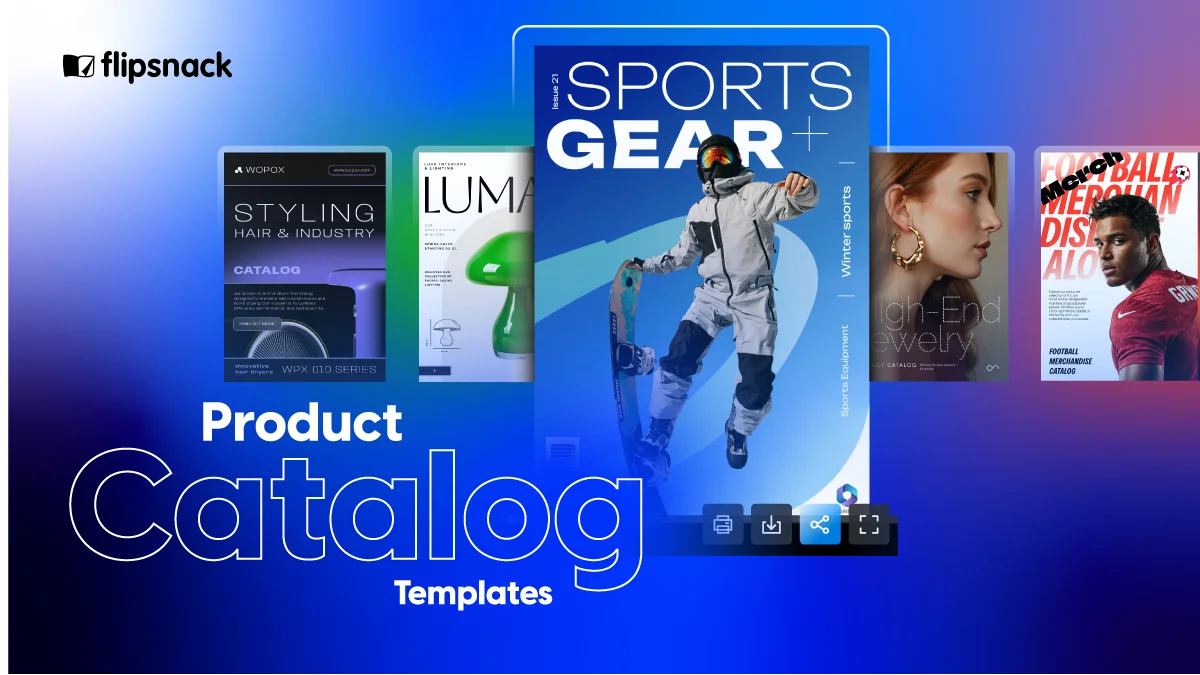
Professional product catalog templates to customize
A well-structured product catalog template is essential for presenting your range clearly, enabling faster buying decisions, and keeping your sales team equipped with always-current materials. Whether you’re managing a wholesale product line, launching a seasonal collection, or building a B2B pricing resource, a catalog template provides the organized, visual framework that turns product data into revenue. Below, we’ve compiled ten professionally designed catalog templates all fully customizable in Flipsnack with interactive elements, secure sharing options, and built-in analytics to help you build catalogs your buyers actually use.
Digital wholesale catalog template
Trade buyers making large-scale purchasing decisions need clarity on specs, bulk pricing, minimum order quantities, and terms before they’ll commit to a conversation. This wholesale catalog template is built to give them exactly that, in a format that’s easy to navigate and professional enough to represent your brand at the highest level.
Best for: Distributors, manufacturers, and suppliers selling to trade buyers across any industry, from industrial supplies to consumer goods. Suitable for companies of 10 to 500+ employees where B2B purchasing decisions are driven by structured product and pricing information.
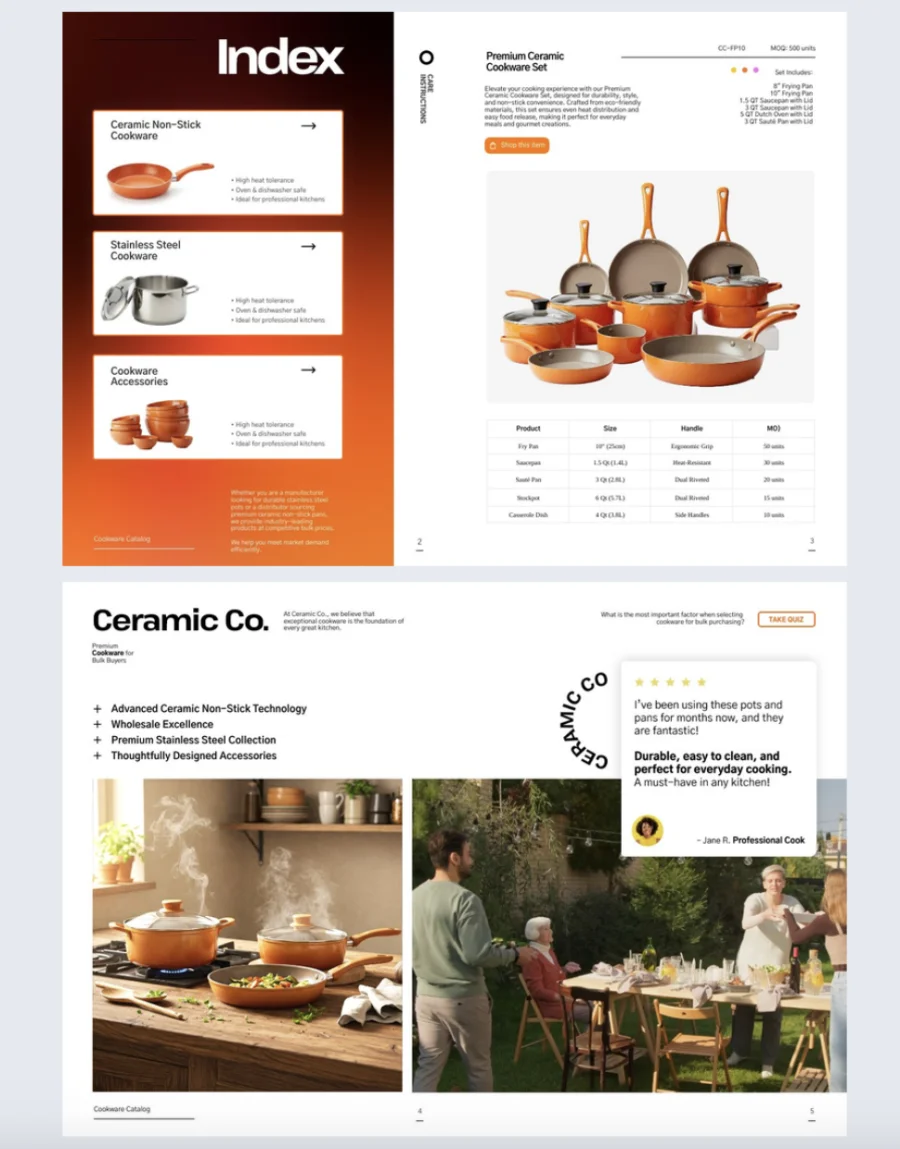

Real-world application: A mid-sized building materials supplier with 320 employees used this template to restructure their wholesale catalog by material category, with dedicated sections for volume pricing tiers, lead times, and certification documentation. Their sales team reported a significant reduction in pre-quote email exchanges, and buyers arrived at first calls already aligned on product options and pricing ranges. The supplier used Flipsnack’s analytics to identify that the certification section received the highest repeat views, which led them to expand that section in the next update.
Customize the template with pre-filled content zones for shipping options, material certifications, and MOQ thresholds. Embed contact forms per product line to capture buyer intent directly from the catalog, and use Flipsnack’s private link sharing for tier-specific pricing that isn’t visible to all buyers.
Common mistake to avoid: Don’t bury essential information in fine print or lengthy terms sections. Wholesale buyers are scanning for pricing, quantities, and lead times first — everything else is secondary. Keep primary product pages clean and use pop-ups or linked pages for detailed contractual information. A cluttered catalog delays decisions; a clear one accelerates them.
Share via a password-protected private link for trade-only access, embed directly on your B2B portal, or organize alongside other wholesale resources in a virtual bookshelf.
Apparel catalog template
Apparel buyers, whether retail consumers or wholesale partners, need more than product shots. They need to feel the brand, understand the range, and visualize how pieces work together before they commit. This apparel catalog template turns product display into a full brand experience.
Best for: Fashion brands, clothing retailers, and wholesale apparel distributors from startups to mid-market. Particularly effective for seasonal launches, editorial-style lookbooks, and brands where culture and storytelling are central to the purchasing decision.
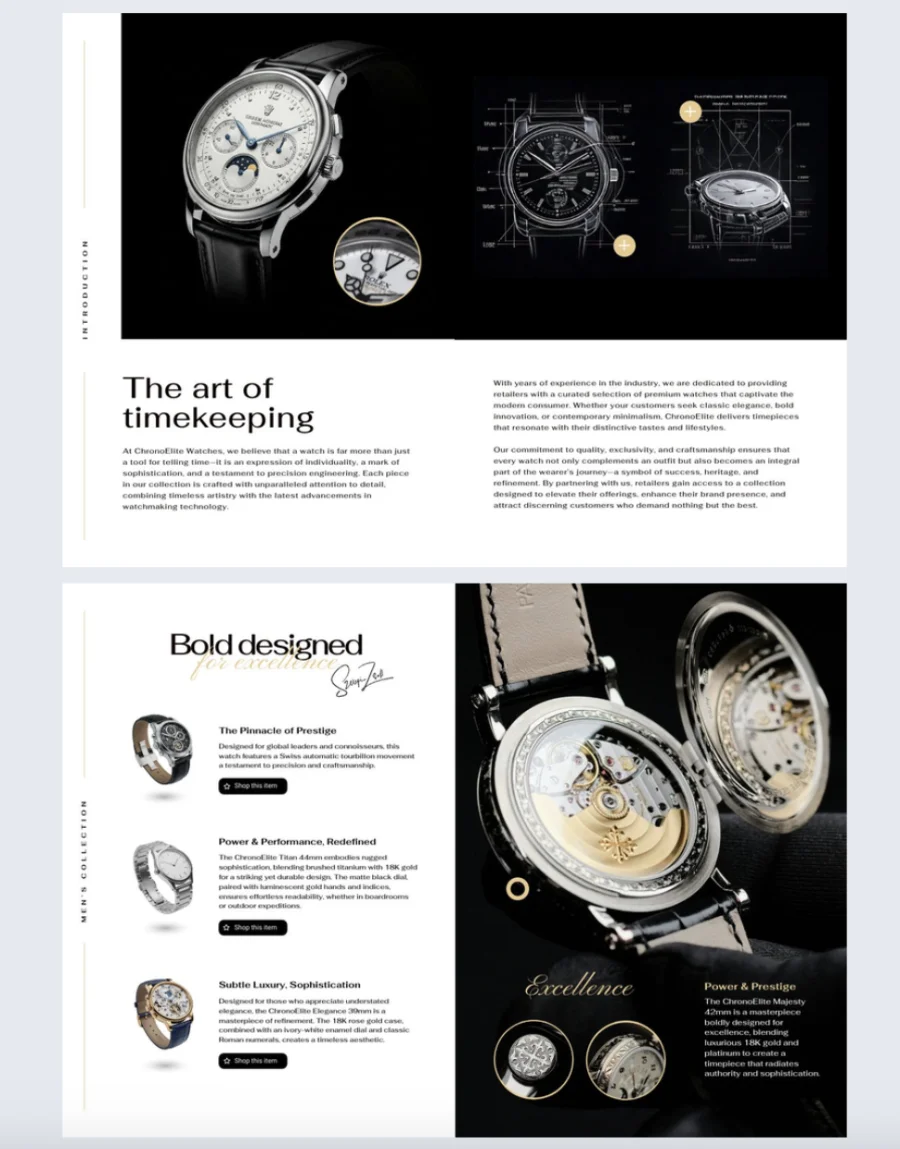
Real-world application: A mid-size women’s fashion brand used this template to launch their spring collection, embedding ‘shop this look’ buttons on every editorial spread that connected directly to their eCommerce platform. Their wholesale buyers received the same catalog via a private link with a trade pricing overlay. The brand’s marketing team used Flipsnack’s analytics to discover that buyers were revisiting the fabric detail section most frequently, which informed the decision to expand material specifications across all SKUs in the next catalog edition.
Customize the template with editorial-style imagery, embedded styling videos, and modular promotional banner sections. Add fit quizzes to guide buyers toward the right size, embed influencer picks, or include a ‘shop this look’ button on every spread. The layout is designed to scale with seasonal releases without requiring a design rebuild each time.
Common mistake to avoid: Don’t sacrifice product information for aesthetics. Wholesale buyers in particular need size charts, fabric compositions, and care instructions, not just beautiful imagery. The most effective apparel catalogs balance editorial impact with practical detail. If buyers have to request spec information separately, your catalog is doing half the job.
Share via private link for wholesale partners, embed in your eCommerce platform for retail buyers, or include in a brand kit distributed to retail partners.

Lighting catalog template
In lighting, technical precision wins the rational argument, but atmosphere closes the deal. This lighting catalog template is designed to deliver both, with structured spec sections that also feel like a showroom rather than a data sheet.
Best for: Lighting manufacturers, wholesalers, and design-focused retailers serving residential renovators, architects, commercial interior designers, and facility managers. Scales from small boutique lighting brands to enterprise distributors with broad product ranges.
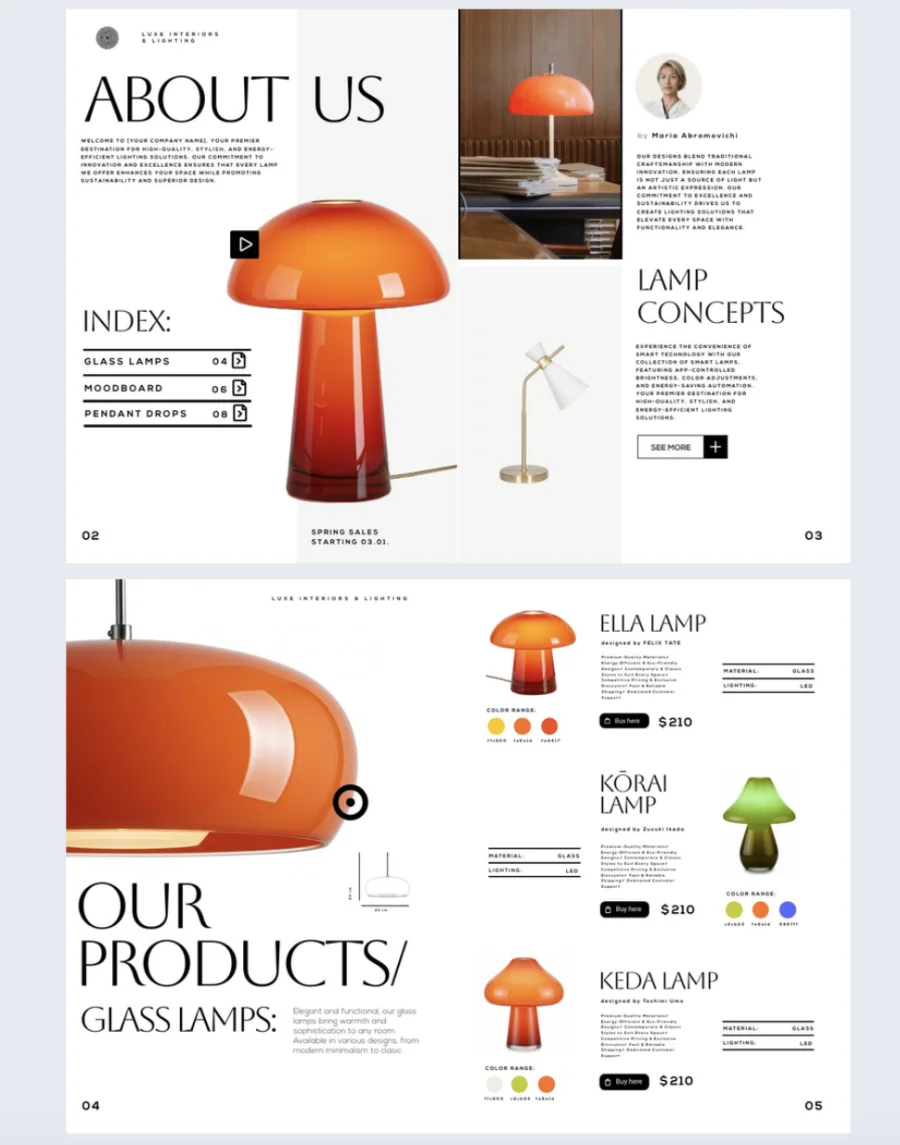
Real-world application: A commercial lighting distributor reorganized their existing PDF catalog using this template, restructuring products by installation space, office, hospitality, and retail rather than by product category. Buyers reported finding the products they needed significantly faster, and the embedded quote request forms on each section page generated leads the sales team could act on immediately. Flipsnack’s analytics revealed that the hospitality section received disproportionately high traffic, prompting the team to expand that category in the following quarter.
Customize the template with high-resolution mood photography, animated GIFs showing products in lit environments, and interactive product tags that display wattage, finish options, and accessory compatibility on click. Use pop-up explainers to surface technical details without cluttering the main product view.
Common mistake to avoid: Listing technical specifications without connecting them to the spaces or problems they solve. “3000K, 800 lumens, CRI 90+” is meaningless to a hospitality designer without context. Every spec section should answer the implicit buyer question: what does this light do for my space? Pair numbers with imagery and use-case descriptions that make the technical tangible.
Share as an embedded catalog on your website, distribute via private link to architecture and design firms, or make available for in-showroom browsing on tablets.
Winter sports catalog template
Cold-weather gear is purchased on trust. Buyers aren’t just choosing a jacket they’re choosing performance under pressure, often in conditions where failure has real consequences. This winter sports catalog template earns that trust through energy, technical clarity, and depth.
Best for: Performance outdoor brands, sporting goods distributors, and ski and snowboard retailers. Particularly strong for brands where technical credibility is as important as visual appeal, and where buyers range from individual athletes to professional procurement teams at resorts and ski schools.
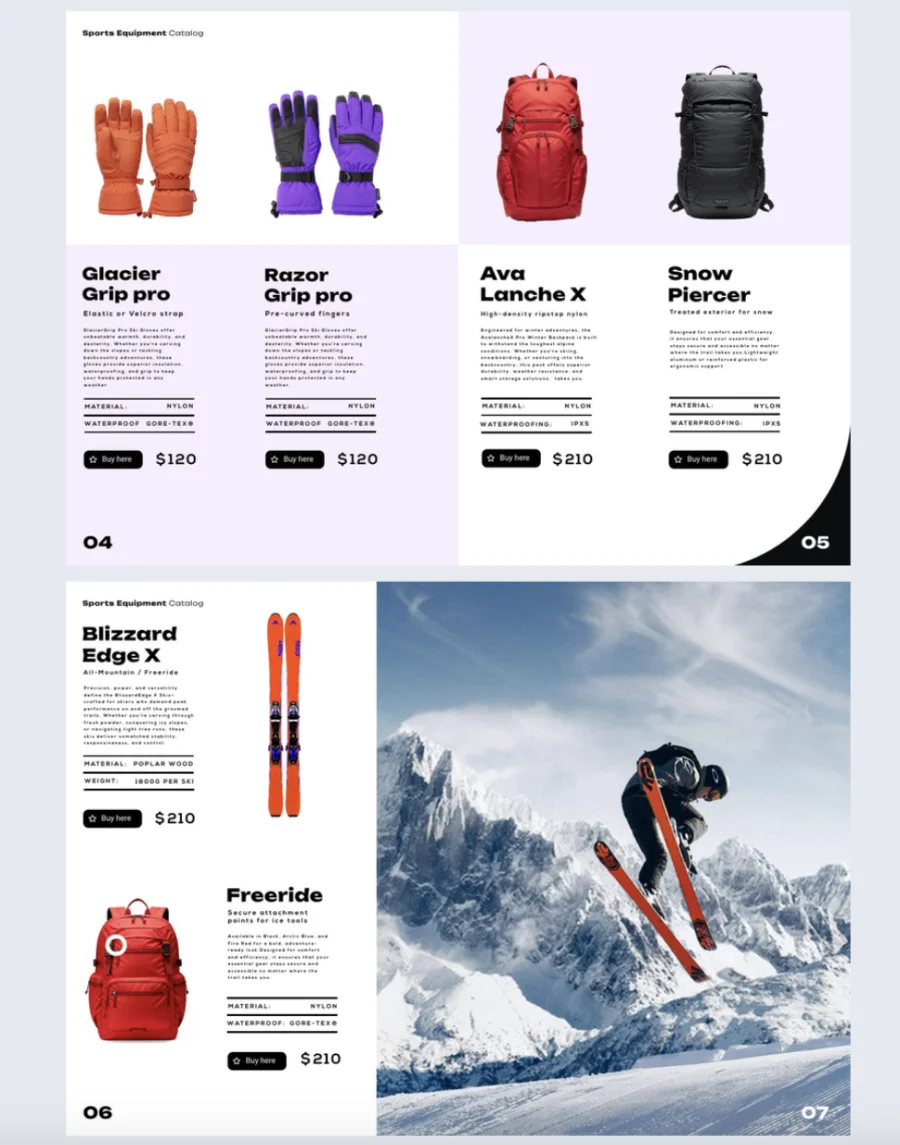
Real-world application: A European ski gear brand used this template to launch their B2B wholesale catalog, embedding pro athlete testimonials alongside performance specifications for each product category. Wholesale buyers of ski schools and resorts, procurement teams reported higher purchasing confidence before handling physical samples.
The brand’s sales team used Flipsnack’s analytics to identify that the durability and materials section was the most revisited, leading to a dedicated product testing video embedded in the following catalog version.
Customize the template with motion-enhancing GIFs for product action shots, slideshow galleries for colorway and variant display, and interactive sizing tools that buyers can use directly within the catalog. Embed athlete endorsements alongside product pages to build credibility at the moment of evaluation.
Common mistake to avoid: Letting visual energy override practical information. Dramatic photography and GIFs create the right emotional context, but buyers still need clear sizing guides, durability ratings, and technical performance notes before they’ll place an order. The most effective winter sports catalogs use energy to draw buyers in, then deliver the details needed to close.
Use locked brand templates and role-based permissions to ensure visual consistency across sales teams and markets. Share via private link for wholesale access or embed on your B2B portal.
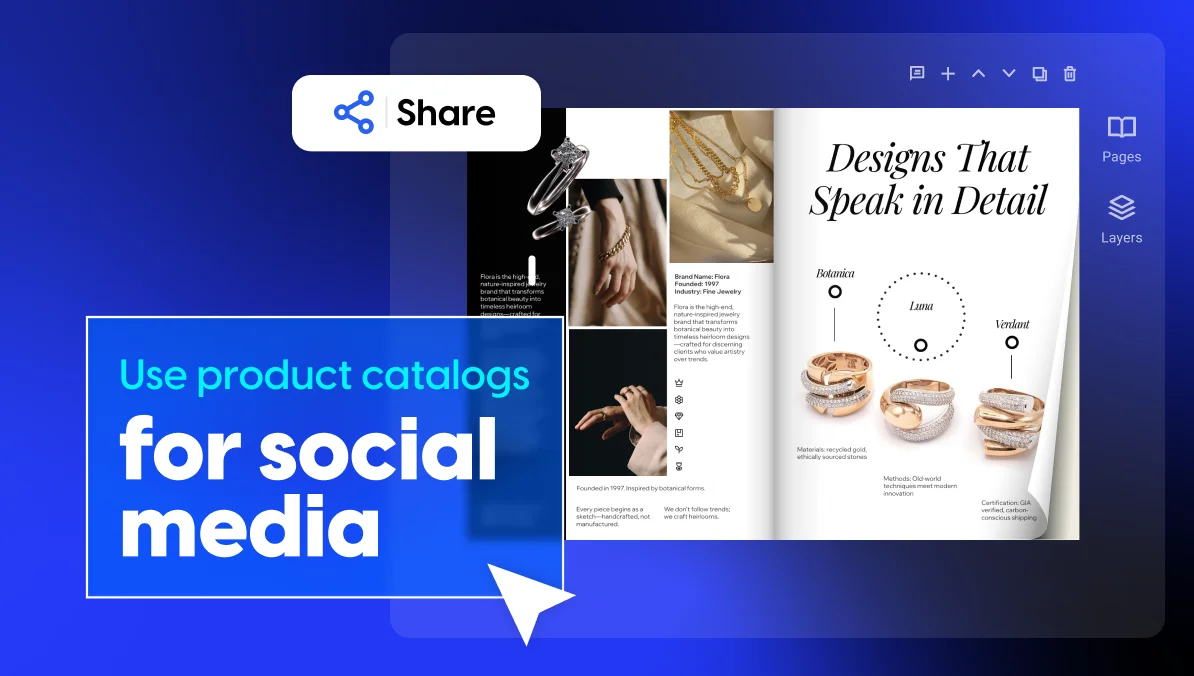
Fine jewelry product catalog template
Luxury buyers don’t buy on logic alone — they buy on story, presentation, and trust. This fine jewelry product catalog template is built with that in mind. Designed to elevate high-ticket collections, it offers a polished, editorial-style layout where every page creates space for visual impact and emotional connection. Think more of a digital showroom than a static product list.
Best for: Independent jewelry designers, boutique retailers, and luxury brands selling direct-to-consumer or through retail partners. Particularly effective for seasonal high-ticket launches, premium lookbooks, and brands where the craftsmanship story is central to perceived value.
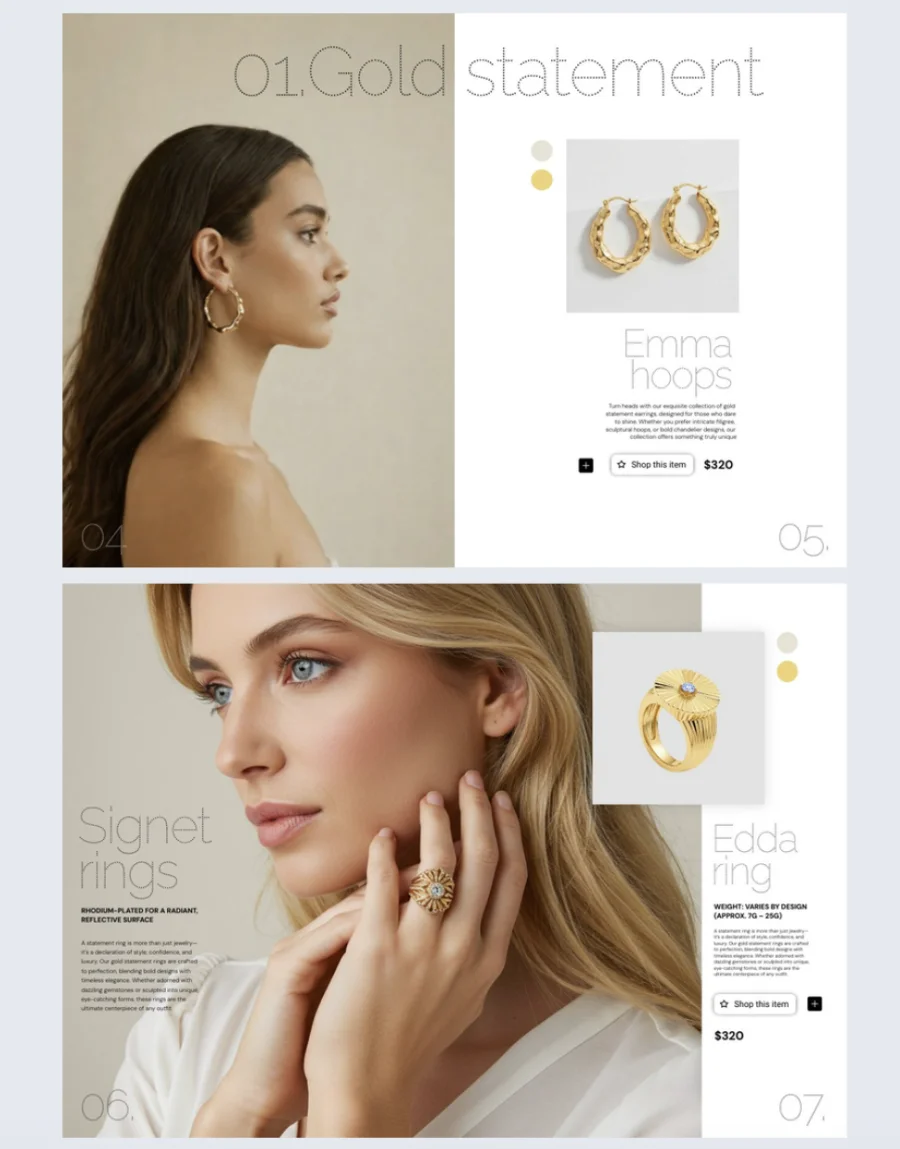

Real-world application: A fine jewelry brand used this template to build their holiday collection lookbook, embedding behind-the-scenes videos of the crafting process alongside each product. The catalog was shared with retail partners via a private link and with consumers via their website embed.
Wholesale orders from retail partners increased compared to the previous season’s PDF catalog, and the brand’s design team used Flipsnack’s real-time update feature to adjust pricing across all shared links mid-season without redistributing a new file.
Customize the template with dedicated zones for gemstone clarity details, craftsmanship notes, and certification badges. Use pop-up product frames to surface additional specification detail, such as metal weight, stone grade, and chain length options, without breaking the editorial flow of the page.
Embed designer notes or video stories to add narrative depth to each collection section.
Common mistake to avoid: Under-investing in product photography before building the catalog. This template amplifies great imagery, but it cannot compensate for poor visuals. Close-up shots that capture texture, finish, stone clarity, and scale are foundational. Build the photography brief before the catalog brief.
Share via private link for retail partners, embed on your website for direct consumer access, or use as a digital press kit for media and buyer outreach.
Football merchandise catalog template
In sports retail, loyalty fuels revenue, and this football merchandise catalog template is designed to convert passion into purchases.
Best for: Football clubs, licensed merchandise distributors, and sports retailers. Equally effective for professional clubs with high-volume seasonal launches and youth team suppliers managing smaller, personalized orders.
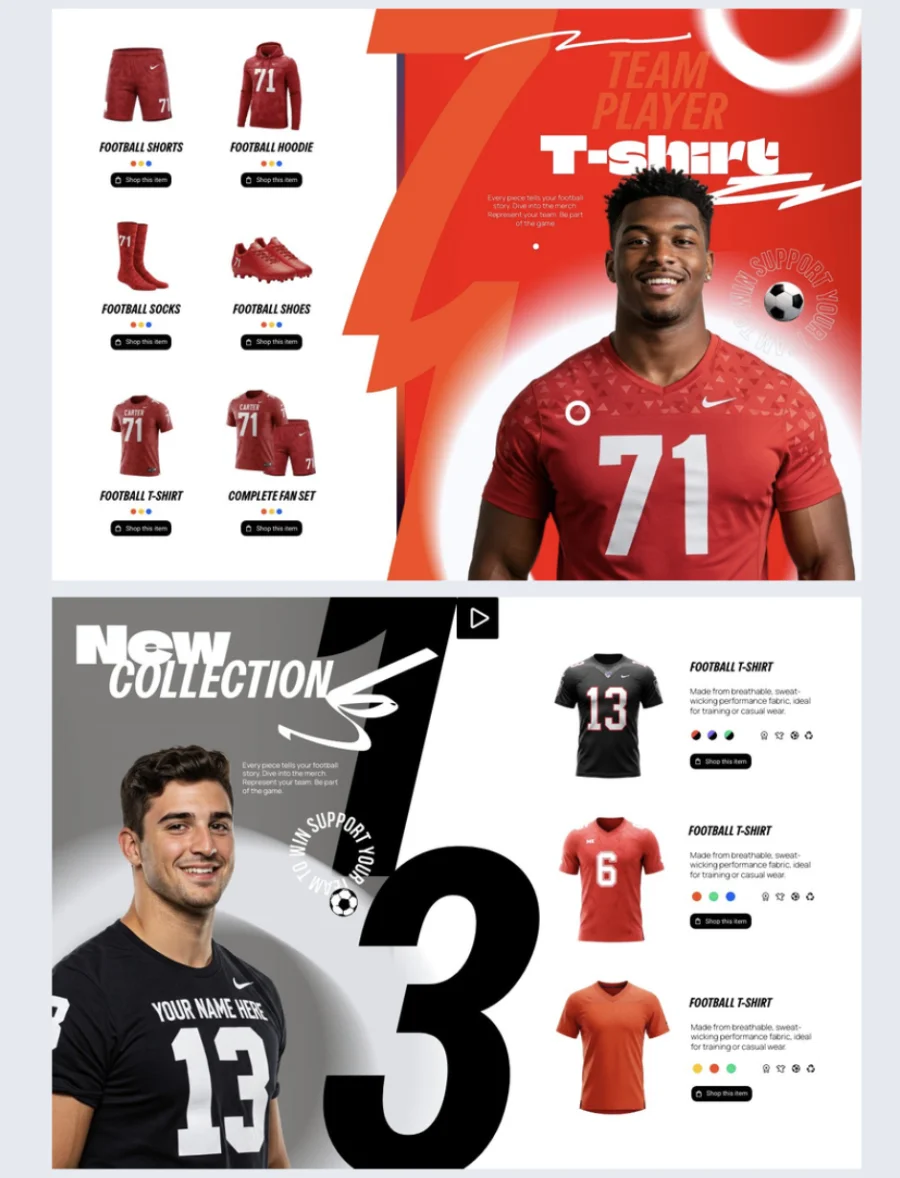
Real-world application: A semi-professional football club used this template to run their annual kit launch, enabling fans to personalize shirts — name, squad number, and edition directly within the catalog without leaving the page.
Pre-orders came in within 48 hours of the catalog going live, with no additional sales support required. The club’s merchandise team used Flipsnack’s analytics to identify which items generated the most repeat views, using that data to prioritize stock allocation before the season opener.
Customize the template with GIFs showing kit details in motion, embedded video content for limited edition launches, and product tags that support full variant management across sizes, colors, and editions. Use the analytics dashboard to monitor which products are driving the most engagement, and refine future catalog editions accordingly.
Common mistake to avoid: Prioritizing hype over usability. Fan energy matters, but buyers still need clear sizing information, variant availability, and a frictionless path to ordering. A catalog that looks great but makes it hard to confirm stock or complete a purchase loses sales to the experience, not the product.
Share via a public link for fan access, distribute via private link for trade and club orders, or embed on your official merchandise page.
Business product catalog template
When you’re selling a technical product like a hair dryer, clarity is key, but so is presentation. This business product catalog template is designed to help you showcase your offerings with both precision and style.
Best for: B2B companies, consumer goods brands pitching to retail buyers, and any business where product features and specifications are the primary driver of purchasing decisions. Particularly effective for companies selling to resellers, distributors, or procurement teams where multiple products are being evaluated simultaneously.
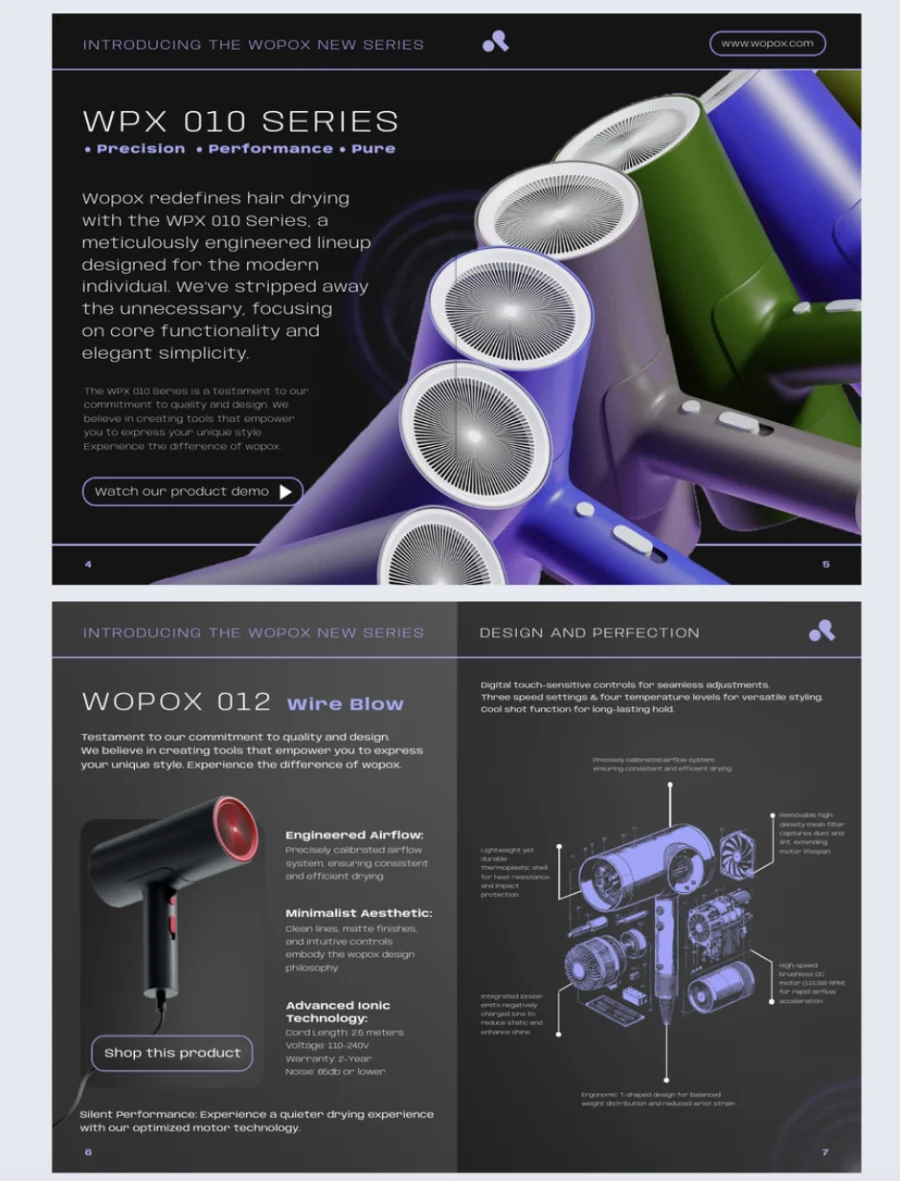
eal-world application: A hair care appliance brand built a dedicated reseller catalog for salon distributors using this template, presenting each model’s heat settings, motor type, available finishes, and warranty terms in a side-by-side comparison format. Their sales team reported shorter pitch cycles and fewer product return queries after buyers had the specification detail they needed upfront.
Flipsnack’s analytics revealed that the comparison section was the most revisited page, prompting the team to expand it into a dedicated category overview section in the next edition.
Customize the template with model comparison layouts, dedicated certification and compliance zones, and embedded explainer videos for products where a 60-second demonstration is more persuasive than a page of specs. Use the service tier sections to present support packages, warranty options, or volume pricing alongside the product itself.
Common mistake to avoid: Writing feature lists without connecting features to buyer outcomes. “Ceramic ionic technology” or “brushless DC motor” mean little to a buyer without context. Always translate technical specifications into what the end user or the buyer’s customer will actually experience. Features describe the product; outcomes sell it.
Share via private link for distributor and reseller access, embed in your sales enablement portal, or use as a leave-behind after pitch meetings.
Pricing product catalog template
Sales teams succeed when pricing is clear, specs are accessible, and the buyer journey flows. This pricing catalog template delivers exactly that. It’s designed to present product lines with professional polish while making it easy for sales reps, retailers, and customers alike to compare options.
Best for: Sales teams across industries, from interior design to industrial supply, where pricing clarity and variant comparison directly influence the buying decision. Particularly valuable for businesses with complex product ranges where buyers need to compare multiple configurations, tiers, or material options before committing.
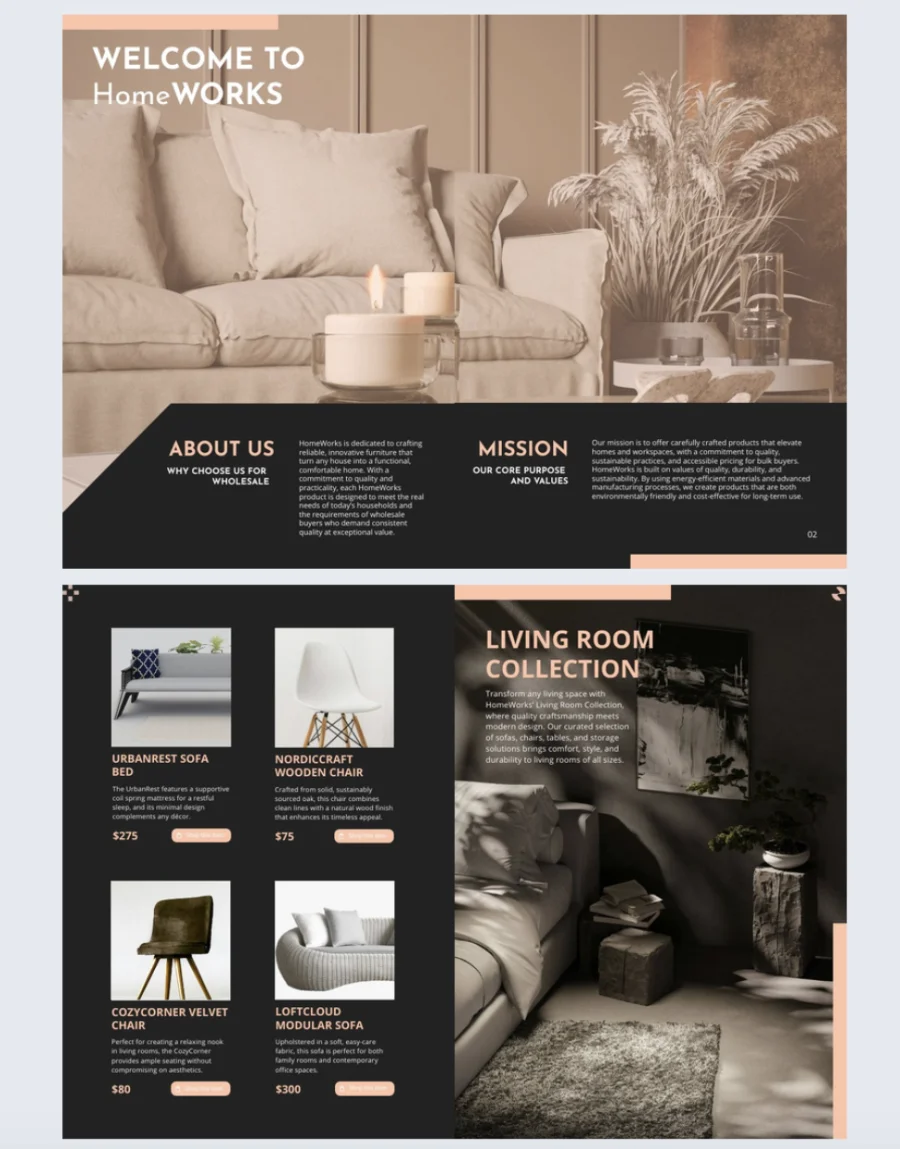

Real-world application: An office furniture distributor replaced their quarterly PDF price list with this template, embedding a quote request form on each category page. Sales reps reported that buyers arrived at first calls already having shortlisted specific products and configurations, effectively pre-qualifying their own intent.
Flipsnack’s analytics showed that the seating category received the highest traffic, prompting the team to add a dedicated comparison section for that range in the following edition.
Customize the template with clearly structured sections for product variants, material finishes, size dimensions, and pricing tiers. Use Flipsnack’s real-time update feature to adjust pricing across all shared links the moment rates change, no redistributing files, no version control problems, no buyers working from outdated numbers.
Common mistake to avoid: Presenting pricing without a value context. A price without an anchor material quality, lead time, warranty terms, or included service invites buyers to compare on cost alone. Every pricing section should make it easy to understand why the product costs what it costs. That context is what turns price comparison into value recognition.
Share via private link for sales team distribution, embed in your customer portal, or use as a digital companion to in-person sales meetings.
Interactive car catalog template
Selling vehicles means navigating complexity, trim levels, specs, upgrade paths, warranties, and availability. The interactive car catalog template brings structure to all that complexity. It’s built for product teams and sales reps who need a sleek, scalable format that walks potential buyers through every option without overwhelming them.
Best for: Automotive dealers, OEM product teams, and aftermarket accessory brands. Works equally well for in-showroom tablet presentations, digital prospect outreach, and dealer network distribution where a single catalog update needs to reach multiple locations simultaneously.
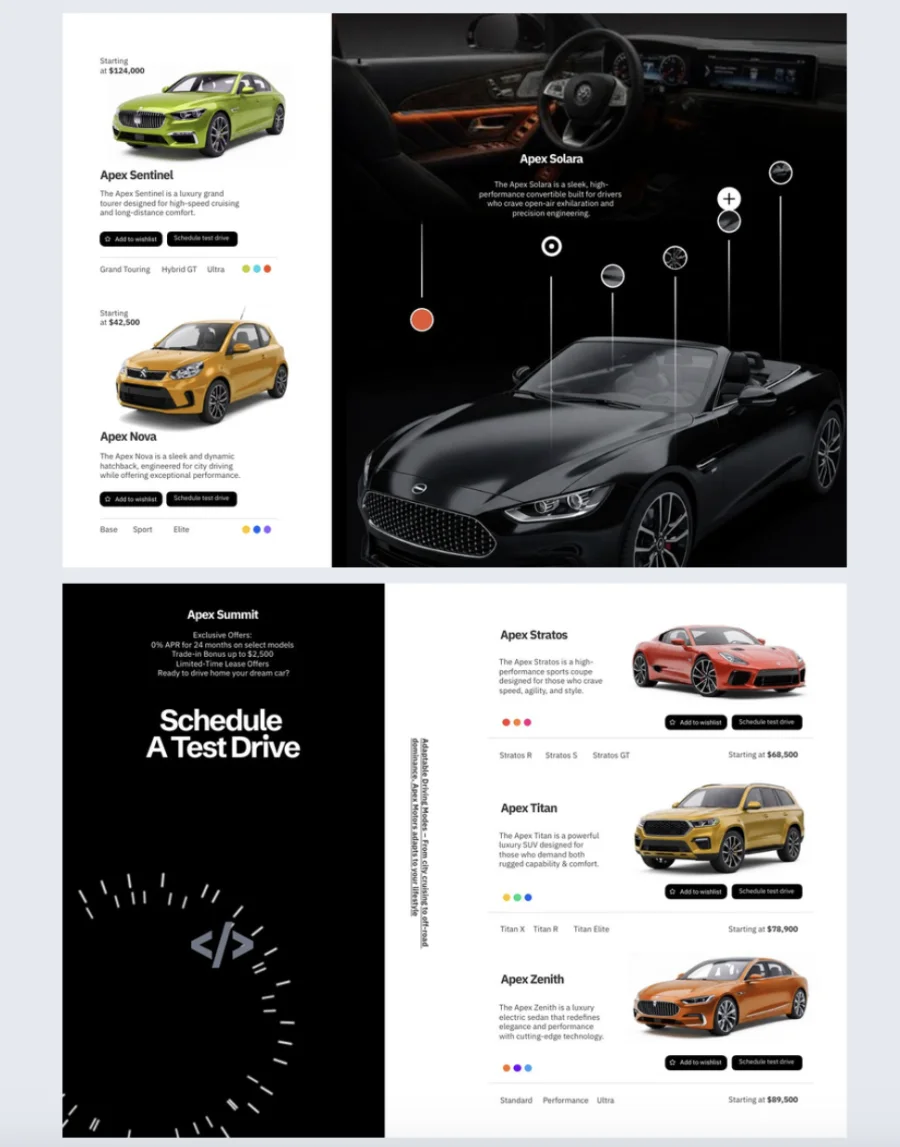
Real-world application: A regional dealer network loaded this catalog onto in-showroom tablets, giving sales consultants a structured, always-current reference for every model and trim configuration. Buyers could explore options independently before engaging a consultant, which the team found shortened the initial discovery conversation significantly. Sales managers used Flipsnack’s analytics to identify which models and packages received the most catalog attention, using that data to adjust floor stock and prioritize test drive availability accordingly.
Customize the template with pre-structured zones for performance data, safety ratings, optional add-ons, and financing overviews. Embed 3D visualizations, walkaround videos, and dynamic image sliders to give buyers the closest possible experience to a physical showroom interaction. Use Flipsnack’s real-time update feature to push specification or pricing changes to all dealer links simultaneously, no version lag, no outdated brochures.
Common mistake to avoid: Overcomplicating the navigation for buyers who are exploring for the first time. Complex products benefit from a clear structure, not more content. Use consistent section layouts across every model, clear category labels, and logical grouping of trim levels so buyers can compare without getting lost. Exploration should feel like freedom, not confusion.
Share via private link for prospect outreach, load onto in-showroom tablets for self-serve browsing, or distribute to dealer networks via a single master link that updates in real time.
Interior design wholesale catalog template
Selling furniture, finishes, or home accents? This interior design wholesale catalog template is made to turn your collection into a smooth, guided shopping experience. Built with wholesalers and design-focused brands in mind, it helps you showcase your products beautifully—without the overwhelm.
Best for: Furniture wholesalers, home décor brands, and interior product distributors selling to designers, retailers, and procurement teams. Scales from boutique design studios sourcing for individual projects to large-volume procurement teams managing entire contract furnishing specifications.
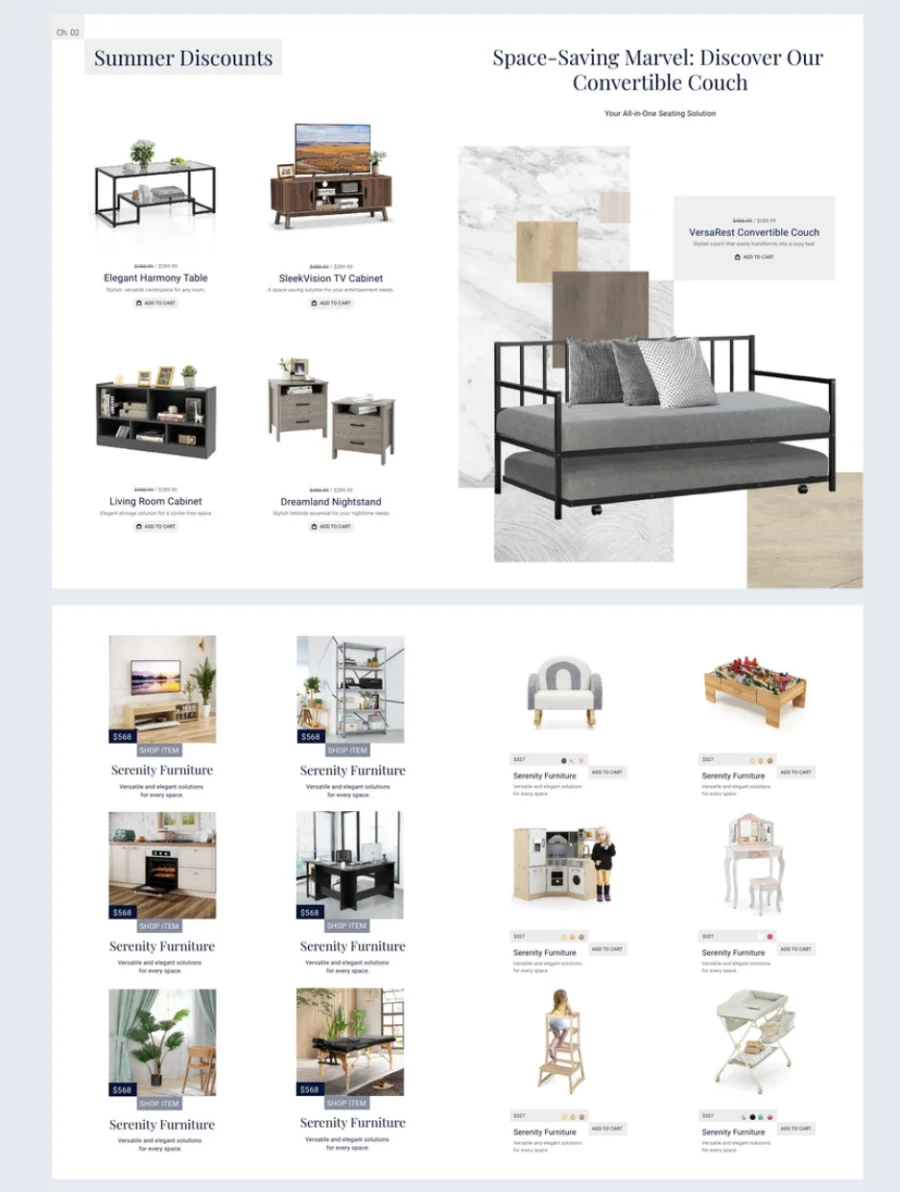

Real-world application: A Scandinavian furniture wholesaler created a private catalog for their network of interior designers using this template, enabling them to build room-specific shopping lists directly within the catalog and submit orders without a sales call. The wholesaler’s team used Flipsnack’s analytics to identify which product categories were generating the most list saves, allowing them to prioritize stock availability for those lines ahead of each season. Order lead times dropped significantly after buyers had a structured, self-serve ordering path.
Customize the template with up to three images per product tag, including a styled room context shot alongside the product close-up, quick description fields, and direct links to ordering pages or specification sheets. Use the built-in shopping list feature to let buyers compile selections across multiple categories and submit them as a single order, eliminating the back-and-forth that typically delays procurement decisions.
Common mistake to avoid: Providing only isolated product shots. Interior buyers make decisions based on how something looks in context, not just on a white background. Every product should include at a minimum one styled image showing the piece in a realistic setting. Buyers who can’t visualize placement are buyers who don’t commit.
Share via private link for designer and trade-partner access, embed in your B2B portal, or store alongside other wholesale resources in a virtual bookshelf for easy access.
No time to use a template? Our designers can build it for you.
Templates exist to save you time, but we know that even the most intuitive starting point requires real investment to produce a catalog that performs. If you’re working to a tight deadline, launching a major campaign, or want a catalog built by someone who does this professionally every day, Flipsnack’s in-house design team can take the entire build off your plate.
Our designers handle the structure, layout, content organization, and interactive elements, delivering a catalog that’s ready to share and built to convert.
It’s the fastest path from product range to professional catalog, without compromising on quality.
How to create a product catalog with Flipsnack
A well-structured product catalog ensures consistent buyer experiences, keeps sales teams equipped with current materials, and turns product ranges into structured, trackable sales assets. With Flipsnack’s platform, you can build a professional, fully customized catalog in a few clear steps.
1. Choose a template or import your product data to get started faster
Select a professionally designed template that matches your industry, company size, and catalog goals. Each template is pre-structured with the sections most relevant to its use case, saving you the time of building from scratch.
Alternatively, upload your existing PDF catalog and use Flipsnack to bring it to life with interactive features or import your product data directly to auto-populate pages at scale.
2. Customize with branding, interactive elements, and your product content
Use Flipsnack’s Design Studio to tailor every aspect of your catalog colors, fonts, logos, and page structure so the final output aligns with your brand. Then add the interactive elements that turn a static document into a sales tool:
- Go-to-page buttons for quick navigation between categories
- Clickable product tags linking to spec sheets, ordering pages, or CRM dashboards
- Embedded videos and GIFs for product demonstrations and brand storytelling
- Interactive forms for quote requests, contact capture, and order submission
- Pop-ups to surface detailed specifications without cluttering the main product view
3. Collaborate with your team before publishing
A catalog that reflects input from sales, marketing, and product teams performs better than one built in isolation. Flipsnack allows you to invite team members and assign roles:
- Owners have full control over design and publishing
- Editors can modify content, add media, and update product information
- Contributors can leave comments and suggestions without altering core content
Use in-platform commenting to collect feedback and approve changes without email chains or separate review meetings.
4. Publish once — update the same link forever
Once your catalog is finalized, publish it and choose how to share it:
- Private link — password-protected or SSO-authenticated for trade-only or internal access
- Embed — copy and paste an embed code into your website, customer portal, or intranet
- Virtual bookshelf — organize multiple catalogs in a centralized digital library, accessible from a single link
When products change, pricing shifts, or new ranges launch — update your catalog in Flipsnack and every shared link and embed reflects the change instantly. No redistributing files. No version control problems.
5. Track engagement and use the data to improve
Publishing is the beginning, not the end. Flipsnack’s built-in analytics let you monitor:
- Views and time on page — see which sections buyers spend the most time on
- Click tracking — identify which products and CTAs drive the most engagement
- Interactive element usage — measure form completions, video plays, and link clicks
Use that data to refine your catalog layout, expand the sections that perform, and give your sales team the buyer intelligence they need to follow up with precision.
Choose the easiest way to create product catalogs
A successful product catalog is a sales asset, a brand experience, and often your only chance to make a great impression. Specifically, every template featured in this guide was crafted to help you do more than display inventory. They’re here to help you educate, influence, and convert.

What sets Flipsnack apart is the blend of design flexibility, interactive functionality, and brand consistency. You can control every detail—from how your catalog looks to how it’s shared to how it’s tracked. Want buyers to customize a product? Done. Want to collect leads with a contact form right inside the catalog? Easy. Want your catalog to reflect your brand, not a platform?
Get started today and turn your product range into a high-performing, interactive sales asset that buyers actually engage with.
Frequently asked questions about product catalogs
What is a product catalog?
A product catalog is a structured document that presents a company’s products with the pricing, specifications, imagery, and variant information buyers need to make purchasing decisions. Modern digital catalogs go further, adding interactive elements, real-time updates, and engagement analytics.
What should a product catalog include?
A well-structured product catalog typically includes:
- Product names, descriptions, and imagery
- Pricing and variant options (size, color, configuration)
- Technical specifications and certifications
- Calls to action (quote forms, order links, contact options)
- Brand information and terms were relevant
What is the difference between a product catalog and a brochure?
A brochure focuses on brand awareness and high-level messaging. A product catalog goes deeper, providing the specific product details, pricing, and comparison information buyers need to make a purchasing decision.
How do I choose the right product catalog template?
Use the quick comparison table in this article to match your industry, company size, and primary sales goal. Key questions to consider: Are you selling to trade buyers or end consumers? Is the purchase driven by technical specs or brand experience? Do you need to communicate pricing tiers or product stories? Those answers point directly to the right template.
Can I generate a product catalog automatically from my product data? Yes. Flipsnack allows you to import product data, SKUs, descriptions, pricing, imagery, and auto-populate catalog pages at scale. You can then apply a template to structure the output, or have Flipsnack’s in-house design team refine the layout. This is particularly valuable for businesses with large or frequently updated product ranges.
What if I don’t have time to build a catalog myself?
Flipsnack’s in-house design team can build your catalog for you. Share your product data, brand assets, and brief, and they’ll handle everything from structure and layout to interactive elements and publishing.
How do I update my catalog without resending it?
With Flipsnack, you edit your published flipbook, and all shared links and embeds update instantly. There’s no need to redistribute a new file, chase outdated versions, or re-upload to your website.
How do I know which products buyers are engaging with most? Flipsnack’s built-in analytics show views, time on page, click activity, and interactive element usage across your entire catalog. Your sales team can use that data to prioritize follow-up, and your marketing team can use it to optimize the next catalog edition.
Is Flipsnack suitable for B2B product catalogs?
Yes. The wholesale, pricing, and business product templates are specifically designed for B2B scenarios, bulk pricing structures, spec-heavy product pages, trade-only sharing, and embedded quote request forms.
How often should a product catalog be updated?
Product catalogs should be reviewed whenever pricing changes, new products launch, or variants are discontinued, and comprehensively refreshed at least seasonally. With Flipsnack’s real-time update feature, you can make changes instantly without republishing, making continuous accuracy far more achievable than with static PDFs.