How to Password Protect a Word Document: Encryption, Sharing, and Secure Access
Last updated: March 9, 2026
If you’ve ever needed to password protect a file before sending it by email, you already know the drill: save as PDF, add a password in Word or Adobe, hope the recipient can open it. It works — until it doesn’t.
Basic password protection for Word documents has real limits. It doesn’t control whether the file gets forwarded, downloaded, or accessed on a device you didn’t anticipate. It offers no visibility into who actually opened it, and once the file leaves your inbox, you lose all control over it.
That’s where digital tools like Flipsnack come in. Flipsnack isn’t just about converting your Word documents intovisually appealing HTML5 flipbooks. It’s about giving you real control over how you protect and distribute your documents — with encryption, access permissions, download restrictions, and real-time tracking built in.
By protecting your sensitive documents with Flipsnack, you convert your Word file to PDF, upload it to the platform, and share a secure link instead of an attachment. Recipients can open it on any device without installing anything, and you stay in control long after the document is shared. It’s a meaningful step beyond the limitations of standard Word document protection — and simpler to set up than most people expect.

Table of contents
- How to password-protect a Word document with Flipsnack
- Why password protecting a file before sharing isn’t enough on its own
- Additional advanced methods of Word document protection
- How to password protect a Word document using Microsoft Word and Adobe Acrobat
- Secure PDF for online sharing made easy with Flipsnack
- Frequently asked questions
How to password-protect a Word document with Flipsnack
Protecting your sensitive documents with Flipsnack is straightforward. Here’s how to password protect a file and ensure it’s secure before sharing — whether you’re sending it by email, embedding it, or distributing it via link.
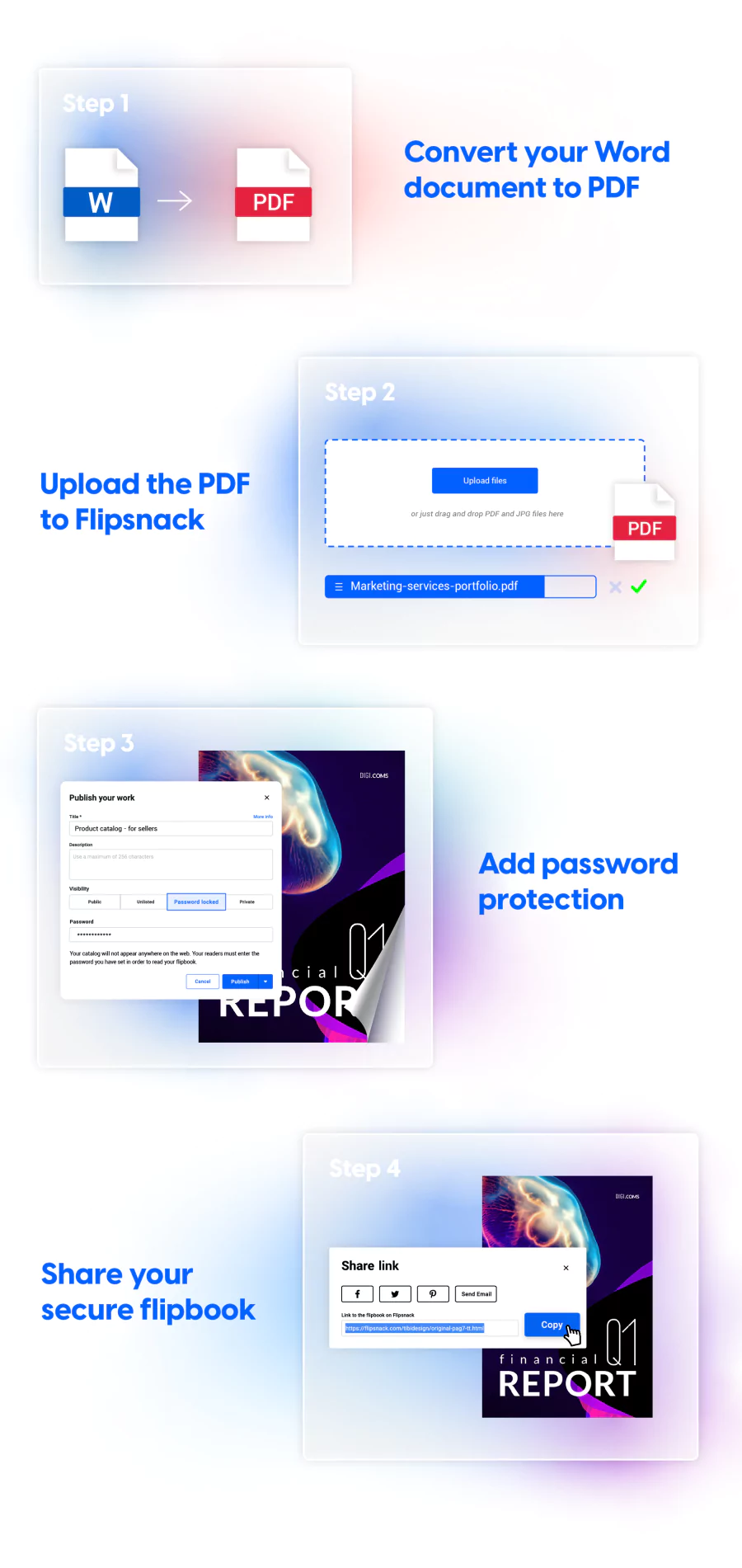
Step 1: Convert your Word document to PDF
First, convert your Word document to PDF. This is a more secure and universally compatible file format, and it’s what Flipsnack works with. Open your Word document, go to File → Save As, and choose PDF from the list of file formats. Save it to a location on your computer.
Step 2: Upload the PDF to Flipsnack
Create a Flipsnack account and upload your PDF. The platform will automatically convert the PDF into a digital flipbook that is mobile-responsive and accessible on any device — no software installation required for your recipients.
Step 3: Add password protection
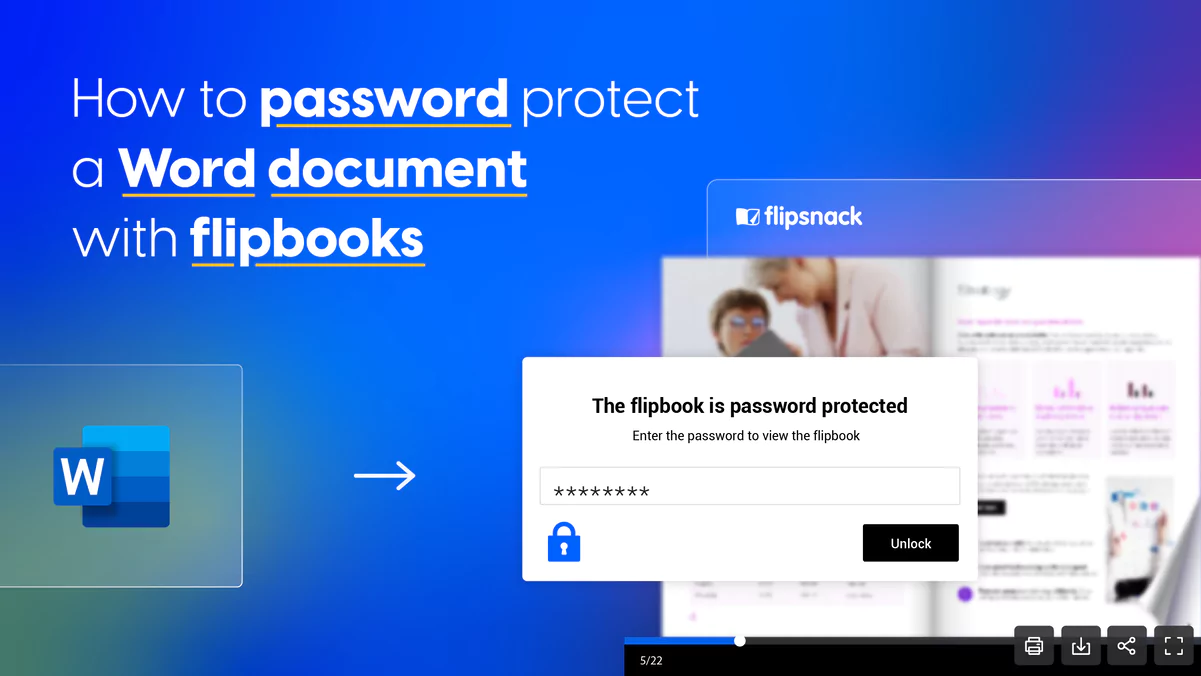
Once your flipbook is ready, open it from the Flipsnack dashboard and click Publish to access the privacy settings. Choose password protection, set a strong password, and click Publish to apply it. Only recipients with the correct password will be able to open the document. For temporary or one-time access, Flipsnack also supports one-time passcode (OTP) sharing — more on that in the Advanced Methods section below.
Step 4: Share your secure flipbook
Finally, share your password-protected flipbook by copying the direct link from your dashboard and sending it to your intended recipients through a secure channel. Make sure to share both the link and the password separately — avoid sending both in the same email thread for better security. For a full breakdown of your sharing options, check out our guide on how to share PDF documents online safely.
Why password protecting a file before sharing isn’t enough on its own
Adding a password to a Word document is a good first step, but it only solves part of the problem. Once the file is sent, you have no control over who forwards it, whether it gets downloaded, or how it’s accessed across different devices. True document security means thinking beyond the password itself.
Before choosing a protection method, it’s worth considering a few key factors:
- Encryption level — does the tool apply real encryption (like AES-256), or just a basic access gate?
- Authentication method — is a static password enough, or do you need one-time passcodes or SSO for higher-risk documents?
- Access permissions — can you control whether recipients view-only or download the file?
- Sharing settings — is the document publicly indexed, unlisted, or restricted to specific people?
- Password recovery — if the password is lost, can it be retrieved? With Flipsnack, recovery isn’t possible on the platform’s end, so store yours safely before publishing.
- Update capability — if the document changes, can you update it without resending the link?
Standard Word protection doesn’t address most of these. Flipsnack does — which is why converting your document into a secure online flipbook gives you a more complete security protocol for sharing sensitive files. For a deeper look at your options, see our guide on how to lock a PDF — then come back to pick the method that fits your situation.
Additional advanced methods of Word document protection
Password protection is a solid baseline, but Flipsnack offers additional security methods for situations that call for tighter control. Depending on your audience and the sensitivity of the document, here are three options worth considering.
Single Sign-On (SSO) sharing
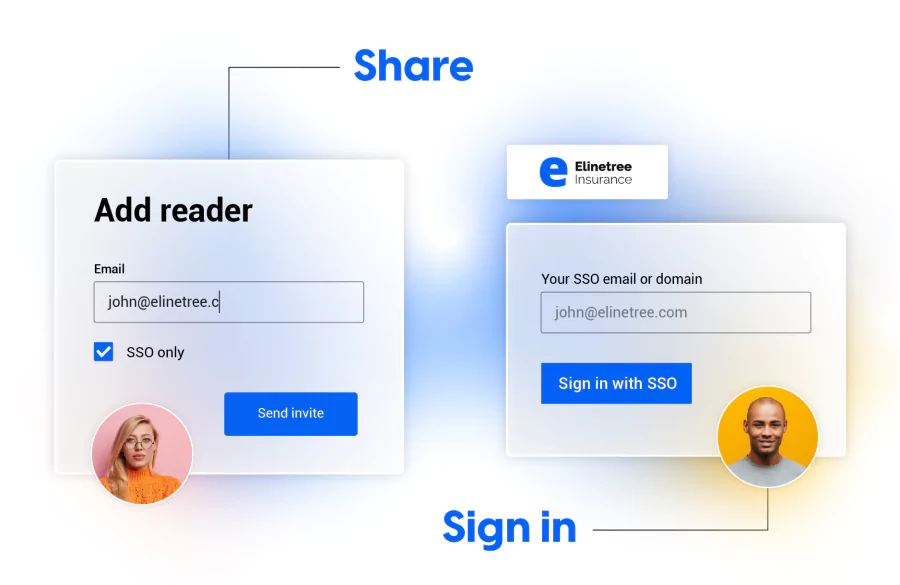
Single Sign-On (SSO) lets you restrict access through your organization’s existing authentication system. Only users verified through your identity provider — such as Google Workspace, Azure AD, or Okta — can open the document. It’s the strongest authentication method available in Flipsnack, and works best for:
- Organizations where security protocol and compliance are non-negotiable
- Internal documents like employee handbooks, policy updates, or training materials
- Teams that need access managed centrally, without touching individual files
One-time passcode (OTP) sharing
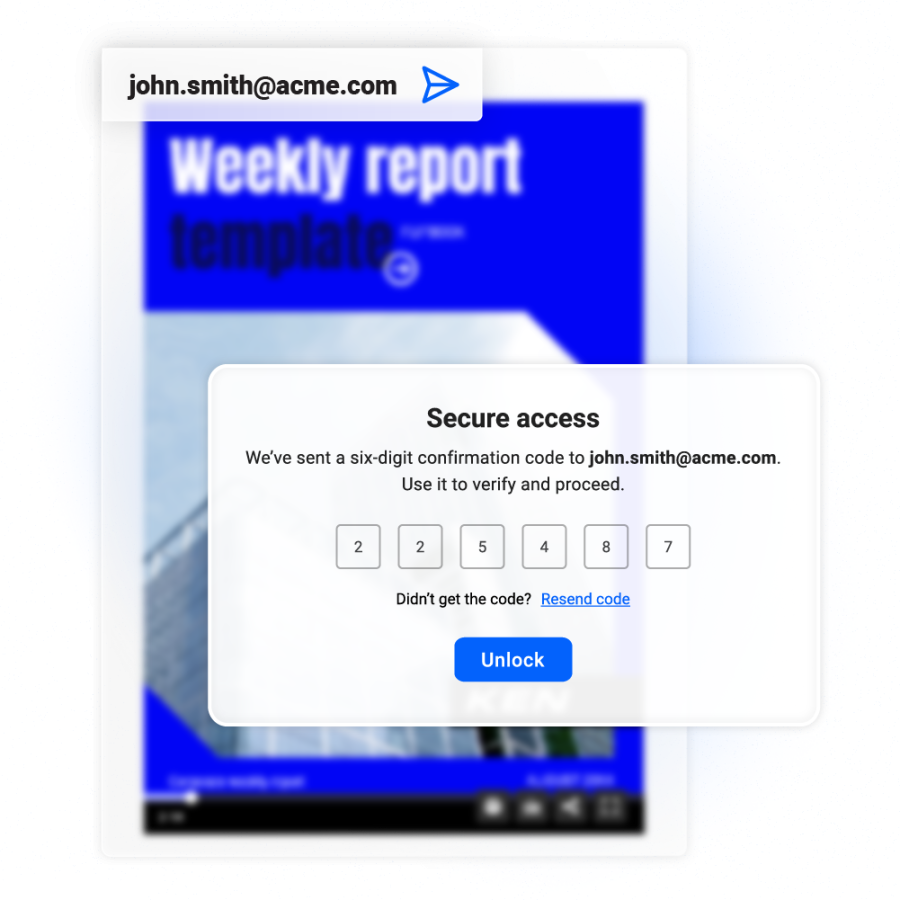
For situations where a static password feels like too blunt an instrument, OTP sharing offers more precise control. Recipients receive a unique passcode each time they need access — time-limited, non-reusable, and requiring no Flipsnack account. It’s a practical choice when you need to share documents online with external stakeholders without giving them permanent access.
Sharing with specific people
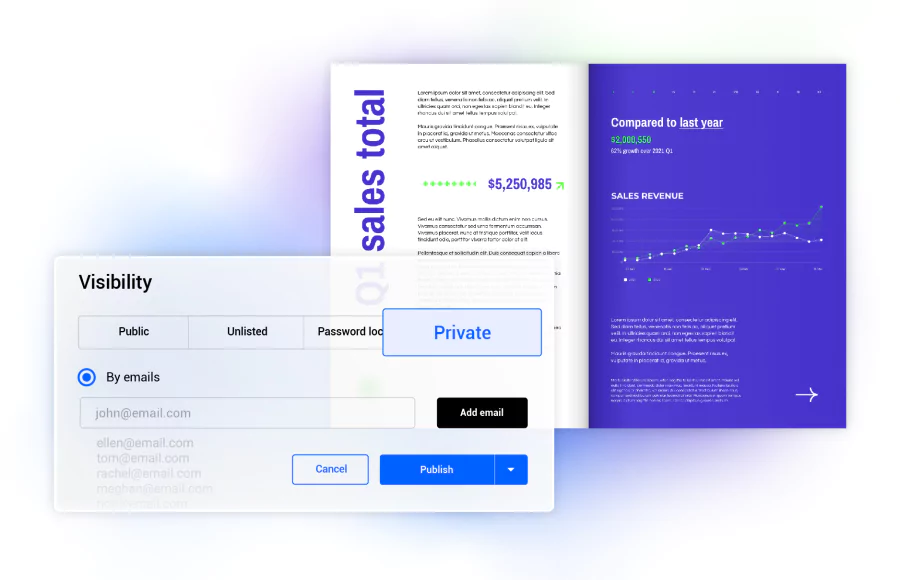
Flipsnack also lets you invite specific individuals to your online flipbooks via email, giving each recipient a secure, personal link. A couple of things to keep in mind with this method:
- Publish the document as unlisted so it won’t be indexed by search engines or appear on your public profile
- Only people who receive the direct link can access it — no accidental exposure to a broader audience
This works particularly well for sharing confidential information with clients or external partners.
How to password protect a Word document using Microsoft Word and Adobe Acrobat
While Flipsnack offers a robust and user-friendly way to protect your documents, it’s also useful to understand how to password-protect a Word document using Microsoft Word and Adobe Acrobat. However, it’s important to note the limitations of these traditional security methods compared to Flipsnack’s advanced features.
Using Microsoft Word
To password-protect a Word document directly in Microsoft Word, follow these steps:
- Open your Word document: Launch Microsoft Word and open the document you want to protect.
- Go to ‘File’ > ‘Info’: Click on ‘File’ in the top menu and select ‘Info’.
- Protect document: Click on ‘Protect Document’ and choose ‘Encrypt with Password’.
- Set a password: Enter a password, confirm it, and click ‘OK’. Save your document.
Disadvantages:
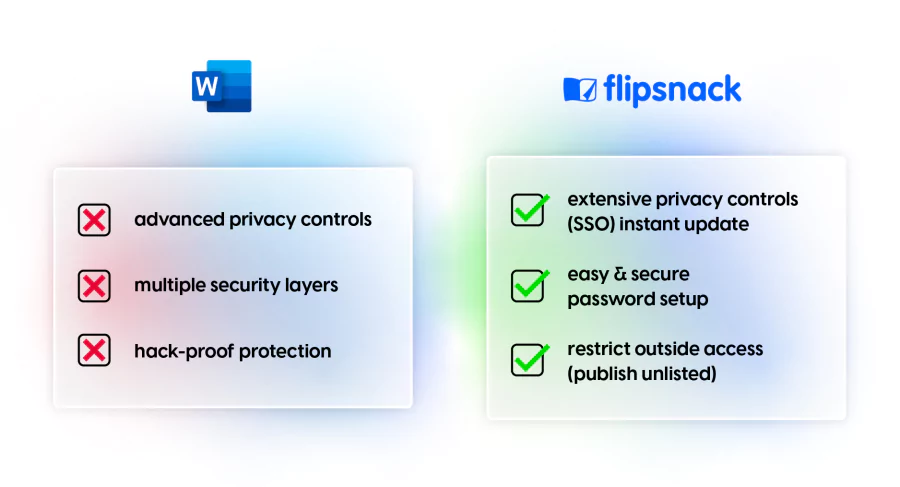
- Limited security: Basic password protection can be easily bypassed by experienced users or with specialized software.
- No tracking or advanced privacy controls: There are no options for tracking document access or advanced privacy settings.
- Single layer of security: Relies solely on password protection without additional authentication options.
Using Adobe Acrobat
To password protect a PDF using Adobe Acrobat, follow these steps:
- Open your PDF in Adobe Acrobat: Launch Adobe Acrobat and open the PDF file.
- Select ‘Protect’: Go to the ‘Tools’ menu and select ‘Protect’.
- Encrypt with password: Choose ‘Encrypt with Password’ from the options.
- Set a password: Enter a password for both viewing and editing, then click ‘Apply’.
Disadvantages:
- Cost: Adobe Acrobat requires a paid subscription for full functionality.
- Complexity: The interface and options can be overwhelming for users unfamiliar with the software.
- No interactive features: Lacks the ability to convert documents into interactive formats like animated flipbooks, reducing user engagement.
While Microsoft Word and Adobe Acrobat provide basic options for password protecting documents, they come with significant limitations in terms of security, ease of use, and functionality. Flipsnack not only offers a more secure and versatile solution through advanced methods like SSO sharing and private sharing but also enhances the user experience by converting documents into engaging, interactive flipbooks. By choosing Flipsnack, you ensure that your sensitive information is protected with multiple layers of security and is presented in a professional and user-friendly format.
Secure PDF for online sharing made easy with Flipsnack
Password protecting a Word document is a start — but it’s rarely enough on its own. As we’ve covered, traditional methods through Microsoft Word and Adobe Acrobat come with real limitations: no encryption beyond the access gate, no control over downloads, no visibility into who opened the file, and no way to update the document without resending it.
Flipsnack closes those gaps. Whether you’re using password protection for a quick secure share, Single Sign-On (SSO) sharing for internal team access, or one-time passcodes for external stakeholders, you get a security protocol that fits the situation — not a one-size-fits-all attachment.
Start your 14-day free trial and see how easy it is to encrypt, share, and track your documents in one place.

Frequently asked questions
Yes. Microsoft Word has a built-in encryption option that lets you save a document as a password-protected PDF for free. Flipsnack is another option — you upload your PDF and add password protection directly from the publishing settings, no Acrobat subscription needed.
There’s an important distinction here: not all password protection is the same as encryption. Microsoft Word applies basic password gating, while Flipsnack uses AES-256 encryption — a security protocol that protects the actual content of the file, not just access to it. For sensitive documents, encryption-backed protection is the stronger choice.
Flipsnack doesn’t store or have access to your flipbook passwords, so recovery isn’t possible on their end. If you forget the password, you’ll need to unpublish the flipbook, set a new password, and republish it. To avoid this, store your password in a secure password manager before publishing.
That depends on your sharing settings. Flipsnack lets you control download restrictions separately from password protection — so you can allow downloads, restrict them entirely, or limit access to view-only. You’ll find this option in the same publishing panel where you set the password.
Yes. Flipsnack flipbooks are fully mobile-responsive and work across all major devices and browsers — no app or software installation required. Recipients can open the password-protected link directly from their phone or tablet, authenticate with the password, and view the document just as they would on desktop.