How to Choose Checkout Options For Your Digital Catalog: Quote, Cart, or Order Form
Published on: September 28, 2026
Static catalogs, whether printed or exported as PDFs, have one critical weakness: they stop at browsing. Customers see your products but can’t act on their interest without jumping to a completely different channel. That disconnect between browsing and buying leads to lost sales, frustrated buyers, and manual work for sales teams.
And these days, modern buyers won’t settle for catalogs that stop at browsing. They expect shoppable catalogs with multiple checkout options, tailored to how they prefer to buy.
- A consumer wants to add a product to their cart and pay instantly, which is where a direct webshop checkout, through Shopify or your own store’s cart, makes the experience feel smooth.
- A B2B client may need a downloadable PDF or CSV to plug into their procurement systems.
- Another buyer might prefer the speed and convenience of ordering through WhatsApp, especially if they want quick clarifications or a personal touch.
If you only offer a single path to purchase, you risk losing them the moment it doesn’t fit.
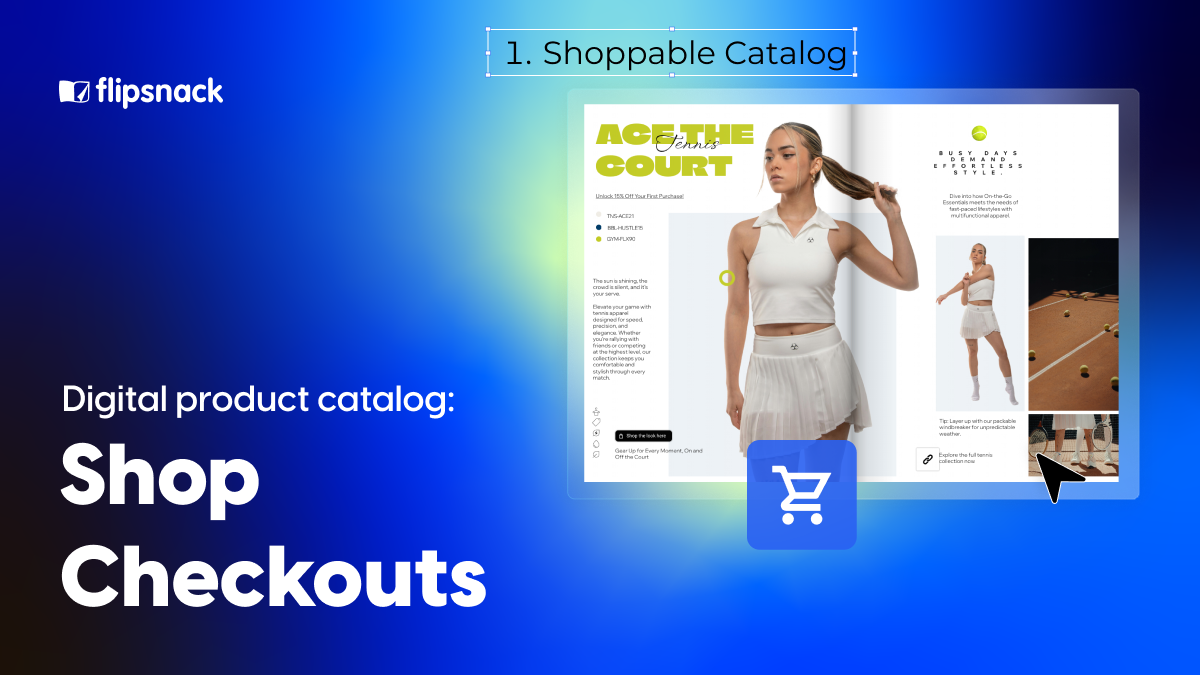
That’s why Flipsnack exists. It’s more than a digital catalog tool; it’s a platform that bridges the gap between product discovery and purchase. And your catalogs don’t just showcase products; they become conversion-ready sales engines. Interactive features and flexible checkout flows ensure every buyer can move from browsing to buying in the way that suits them best.
Which checkout option fits which buyer?
Match the checkout to the pricing model and the order size. Fixed prices and small orders suit a cart or an email order. Negotiated prices and bulk volumes suit a quote request. Orders that need internal approval suit a PDF or CSV download.
| Checkout option | Best for | Pricing model | What your team receives | Where it falls short |
|---|---|---|---|---|
| Email order | Resellers, direct sellers, small B2B accounts | Fixed list price | Structured email with products, quantities, buyer details | No payment; processed manually unless automated |
| Quote request | Wholesalers, manufacturers, distributors | Tiered, negotiated or custom | Request with SKUs, quantities and buyer notes | Slower; only as good as your response time |
| PDF or CSV download | Procurement teams, multi-step approvals | Any | A file the buyer forwards or imports into an ERP | The buyer decides when it reaches you |
| WhatsApp order | Markets where business runs on messaging | Flexible | Prefilled message in a WhatsApp chat | Orders live in chat threads, not a queue |
| Shopify cart | D2C and retail brands on Shopify | Fixed | Items added to the Shopify cart | Requires Shopify; poor fit for negotiated prices |
| External buy links | Brands selling on other platforms or marketplaces | Fixed | Traffic to the product page | Cart and payment are tracked in your store, not the catalog |
| Wishlist | Fashion, jewelry, omnichannel retail | Fixed | A list sent to a store for pickup or try-on | No online transaction |
Most sellers need two or three of these, not all seven. Start with the path your largest customer segment already uses offline, then add the one that removes your most common back-and-forth.
6 digital catalog checkout options in Flipsnack
Instead of leaving buyers at a dead end, your catalog should guide them smoothly toward the next step: making a purchase. Flipsnack makes this possible by embedding checkout options directly into your digital catalog. The shopping list feature makes this process easier; it lets buyers select products as they browse, then choose how to send that list: via email, WhatsApp, as a PDF/CSV download, or even as a wishlist. Instead of forcing every buyer down the same rigid path, you can adapt the checkout experience to fit different customers, markets, or workflows.
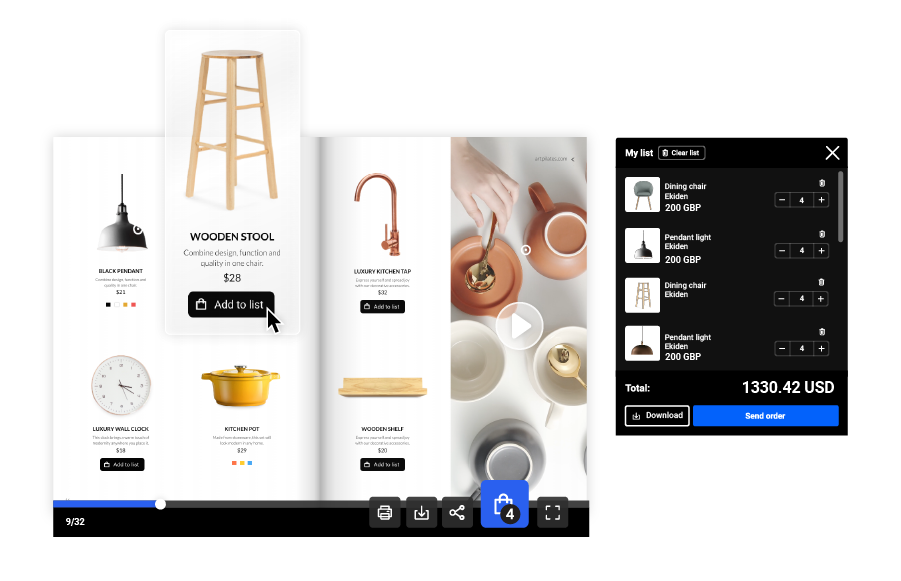
Here’s a quick overview of the checkout options you can enable in Flipsnack:
- Email checkout – Turn catalogs into instant order forms, with structured emails that land directly in your sales team’s inbox.
- WhatsApp integration – Make purchasing conversational by letting buyers send pre-orders or questions straight from the catalog.
- Shopify integration – Connect catalogs to your online store for direct add-to-cart and real-time inventory handling.
- Cart integration with your webshop: Connect the catalog to your own website’s shopping cart, so products go straight from catalog to checkout.
- External links – Drive catalog traffic to any e-commerce platform or custom portal with product-specific buy buttons.
- PDF & CSV downloads – Give B2B buyers procurement-ready order lists they can share, import, or approve internally.
- Wishlists – Let customers save favorites and send them to you or a store for follow-up and in-person purchase.
This flexibility is key to accommodating different buyer behaviors and workflows. With Flipsnack, you can mix and match the options that best align with your audience and sales process, turning your catalog into a true conversion-ready sales tool.
1. Email checkout
Email checkout is the simplest way to make your Flipsnack catalogs shoppable. When enabled, it comes with a ready-made template that you can customize to fit your brand. Customers can flip through your catalog, add products to their shopping list, and send that order directly to your inbox.
This option works especially well for smaller B2B sales and quote-based workflows, where buyers often just want to request pricing or send in a bulk order without completing an instant checkout. It’s also widely used in direct selling models, where customers can email their selections to a local reseller or store for processing.
What makes Flipsnack’s email checkout powerful is the flexibility to fit your process:
- Custom forms – Collect the buyer details you need (name, contact info, company, etc.).
- Send orders to the right team – Route orders automatically to branches or sales reps based on buyer location or other criteria.
- Branded confirmations – Add your logo and a custom thank-you message for a professional touch.
- Localized experience – Emails match the language of your catalog and include product images, so buyers instantly recognize what they ordered.
For many businesses, this is the fastest way to get started with interactive catalogs. Email checkout transforms a static catalog into a working sales channel that’s easy for customers to use and simple for sales teams to manage.
2. Quotes and B2B preorders
For B2B companies and wholesalers, purchases often aren’t as simple as clicking “buy now.” They usually involve bulk quantities, custom pricing, or negotiated terms. Flipsnack’s can be used for these more complex workflows.
Instead of relying on phone calls or outdated spreadsheets, partners can select the products and quantities they need directly in your catalog and submit a quote request or preorder on the spot. That request is instantly sent to your team with all the details needed to prepare a formal quote or invoice.
The key difference is that every request is generated as a structured PDF or CSV order list:
- PDFs – Branded with your logo, headers, and footers, making them easy to share with decision-makers or keep on record.
- CSVs – Procurement-ready and simple to import into ERP systems or spreadsheets, eliminating manual data entry.
This also extends to workflows where buyers need to download their own lists. With Flipsnack’s shopping list feature, customers can export their selected items as a PDF or CSV directly from the catalog. For example, a procurement manager can download a list for approval before placing an order, or a retailer can compare product selections offline and then return to finalize their request.
Together, these capabilities create an error-free process for handling large or custom B2B orders. Your partners gain flexibility in how they prepare and share requests, while your team receives standardized, actionable data that’s easy to process. The result: faster responses, fewer mistakes, and stronger long-term business relationships.
3. Customer wishlists
The wishlist option is all about allowing customers to save items for later, which can drive sales both online and in-store. Flipsnack enables customers to create a personal wishlist of products in the digital catalog and then email it to you or a specified store location for later pick-up. This is particularly popular in retail scenarios (think fashion or luxury goods) where a customer enjoys browsing a lookbook or catalog, adds a few favorites to their list, and then wants to see those items in person before buying.
For example, a global jewelry brand like Pandora uses Flipsnack’s wishlist feature to let customers select desired jewelry pieces in the digital catalog and send the list to their nearest store. The store can then prepare those items for the customer to try on, making the eventual purchase seamless and personalized. This ensures no time is lost – the staff can set aside the items or reach out to the customer to confirm details.
Overall, the wishlist option creates a smooth online-to-offline experience. Customers get the convenience of browsing and deciding at home (or on their phone), and retailers get a warm lead delivered right to their inbox or messaging app. It’s a great way to blend digital catalogs with e-commerce customer service, increasing the likelihood of conversion by catering to how customers actually like to shop.
4. WhatsApp Checkout
In many markets, messaging apps like WhatsApp are where business happens, and Flipsnack makes it easy to meet buyers right there. By enabling WhatsApp checkout, you give customers the option to send their shopping list or pre-order directly from the catalog into a WhatsApp conversation with your business.
All it takes is adding the phone number to which you want orders sent. From there, buyers can browse your catalog, select products, and submit their order through WhatsApp with a single click. The order appears as a pre-filled message, complete with product details, so both you and the customer have a clear starting point for the conversation.
Every WhatsApp order is automatically logged in Flipsnack’s Analytics section, giving you visibility into performance and helping you track how frequently buyers choose this checkout option.
It ensures real-time communication with the buyer, which can lead to higher trust and conversion. Your sales team can clarify specs, offer recommendations, or negotiate details instantly, all within a channel the customer is comfortable with.
5. External links to your webshop
If you already have an e-commerce website or online store, you might want to drive buyers from the catalog directly to your site’s checkout. For example, if you’re comparing platforms like ThriveCart vs Teachable, choosing the right checkout solution can directly impact your conversion rates. Flipsnack supports that too, through external link checkout options. You can embed shopping links or buy buttons on products in your catalog that will take customers straight to the corresponding page on your webshop. For instance, a customer browsing your digital catalog clicks a “Buy Now” button on a product; …that button could open your Shopify product page or the matching page on any ecommerce platform where the product is listed. Want the product to land directly in your store’s cart instead? That’s what cart integration does (see option 6).
This approach lets you leverage the rich, interactive browsing experience of Flipsnack and then hand off the final transaction to your existing online store. If that storefront is not where you want checkout to live, one of the best options for small to medium businesses is Whop’s rundown of embedded checkout so catalog traffic still lands in a dedicated payment flow with global payouts. It ensures inventory, pricing, and payment are handled by your e-commerce system (which your team is already comfortable with), maintaining a great checkout flow for the customer. In practice, this means no duplicate data entry or separate systems; the catalog becomes an engaging front-end that funnels interested buyers into your normal online sales funnel.
If your goal is to increase traffic and conversions on your website, this option can be very powerful.
6. Cart integration with your own webshop
If your online store already handles checkout, payments and inventory, your catalog shouldn’t compete with it. With cart integration, Flipsnack connects your digital catalog directly to the shopping cart on your own website.
Shoppers browse the catalog, click a product or send their shopping list, and the items land straight in your store’s cart. They check out the way they always do, and your team processes the order in the same system as every other online sale.
- One checkout. Buyers never switch between two carts or retype products.
- No duplicate orders. Everything flows into your existing ecommerce system.
- Works beyond Shopify. Connect the catalog to your own store’s cart, whatever platform powers it.
This option fits retailers and ecommerce brands that want the catalog to drive sales into the store they already run.
Optimize your catalog for performance and turn data into conversions
Optimizing your catalog isn’t just about keywords or AI SEO. While not every checkout option influences search visibility, each one shapes the buyer’s experience once they’re inside your catalog. By adding flexible checkout paths, you’re optimizing for conversions, making it easier for customers to buy the way they prefer. The right mix removes friction, strengthens your presence in buyers’ minds, and ultimately shortens the journey from browsing to buying.
With Flipsnack’s built-in analytics, you can track your buyers and see what products capture attention, how they interact with your catalog, and which checkout converts better. Every interaction is logged, from “added to cart” actions to completed orders, giving you a clear picture of what’s working and where customers drop off.
Here’s what Flipsnack’s analytics let you track about your overall catalog performance:
See How Buyers Interact With Your Catalog
- Impressions – Every time your catalog is loaded (through a link or embed).
- Views – Every time a reader actually engages with your catalog (spends 5+ seconds or clicks through pages).
- Average time spent – How long, on average, readers stay in your catalog.
- Page-level stats – See which pages get the most views, clicks, and time spent.
- Devices & sources – Breakdown of whether readers came via desktop, mobile, or tablet, and whether they opened the catalog from a Flipsnack URL or an embedded version.
- Locations – A country-level map showing where your readers are.
Shopping List & Order Metrics
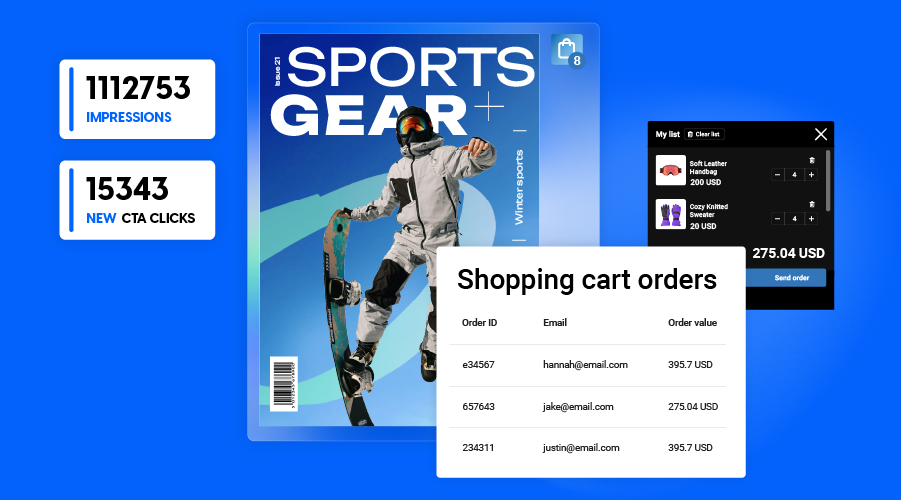
With shopping list and order statistics, you can see not just how many people placed orders, but which products caught their eye, which checkout channels they preferred, and where interest might have dropped off.
Here’s what you can track in detail with Flipsnack’s shopping list:
- Shopping list orders – Track all incoming orders from your catalogs, view details, and even filter out test or incorrect submissions.
- WhatsApp order stats – See how many buyers prefer to order via WhatsApp, giving you a clear view of adoption by market or customer segment.
- Popular products – Identify which products get added to carts most often, compare added to cart vs. ordered numbers, and spot drop-off points in the buying journey.
- Workspace-wide stats – Get a combined overview across all published catalogs in your workspace, so you can see how your product lines perform at scale.
This level of visibility helps you refine your catalogs, optimize sales workflows, and ultimately make smarter decisions that boost both customer satisfaction and revenue.
Make Your Catalog an Integrated Part of Sales Operations with Flipsnack
Offering multiple checkout options is a huge advantage, but managing those incoming requests can become overwhelming if they stay siloed. That’s why Flipsnack goes beyond checkout features, giving you integrations and automation tools that connect directly to the systems you already use. Instead of creating extra manual work, your catalog becomes part of a smooth, scalable workflow.
Zapier: Automate Tracking Orders
Flipsnack integrates with Zapier, making it possible to connect with thousands of apps without a single line of code. This means you can:
- Capture orders in real time – Send every catalog order straight to a Google Sheet for an instant overview.
- Sync with your CRM – Push requests into Salesforce, HubSpot, or another CRM so your sales team never misses a lead.
This kind of automation ensures that every time a customer submits an order or quote request, it’s instantly recorded in your system of choice (Salesforce, HubSpot, Excel, etc.). No more copying and pasting data from an email. Zapier acts as the bridge that moves info from Flipsnack to wherever you need it, saving you time and preventing errors.
Shopify: Direct Checkout Flows
If you already run a webshop, Flipsnack connects seamlessly with it. For example, a Shopify integration allows buyers to move from browsing in your catalog to adding items to their cart, with inventory and pricing synced in real time. To the customer, the transition feels natural — they may not even notice they’ve shifted platforms.
This approach improves the buying experience while keeping all transactions, stock management, and payments centralized in your existing e-commerce system. Flipsnack works as a visual front-end that drives traffic into your online checkout flow. A Shopify automation tool syncs supplier inventory, pricing, and orders while updating tracking in Shopify automatically. Integrated with Flipsnack’s shoppable catalogs, it eliminates manual uploads and streamlines the entire path from browse to buy to delivery.
Slack Notifications: Instant Team Alerts
For teams that use Slack, this integration makes order handling faster and more collaborative. Every time a buyer submits a shopping list, a notification can appear instantly in your workspace. Imagine your sales channel lighting up with: “New Catalog Order from Client X – 5 items in wishlist.”
From there, team members can immediately pick up the lead, assign ownership, and respond. This real-time visibility reduces delays, ensures no order slips through the cracks, and helps sales teams impress customers with faster follow-up.
These integrations and automations function like helpful shortcuts in your sales process. They ensure that making your catalog shoppable doesn’t add extra administrative burden. Instead, Flipsnack becomes part of your existing ecosystem. Whether it’s feeding data to a CRM, pushing customers to your online store, or pinging your team with alerts, these tools keep your workflow smooth and scalable.
Quick implementation tips
Rolling out new checkout options doesn’t have to be overwhelming. The smartest approach is to start simple, test in controlled environments, and build from there. Step by step, you can gather useful data, train your team effectively, and make improvements without risking customer frustration.
- Test with one catalog first – Launch new options in a single catalog to monitor adoption and get an opportunity to experiment with page manipulation. This keeps risks low while giving you clear, controlled insights.
- Train your team on multi-channel order management – Staff needs to handle orders arriving via email, WhatsApp, Shopify, or CSV with equal efficiency. Training avoids errors and keeps service consistent.
- Collect direct customer feedback – Buyers will tell you what works and what feels clunky as well as your sales team. Their feedback is the fastest way to enhance your sales playbook as a whole, not just the checkout part.
- Iterate regularly – Treat your checkout setup as a living system. Continuous adjustments based on analytics keep your digital catalog’s e-commerce integration aligned with real-world behavior.
Turn browsing into buying with flexible checkout options
Catalogs can’t just be pretty brochures, they need to function as active sales tools. The checkout options inside Flipsnack transform your product catalog from a static asset into a dynamic, conversion-ready channel. Whether your buyers want to request a quote, download a procurement list, pay instantly through Shopify, or chat with you on WhatsApp, Flipsnack makes it possible.
By giving customers multiple, flexible ways to move from browsing to buying, you remove friction, speed up the sales cycle, and meet every buyer where they are. Combined with analytics, automation, and integrations, your catalog becomes more than a showcase, it becomes an engine for growth.
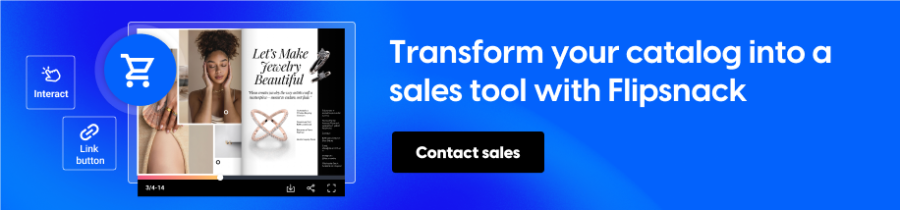
If you’re ready to stop losing buyers at the browsing stage, it’s time to make your catalog shoppable with Flipsnack.