How to Turn a Property Listing Into a Brochure
Published on: February 25, 2026
Updated on: August 17, 2026
Four o’clock on a Friday. Your seller signs, then asks when the marketing goes live. Photography arrives Monday. Whoever handles design has two colleagues queued ahead of you, so the brochure realistically surfaces Wednesday. Three competing homes list on that same street before then.
Nowhere in that sequence did anybody sell anything.
Production has quietly become the heaviest recurring administrative burden in listing marketing. Copying specifications, resizing photography, matching typography, exporting, then repeating all of it when pricing moves.
Your design ability was never the constraint. Where each brochure begins was. Historically that meant an empty canvas.
Find out what belongs inside a real estate property brochure, four ways to produce one, and how to share and measure the result. Pasting a listing URL and receiving a finished brochure sixty seconds later is now among those option
What is a property brochure?
A property brochure is a marketing document presenting one listing or a portfolio of listings through photography, specifications, pricing, location context and agent contact details, produced for prospective buyers and sellers.
Formats split into two families. Printed brochures still earn their place at open houses and on kitchen tables. Digital property brochures live behind a shareable link, carry video and virtual tours, and report back on who opened them.
Agents increasingly build the digital version first, then export a print-ready file from that same source.
How to turn a property listing into a brochure
Paste the listing URL into Flipsnack’s one-click brochure generator. Photography and property specifications get pulled from that page, arranged into a page-flipping layout, and handed back in roughly sixty seconds. Branding, interactive elements and sharing controls follow afterwards.
Step 1: Copy your listing URL
Grab the public web address of the property, whether that sits on your brokerage website, a portal or your own listing page. Anything publicly reachable works.
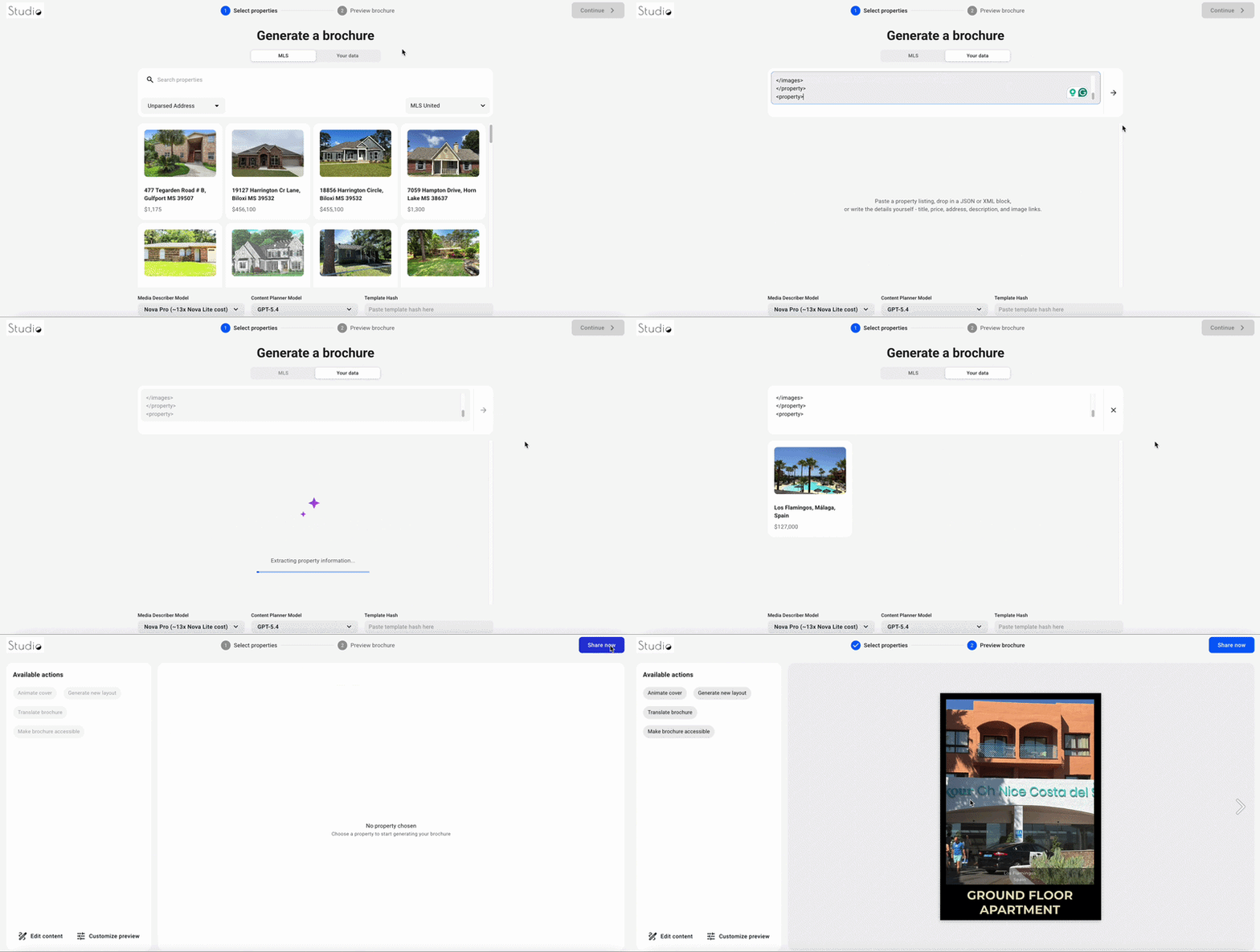
Step 2: Choose Link to brochure
Inside Flipsnack, select Create, then Link to brochure. Paste the address and confirm.
Step 3: Review the generated layout
Photography, headline specifications, descriptive copy and pricing arrive already positioned. Review sequencing, drop any page you do not need, reorder whatever reads better elsewhere.
Step 4: Apply your branding and interactivity
Pull in your logo, typography and colour palette from your brand kit, so the finished piece belongs to your brokerage rather than to a template gallery. Then layer in the elements a static file cannot carry:
- Matterport and 3D tour embeds
- Video walkthroughs
- A navigable Google Maps embed for neighbourhood context
- Lead capture forms wired to your CRM
Step 5: Publish and share your listings
Publish, then distribute however the conversation demands: full-view link over email or WhatsApp, an auto-generated QR code for signage and open houses, or an embed on your listing page. Sensitive pre-launch material can sit behind password or verification-code access. One-click brochure generation currently sits in open beta for every Flipsnack account, with no AI credit needed.
See how Flipsnack’s AI turns a property listing into a ready-to-share digital brochure.
Which starting point fits your workflow?
Four routes exist Flipsnack, and the correct one depends on what you already hold. A public listing URL, an existing PDF, a repeatable brand template, or a direct MLS feed.
| Starting point | Best for | What you need | Availability |
|---|---|---|---|
| Link to brochure | Agents marketing individual listings fast | A public property listing URL | Open beta, all accounts |
| Upload a PDF | Anyone whose designer already delivered a file | The finished PDF | All plans |
| Branded template | Teams producing many brochures to one standard | A template built once, reused per listing | All plans |
| Connect your MLS | Brokerages generating across dozens of agents | RESO-compatible MLS credentials plus approval | Requires setup with our team |
Most agents never move beyond the first row, because a listing URL already contains everything a brochure needs. Larger brokerages producing hundreds of brochures monthly sometimes prefer a direct feed, which removes the URL step entirely and lets marketing lock templates centrally. That path involves credentials and permissions specific to your MLS, so talk to our team if it sounds relevant.
What a property brochure should include
A cover establishing the property and price, a photography sequence, verified specifications, neighbourhood context, and one unambiguous next step. Everything else is optional.
- Hero cover. Strongest exterior or interior photograph, address, headline price. Buyers decide whether to continue here.
- Photography sequence. Room order matching how somebody physically walks through, rather than however your camera roll sorted them.
- Verified specifications. Square footage, bedrooms, bathrooms, lot dimensions, year built, parking. Pull straight from listing data, because retyping introduces errors that cost credibility.
- Descriptive copy with restraint. Two paragraphs maximum. Lifestyle first, then features.
- Neighbourhood context. Schools, commute, amenities, plus an interactive map. Buyers relocating cannot picture the area otherwise.
- Immersive media. Virtual tour, video walkthrough, animated visuals. Anything letting somebody explore before scheduling.
- Agent identity. Photograph, direct contact routes, brokerage branding.
- A single call to action. Book a viewing, request the full package, download the floor plan. One, not five.
Static documents accommodate roughly half that list. Interactive brochures accommodate all of it.
Building every element in one place
Nothing above requires a second tool. Here is where each piece comes from once your brochure has generated in Flipsnack:
| Element | How it gets built |
|---|---|
| Hero cover | Lead photograph, address and price arrive positioned from the listing you pasted. Swap in a stronger shot from your Uploads panel whenever the portal’s first image underwhelms. |
| Photography sequence | Reorder pages by dragging them in Design Studio. Photo slideshows collapse several angles of one room onto a single page, so a fourteen-page walkthrough stops feeling like fourteen pages. |
| Verified specifications | Populated directly from listing data, which removes the retyping step where pricing and square-footage errors originate. |
| Descriptive copy | Edit text inline, no round trip to a designer. One-click translation produces a second language version for relocating buyers without duplicating the build. |
| Neighborhood context | Drop in a navigable Google Maps widget. Buyers pan the surrounding streets themselves rather than trusting your adjective choices. |
| Immersive media | Embed Matterport and 3D tours, video walkthroughs, or animate a still photograph with AI, so the property moves before anybody schedules a viewing. |
| Agent identity | Your brand kit holds logo, typography and palette centrally. Locked templates keep all of it fixed while agents fill in property content. |
| Single call to action | Add a button or an inline lead form that routes submissions into your CRM, converting a reader into a contactable prospect inside the document. |
Every row above happens in the same workspace that generated the brochure, which is what keeps a sixty-second draft from becoming a two-hour assembly job.
Where static property brochures still win
Printed and PDF brochures have not become obsolete, and pretending otherwise damages your credibility with sellers who ask.
Where static wins:
- Kitchen-table permanence. Something physical survives on a counter for weeks. No link does.
- Zero-connectivity viewing. Rural showings, basements, older buildings.
- Procurement and legal packages. Certain commercial processes require an attached file, full stop.
- Perceived luxury. Heavy stock at a high-end viewing communicates investment instantly.
Where interactive wins:
- Pricing corrections. Update once, and every shared link, QR code and embed reflects it. Reprints cannot.
- Buyer intent visibility. Page-level attention data tells you which prospect to telephone tonight.
- Immersive exploration. Tours, video and maps live inside the document rather than beside it.
- Distribution economics. One asset reaches a hundred prospects at no incremental cost.
Sensible teams produce both, generating the interactive version first and exporting print-ready files from it.
How do property brochures help you win listings?
Sellers cannot evaluate marketing they have never seen. Producing a brochure for their specific property before you have signed anything converts an abstract promise into a demonstrable artifact.
1. Arrive at the appointment holding their brochure
Generate one from the existing listing, or from draft details, before you walk in. Open it on a tablet, walk the seller through what buyers will experience, then email the identical link with your recap that evening. Competing agents describe a plan. You demonstrated one.
2. Convert open houses into seller pipeline
A QR code on your signage sends visitors into the full brochure: tour, map, complete specifications. Add a lead form and interest becomes contactable. Neighbours attending casually observe your production quality, and neighbours list eventually.
3. Earn referrals through something forwardable
Attachments rarely travel. Links do. Prospects can assemble a shortlist of units or floor plans inside the brochure itself and send that selection back to you, which shifts passive browsing toward active decisions.
Track and see of your property links brochure work
Track opens, time spent per page and clicks per recipient. Attention concentrating on one specific room or on the pricing page tells you what to raise on your next call.
Static files report nothing. Every interactive brochure reports page-level engagement, so you learn:
- Which prospects opened, and when
- Which pages retained attention, and which got skipped
- Which links, tours and forms got used
- Which agent or campaign generated the engagement, using per-recipient links
Email notification the moment somebody opens a brochure turns follow-up from guesswork into timing.
How Young Ottosen brought 62 homes to market in three days
Young Ottosen Team at Real Broker is a five-agent new home sales operation in Phoenix, managing close to 200 active listings across Scottsdale and Phoenix, focused on new communities and builder representation.
Print was the bottleneck. Pricing evolved, renderings became finished models, inventory shifted overnight, and each change meant briefing a designer and printing another batch. One brochure run cost roughly $2,500 and was frequently, in Nathan Ottosen’s words, <cite>”outdated before buyers even held it”</cite>. Onsite agents crossed out figures by hand.
The team rebuilt around one living brochure link: embedded on their website, texted to buyers after self-tours, reachable through QR codes on-site, and used to pitch developers with trackable presentations. Pricing and availability now update under that same address.
Results the team reported:
- Print costs down roughly 90%
- More than $20,000 saved launching four communities simultaneously
- Designer turnaround of three to four weeks replaced by two days of in-house building
- 62 homes brought to full marketing capacity inside three days
Read the full Young Ottosen story.
Stop explaining and start demonstrating
Frequently asked questions about property brochures
What is the best AI property brochure generator?
Depends what you need generated. Most AI tools marketed for property brochures produce copy alone, leaving you to place text into a design tool yourself. Flipsnack instead returns a finished, page-flipping brochure from a listing URL, already branded and ready to share or export. Judge candidates on whether the output is publishable or merely draft text.
Can ChatGPT make a property brochure?
ChatGPT writes property descriptions and suggests brochure structure competently. Producing a laid-out, branded, shareable document is outside its scope, so you would still assemble that output somewhere else. Purpose-built generators handle copy and layout together.
How long does it take to make a property brochure?
Roughly sixty seconds from a listing URL, plus however long branding and interactive elements take you. Building the same brochure manually in a design tool typically consumes one to three hours per listing.
Do you need design skills to make a property brochure?
No. Generated layouts arrive already structured, and template locking lets a marketing team fix typography and logo placement so agents only ever change property content.
Can you make a property brochure without connecting your MLS?
Yes. A public listing URL, an existing PDF or a brand template each produce a complete brochure with no MLS connection whatsoever. Direct MLS feeds suit brokerages generating at volume, and involve a setup conversation.
How do you share a property brochure with buyers?
Through a full-view link over email, WhatsApp or social, a QR code for print and signage, or an embed on your listing page. Access can stay public, unlisted, or gated behind a password.
Can you update a property brochure after sharing it?
Yes, and the address stays identical. Correct a price and every previously shared link, QR code and embed serves the updated version, so nothing outdated remains in circulation.
Should a property brochure be print or digital?
Both, produced in that order. Digital carries tours, video and engagement tracking. Print still performs at open houses and in luxury settings, and exports cleanly from the digital original. Going digital-first can also cut print spend substantially: Young Ottosen Team reduced print costs by around 90% and saved more than $20,000 launching four communities at once.