Business Newsletter Templates: 11 Professional Examples for Company Updates
Published on: February 4, 2026
Last updated: September 22, 2026
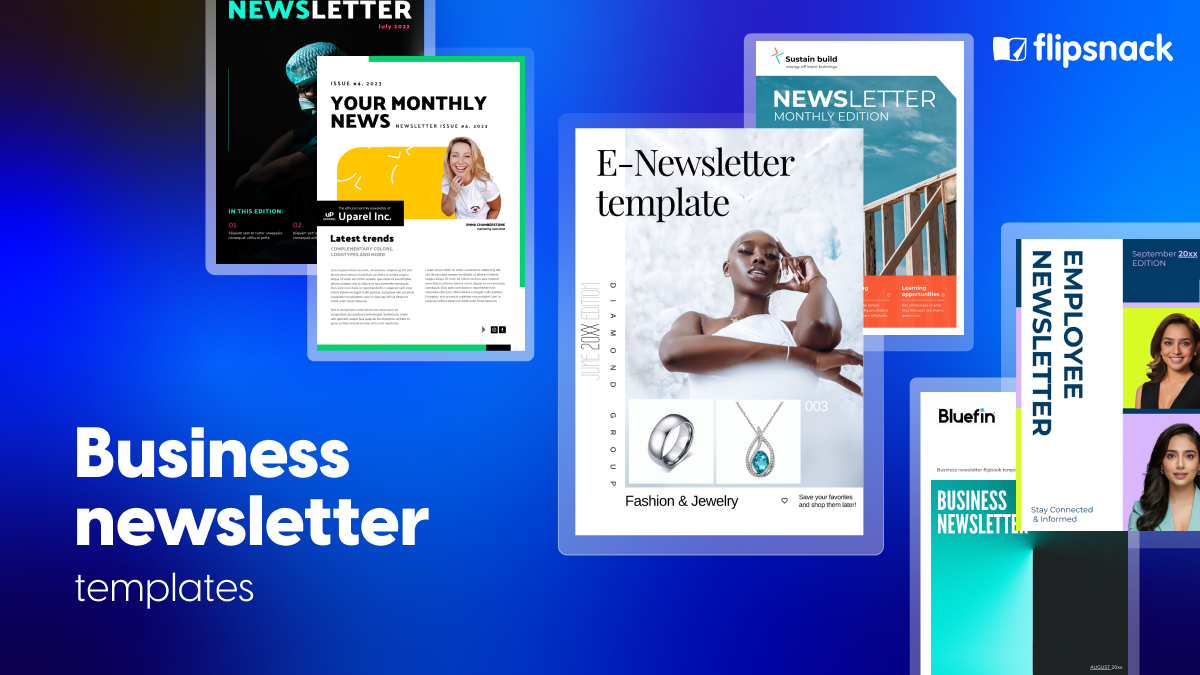
A business newsletter template gives you a ready-made structure for communicating company news, strategic priorities, financial information, employee updates, product developments, and other important information. Instead of designing every newsletter from scratch, you can start with a professional layout and customize the content, branding, visuals, and calls to action for your audience.
The best template depends on who you’re communicating with, what you need to communicate, and what you want readers to do next.
In this guide, you’ll find 11 professional business newsletter templates and examples for employee communications, leadership updates, investor relations, ESG reporting, product launches, market intelligence, knowledge sharing, financial updates, and more. You’ll also learn what makes an effective newsletter, how to choose the right template, how to create a newsletter for your business, and which common mistakes to avoid.
Use the comparison table below to find the template that best matches your audience and communication goal.
Table of contents
- What is a business newsletter?
- What is the best business newsletter template?
- Quick comparison: business newsletter templates
- 11 business newsletter templates and examples
- What should a business newsletter include?
- Are business newsletters still relevant in 2026?
- Business newsletter example: a simple structure
- How to choose the right business newsletter template
- How to create professional business newsletters with Flipsnack
- Business newsletter checklist
- Conclusion
- Frequently asked questions about business newsletters
1. What is a business newsletter?
A business newsletter is a regular email sent by a company to its customers, prospects, subscribers, or partners to share useful information, build relationships, and encourage business activity.
2. What is the best business newsletter template?
The best newsletter template depends on your audience, communication goal, content type, and publishing frequency. A good business newsletter template should provide a clear visual hierarchy, logical sections, consistent branding, enough flexibility for different types of content, and a clear next step when readers need to take action.
For example, an employee newsletter may prioritize company announcements, team news, culture, and upcoming events. An investor newsletter should give greater prominence to financial performance, strategic developments, milestones, and leadership commentary. A product newsletter may focus on new features, customer benefits, demonstrations, and calls to action.
The most effective template is therefore not necessarily the most elaborate design. It’s the one that makes the information your audience needs easy to find, understand, and act on.
3. Quick comparison: business newsletter templates
What customers say about Flipsnack templates
The best flipbook tool I have used
Flipsnack is easy to use and offers all the features a small business needs, at a very affordable price. There are plenty of templates to choose from to speed up the project. Each template is easily tailored to your needs. The support is good and fast through the chat function, and they also provide a phone number (infrequently these days) in case you prefer a phone call.
Leonardo Soto, President of SotoNets Cloud Solutions
Reviewed on G2
4. 11 Business newsletter templates and examples. how they work and why they matter:
Not all business updates are the same, and neither should the documents used to share them. Each template below follows the same structure, definition, best fit, audience, cadence, contents, and the most common way teams get it wrong, so you can compare them quickly and pick the one that matches your goal.
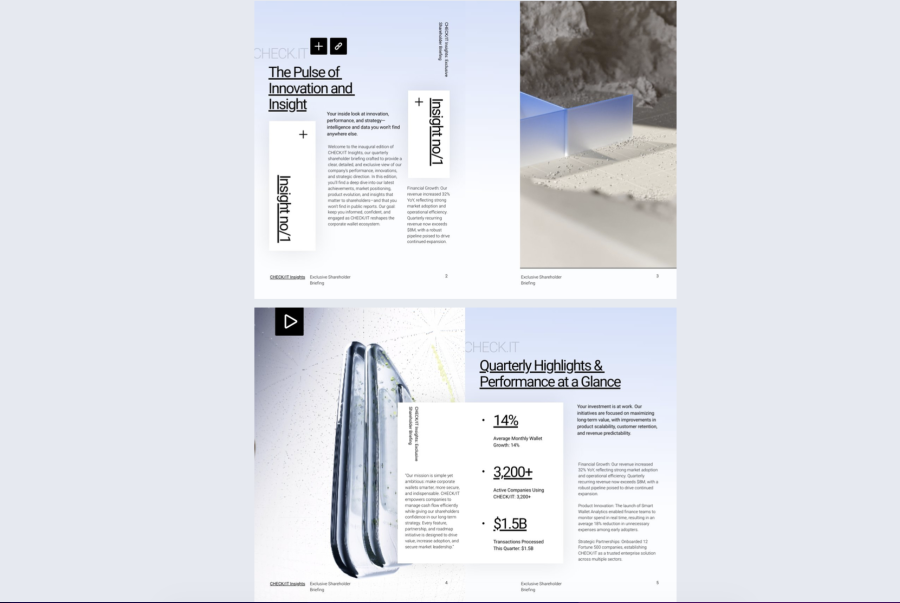
1. Shareholder update newsletter template
A shareholder newsletter template is designed to communicate company performance, strategic progress, milestones, and major developments to investors and other stakeholders.
Best for: Investor and shareholder communications
Audience: Shareholders, investors, board members, and other financial stakeholders
Recommended cadence: Usually quarterly, depending on the communication purpose
What to include: Leadership or CEO message · Financial performance highlights · Key business metrics · Major company milestones · Product or market developments · Strategic priorities · Relevant charts or visual data · Supporting reports and resources
Why this format works: Investors often need both the key numbers and the context behind them. A structured newsletter can present important figures first and then provide commentary and supporting information for readers who want more detail.
Common mistake to avoid: Don’t lead with raw data without explaining what it means. Put important performance figures in context so readers understand what changed and why it matters.
2. Quarterly strategy newsletter template
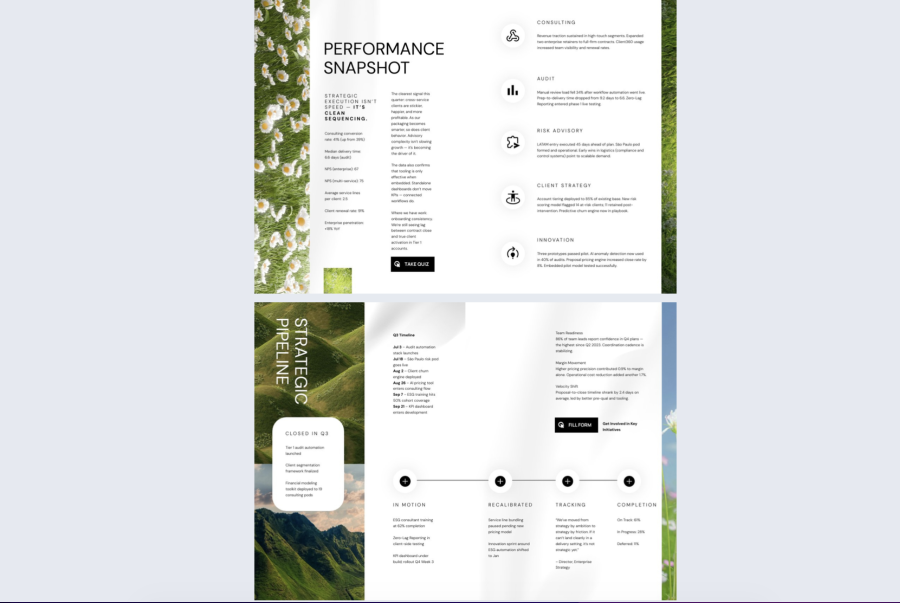
A quarterly strategy newsletter template provides a repeatable structure for communicating strategic priorities, progress, goals, and upcoming initiatives.
Best for: Companies that run quarterly business reviews or need a consistent way to communicate strategic priorities
Audience: Employees, managers, leadership teams, and board members
Recommended cadence: Quarterly
What to include: Leadership message · Strategic priorities · Progress against goals or OKRs · Major achievements · Team highlights · Important changes · Priorities for the next quarter · Links to supporting documents
Why this format works: A recurring structure makes strategic communication easier to follow from one quarter to the next. Readers can quickly see what changed, what was accomplished, and what comes next.
Common mistake to avoid: Don’t try to document every initiative. Focus on the changes and priorities that matter most, and link to deeper resources when necessary.
3. Sustainability & ESG newsletter template
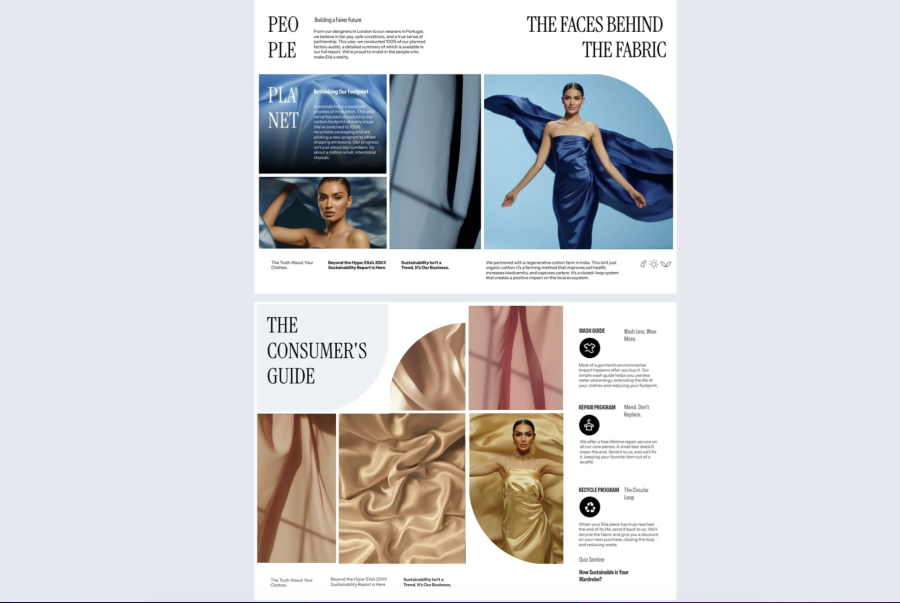
A sustainability and ESG newsletter template helps organizations communicate environmental, social, and governance initiatives, progress, metrics, and priorities.
Best for: Organizations with active ESG or sustainability programs
Audience: Employees, investors, customers, partners, and other stakeholders
Recommended cadence: Quarterly or biannually, depending on the reporting purpose
What to include: Sustainability goals · Progress against targets · Environmental metrics · Social impact initiatives · Governance updates · Relevant case studies · Leadership commentary · Supporting data and resources
Why this format works: ESG information can become difficult to follow when presented as disconnected metrics. A structured newsletter can combine data with explanations, examples, and progress updates.
Common mistake to avoid: Don’t communicate sustainability only through broad claims. Give readers measurable progress and enough context to understand what the organization is doing.
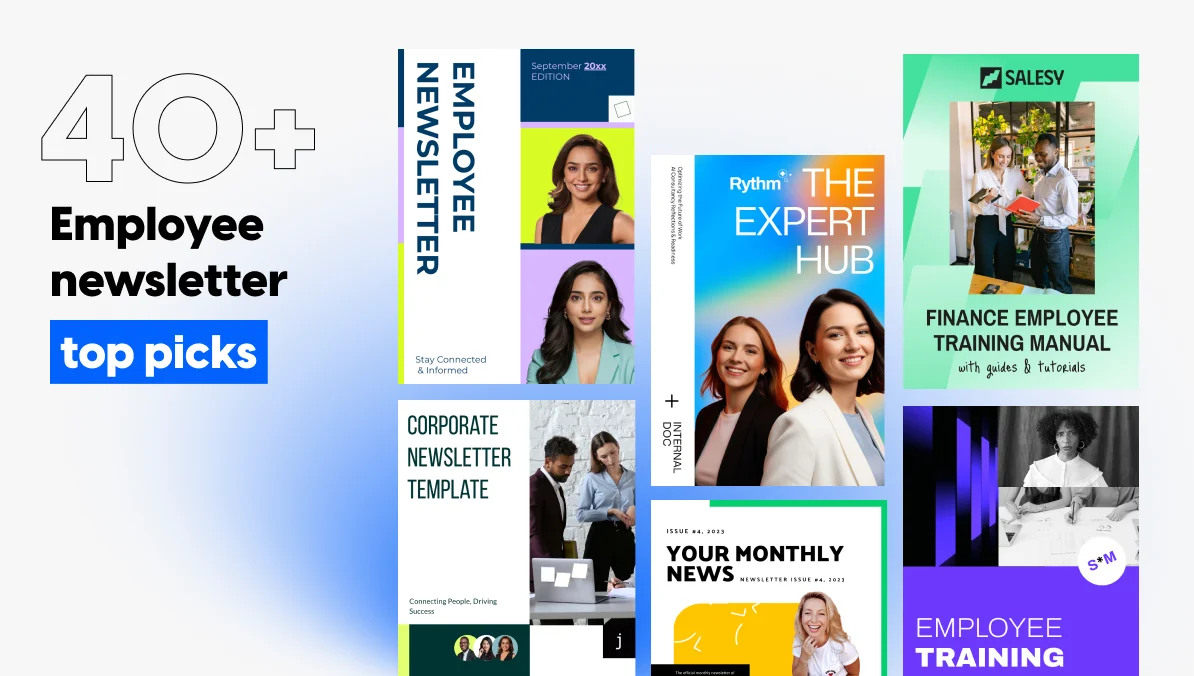
4. Employee culture newsletter template
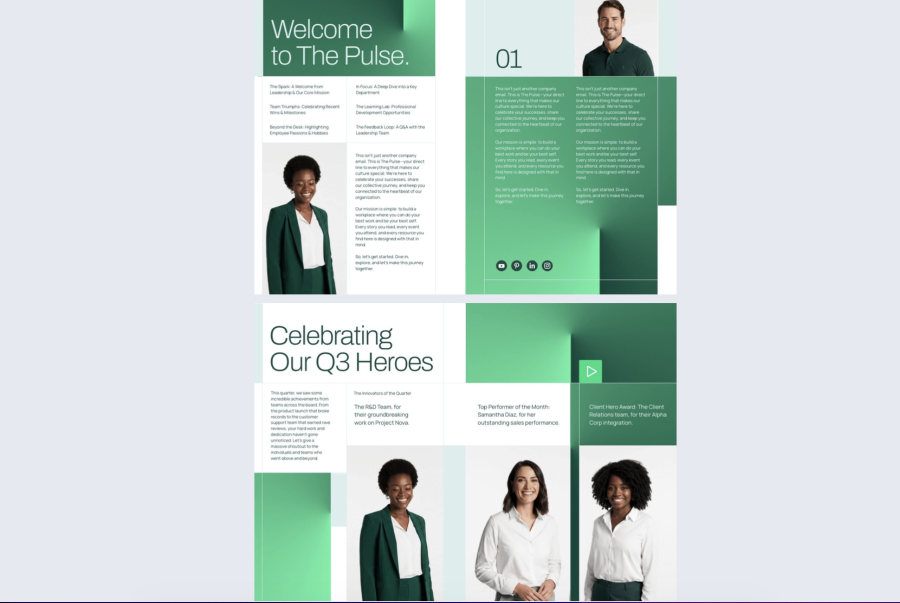
An employee newsletter template gives HR and internal communications teams a consistent format for sharing company news, culture, team achievements, events, and organizational updates.
Best for: Internal communication across companies of different sizes, especially distributed, hybrid, or fast-growing teams
Audience: Employees and managers
Recommended cadence: Weekly, biweekly, or monthly
What to include: Leadership message · Company announcements · Team achievements · Employee recognition · New hires · Upcoming events · Policy updates · Culture initiatives · Employee stories or contributions
Why this format works: A recurring internal newsletter gives employees one recognizable place to find important company information, instead of relying on disconnected messages across email, chat, meetings, and shared documents.
Common mistake to avoid: Don’t make internal communication entirely top-down. Include employee voices, team achievements, recognition, and contributions from across the organization.
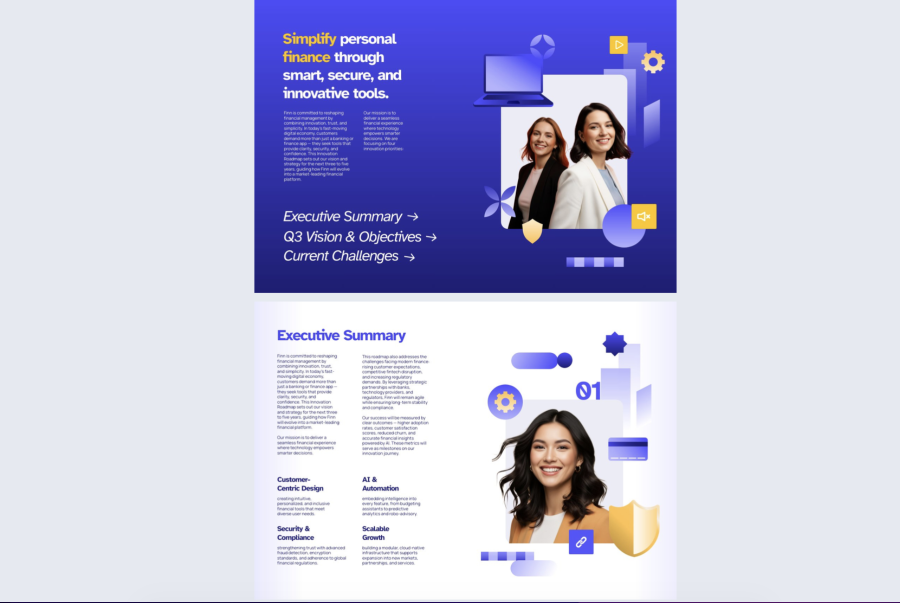
5. Innovation roadmap newsletter template
An innovation roadmap newsletter template gives product and strategy teams a structured format for sharing timelines, milestones, and priorities in a way that’s easy for any audience to follow.
Best for: Mid-size to large companies in product-led or technology-driven industries where keeping teams and stakeholders aligned on future direction is a recurring need
Audience: Product teams, engineering teams, strategy leads, partners, and select enterprise clients
Recommended cadence: Monthly or quarterly
What to include: Upcoming milestones · Strategic priorities · Team ownership · Timeline overview · Context for sequencing decisions · Links to supporting documentation
Why this format works: A structured roadmap newsletter replaces a static slide deck with something readers can navigate at their own pace. Clear ownership and timelines help internal teams and outside partners track what’s coming, without a follow-up meeting to explain it.
Common mistake to avoid: Don’t present the roadmap as a fixed commitment. Frame milestones as priorities, not deadlines, and explain why certain items are sequenced the way they are. Roadmap newsletters that share the reasoning behind decisions build far more trust than ones that simply list what’s coming.
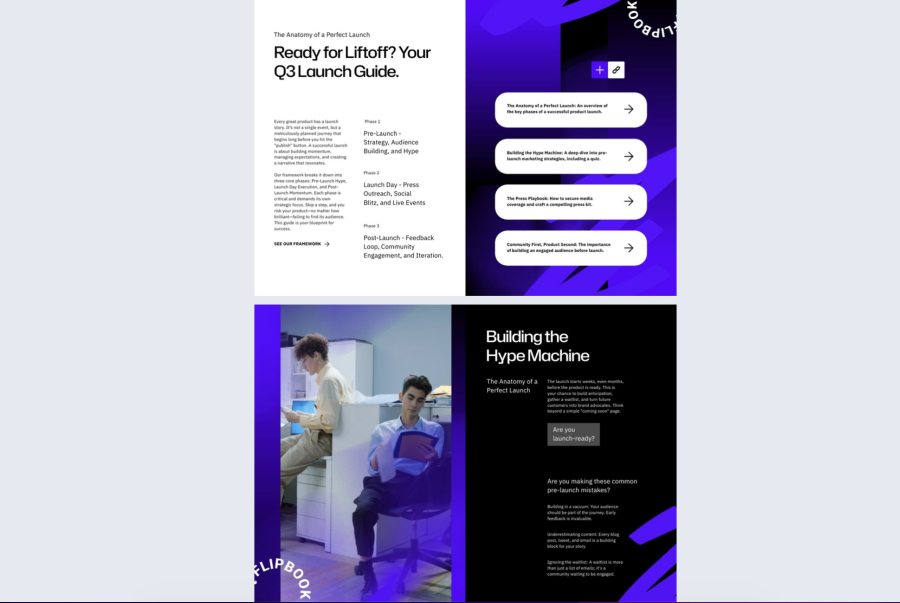
6. Product launch newsletter template
A product launch newsletter template gives marketing and product teams a focused format for announcing new products or features, with clear sections for benefits, visuals, and next steps that guide readers toward action.
Best for: Companies of any size launching new products, features, or updates to internal teams, partners, or customers
Audience: Sales teams, customer success teams, partners, and customers, depending on which version of the newsletter is sent
Recommended cadence: As needed, timed to each launch
What to include: Product overview · Key benefits · Use cases · Embedded walkthrough or demo video · CTAs for demos, downloads, or bookings
Why this format works: A single, well-organized launch newsletter lets sales, marketing, and customer success work from the same material, instead of piecing together three separate briefings.
Common mistake to avoid: Don’t treat internal and external audiences the same. A sales team needs battle cards and objection handling; customers need benefits and a clear next step. Use separate sections, or separate versions of the template, so each reader gets what they actually came for.
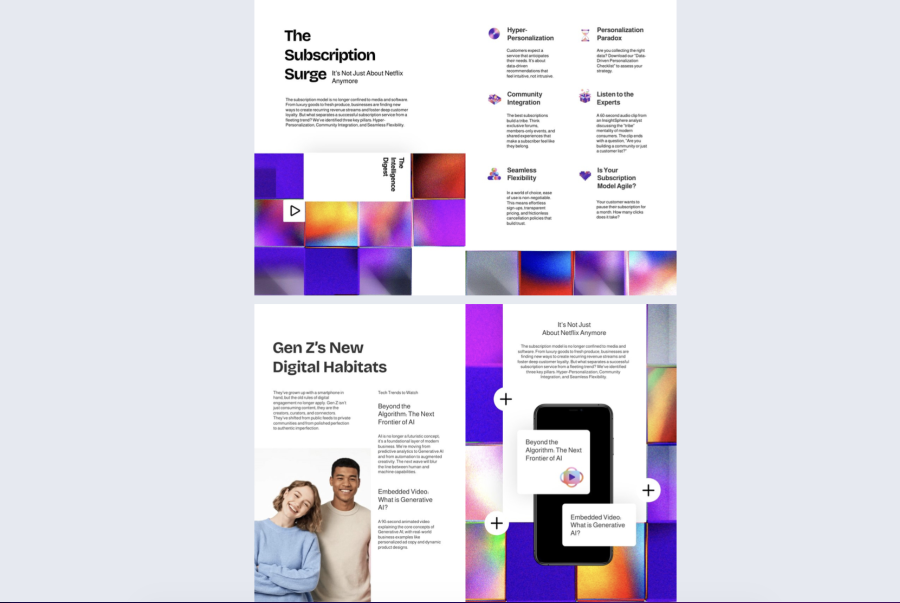
7. Market intelligence newsletter template
A market intelligence newsletter template gives strategy and research teams a structured way to share trends, competitive data, and analysis with decision-makers who need to act on it.
Best for: Mid-size to large companies where market research, competitive intelligence, or industry monitoring is a regular function
Audience: Executives, strategy teams, sales enablement teams, and product leaders
Recommended cadence: Monthly
What to include: Key trends · Competitor updates · Data highlights · Analyst or internal commentary · Links to full research reports
Why this format works: Consolidating scattered updates into one recurring document saves leaders from gathering the same information independently every month, and keeps strategic discussions grounded in a shared set of facts.
Common mistake to avoid: Don’t just report what happened, explain what it means. A market intelligence newsletter that lists trends without connecting them to business implications gets skimmed and forgotten. Every data point needs a clear “so what” for the reader.
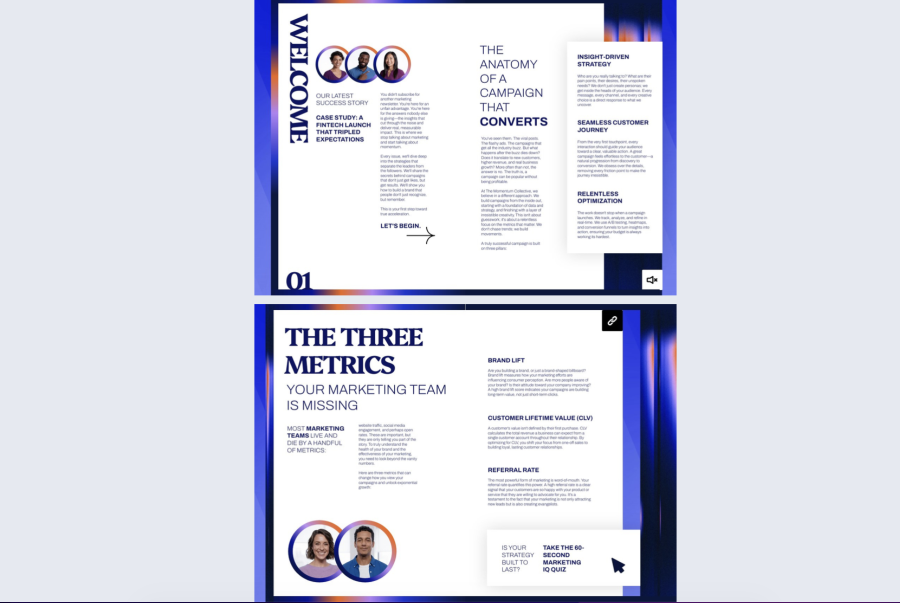
8. Creative campaigns newsletter template
A creative campaigns newsletter template gives marketing teams a bold, structured format for sharing campaign performance, strategy highlights, and key metrics with stakeholders who need the full picture.
Best for: Marketing teams of any size running ongoing campaigns that need a consistent way to report results to leadership, clients, or cross-functional partners
Audience: Clients, leadership, and cross-functional stakeholders
Recommended cadence: Monthly or quarterly
What to include: Featured case study · Strategy overview · Performance metrics · Key takeaways
Why this format works: Opening with the objective and audience before the results reframes performance data as progress toward a goal, rather than a disconnected scorecard.
Common mistake to avoid: Don’t lead with metrics before context. A reader who doesn’t understand the campaign’s objective will misread the numbers that follow. Open with a brief summary of the goal and audience, then present the results.
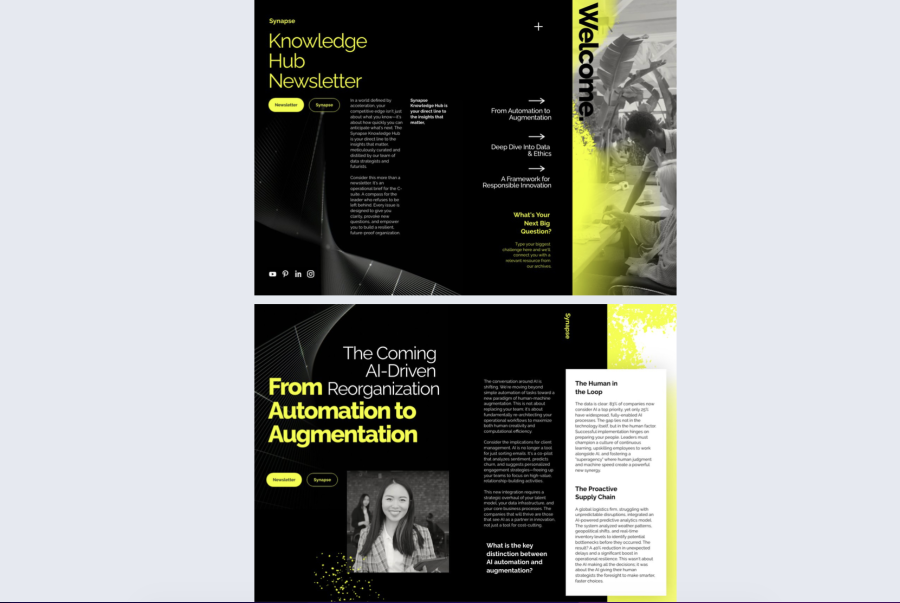
9. Knowledge hub newsletter template
A knowledge hub newsletter template gives teams a structured format for surfacing insights, research, and learning resources, making knowledge sharing a regular, visible part of company culture rather than something buried in a shared drive.
Best for: Mid-size to large companies with active learning and development programs, internal knowledge bases, or thought leadership initiatives
Audience: Employees or professional audiences with a shared learning goal
Recommended cadence: Weekly or biweekly
What to include: Featured articles · Research highlights · Expert spotlights · Recommended resources · Links to full articles or courses
Why this format works: A curated selection gives readers a reason to open the next edition, instead of scrolling past a long list of links with no sense of where to start.
Common mistake to avoid: A knowledge hub newsletter should feel curated, not exhaustive. Three to five well-chosen pieces, each with a sentence on why they matter, will always outperform a long list of links without context.
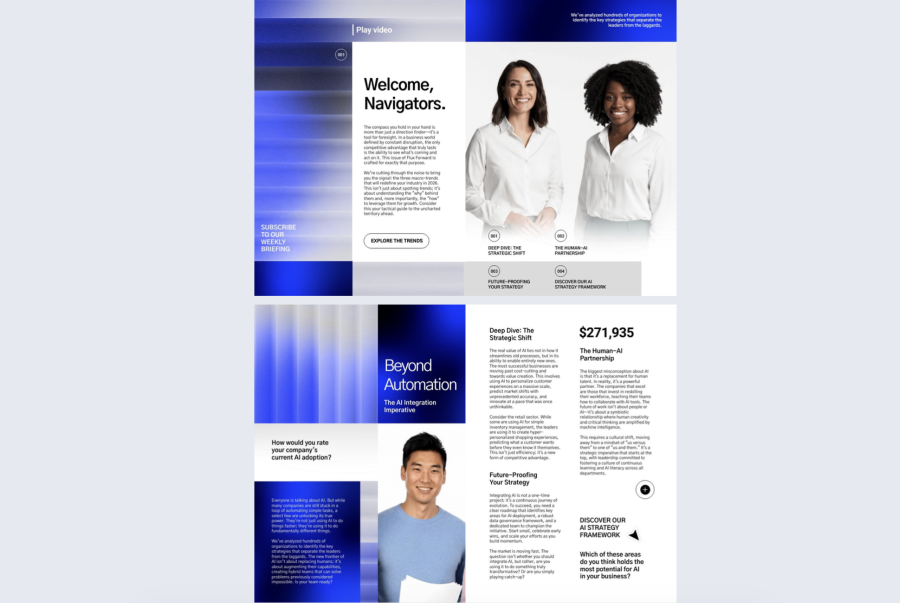
10. Business strategy newsletter template
A business strategy newsletter template gives leadership and executive teams a clean, professional format for sharing strategic updates, priorities, and leadership insights with employees and managers on a regular basis.
Best for: Companies of any size where leadership needs a consistent channel for communicating strategy beyond all-hands meetings
Audience: Employees and managers
Recommended cadence: Monthly or quarterly
What to include: Welcome or leadership message · Featured strategic priorities · Key takeaways · Forward-looking outlook
Why this format works: A regular cadence, even a brief monthly update, signals that leadership stays close to strategy between major announcements and keeps employees focused on what matters.
Common mistake to avoid: Don’t publish strategy updates only when there’s big news. Silence between milestones creates uncertainty; consistency communicates control.
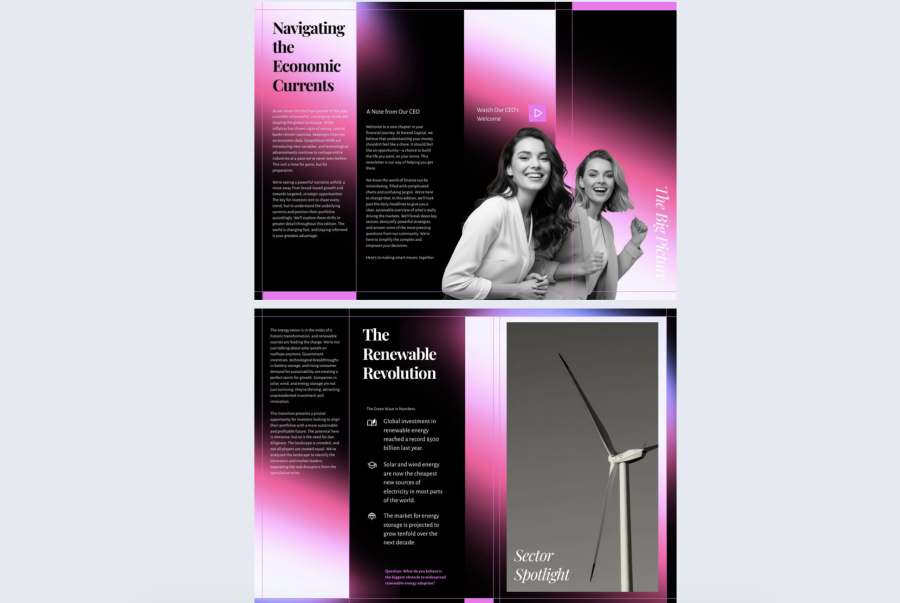
11. Financial overview newsletter template
A financial overview newsletter template gives finance teams, investment firms, and executive leadership a polished, magazine-style format for sharing economic insights, market data, and performance highlights in a way that actually gets read.
Best for: Investment firms, finance departments, and companies that communicate financial performance or market intelligence to investors, board members, or senior leadership on a regular basis.
Audience: Investors, executives, and clients
Recommended cadence: Monthly or quarterly
What to include: Cover section · Analyst or leadership note · Sector spotlights · Data highlights · Embedded commentary
Why this format works: A magazine-style layout turns dense financial data into something readers actually open, instead of a report that sits unread in an inbox.
Common mistake to avoid: Don’t assume financial literacy. Pair key figures with a plain-language explanation of what they mean and why they matter, so the newsletter stays useful to readers who don’t interpret data the way analysts do.
5. What should a business newsletter include?
A business newsletter should contain the information readers need most, organized in a structure that makes it easy to scan and understand.
The core elements are:
- A clear purpose: Explain what the newsletter is intended to communicate.
- A defined audience: Write for a specific group rather than trying to address everyone.
- A strong headline and introduction: Tell readers what the newsletter is about and why it matters.
- Key updates: Lead with the news, milestones, announcements, or developments that matter most.
- Supporting context: Explain important figures, decisions, or developments rather than presenting information without context.
- Relevant visuals: Use charts, images, diagrams, or video when they help readers understand the information.
- Clear sections: Organize different topics with descriptive headings and a logical reading path.
- A clear next step: Tell readers what they should do when an action is required.
- Consistent branding: Use recognizable fonts, colors, imagery, and design elements.
- Useful resources: Link to reports, documents, events, products, research, or other relevant information.
If you want a simple five-part framework, focus on purpose, audience, content, visual structure, and a clear next step.
6. Are business newsletters still relevant in 2026?
Business newsletters remain useful when they provide information that a defined audience actually needs.
Companies use newsletters for internal communication, leadership updates, investor relations, product announcements, customer education, market intelligence, and knowledge sharing.
What has changed is the expectation around the format. Readers are accustomed to digital content that’s easy to scan, visually organized, accessible across devices, and simple to navigate. A business newsletter therefore needs more than attractive design; it needs a clear information hierarchy and a reason for the reader to continue.
The goal shouldn’t be to publish a newsletter simply because it’s on the communication calendar. A newsletter earns its place when it consistently delivers relevant information in a format that respects the reader’s time.
7. Business newsletter example: a simple structure
A professional business newsletter can follow a straightforward structure that works across many industries:
- Header: Company name, newsletter title, edition, and date.
- Opening message: A short introduction explaining the most important update.
- Key highlights: Three to five important developments or announcements.
- Main story: The update that requires the most explanation or context.
- Supporting information: Charts, images, quotes, videos, links, or other resources.
- What’s next: Upcoming priorities, events, deadlines, or actions.
- Resources and CTA: Relevant reports, documents, products, events, or next steps.
This structure adapts for employee newsletters, investor updates, company news, product announcements, financial updates, and other business communications.
8. How to choose the right business newsletter template
Choosing a template should start with the communication goal, not the visual design.
Ask these five questions:
1. Who will read it?
Identify the primary audience, such as employees, executives, investors, customers, partners, or board members.
2. What does the audience need to know?
Determine which information is most relevant to readers. Employees may need organizational updates, while investors may need performance data and strategic context.
3. How often will you publish?
Your publishing cadence affects the amount of content and structure you need. A short monthly update can use a simpler format than a detailed quarterly business review.
4. What type of content will you include?
Consider whether the newsletter needs text, photographs, charts, financial data, videos, links, research, product demonstrations, or downloadable resources.
5. What should readers do next?
If the newsletter has a specific call to action, make sure the template gives that action enough visual prominence.
The best business newsletter template is the one that supports your communication objective without making the reader work to understand it.
9. How to create professional business newsletters with Flipsnack
Flipsnack helps you turn static documents or blank layouts into interactive business newsletters, without the need for design tools or coding. Whether you’re sharing internal updates, strategic documents, or stakeholder reports, you can create professional newsletters that are easy to customize and simple to distribute.
1. Define your audience and purpose: Decide who will read the newsletter and what you want them to know, understand, or do. Your answer determines the newsletter’s tone, content, level of detail, and structure.
2. Choose the right business newsletter template: Select a template based on the communication goal. An employee newsletter, investor update, product announcement, and financial overview shouldn’t necessarily use the same structure.
3. Plan the content before designing: List the information you need to communicate and rank it by importance. Lead with the updates that matter most to your audience.
4. Organize the newsletter into clear sections: Group related information together and use descriptive headings. Readers should be able to scan the newsletter and quickly identify the sections most relevant to them.
5. Customize the design: Apply your organization’s branding and add the appropriate text, images, charts, videos, links, and calls to action. Design should support the message rather than compete with it.
6. Make the newsletter easy to scan: Avoid unnecessary blocks of dense text. Use short paragraphs, lists, headings, visuals, and white space to create a clear reading path.
7. Add a clear next step: If readers need to take action, make the action obvious. A CTA could direct readers to a report, event, product page, survey, resource, or meeting.
8. Review before publishing: Check facts and figures, names and dates, links, images, branding, accessibility, readability, and calls to action before publishing.
9. Measure and improve: If your publishing platform provides engagement data, use it to understand which content readers interact with and which sections may need improvement. Use those insights to make future newsletters more useful.
10. Business newsletter checklist
Before publishing, ask:
- Is the audience clearly defined?
- Is the purpose obvious?
- Does the opening communicate the most important update?
- Are the main sections easy to scan?
- Are statistics explained with context?
- Are the most important points visually prominent?
- Are images and visuals relevant?
- Is the branding consistent?
- Are links working?
- Are calls to action clear?
- Does the newsletter work on the devices your audience uses?
- Are names, dates, and figures accurate?
- Is the publishing cadence realistic?
- Have you used feedback or engagement data to improve the next edition?
11. Conclusion
The best business newsletter template isn’t simply the one with the most attractive design. It’s the one that helps your audience understand the information that matters to them.
Start by defining your audience and communication goal. Then choose a template that supports the type of content you need to publish, whether that’s employee news, strategic updates, financial performance, investor communication, product information, market intelligence, or knowledge sharing.
Keep the structure clear, give important information enough context, use visuals when they improve understanding, and make next steps obvious.
Ready-made professional business newsletter templates can save design time while providing a consistent structure for recurring communication. With Flipsnack, you can customize newsletter templates, add digital and interactive elements, publish them online, and use available analytics to understand reader engagement.
The result should be more than a polished document. It should be a communication tool that helps your audience understand what matters, why it matters, and what happens next.
12. Frequently asked questions
n email newsletter is sent directly through an email platform as a message in your inbox. A business newsletter is a formatted, branded document — designed to be read as a complete publication, shared via link, embedded on an intranet, or distributed as a PDF. Business newsletters are built for strategic communication, not marketing campaigns.
It depends on the audience and purpose. Shareholder and financial updates typically follow a quarterly cadence. Internal culture and strategy newsletters work well monthly or biweekly. The most important thing is consistency — a predictable schedule builds readership habits and signals that communication is a priority, not an afterthought.
You can start from the same template, but the content and structure should be adapted for each audience. Employees need context and culture; investors need performance and strategy; customers need benefits and next steps. Flipsnack makes it easy to duplicate and customize templates, so you maintain a consistent brand while tailoring the message.
With static PDFs or email attachments, you don’t. With Flipsnack, you can track views, time spent on each page, and clicks on interactive elements — giving you a clear picture of what your audience engages with and what gets skipped. This data helps you refine content, improve structure, and make every edition more effective than the last.
The best newsletter template depends on your audience, communication goal, content type, and publishing cadence. For business communications, choose a template with a clear hierarchy, flexible sections, consistent branding, and enough space for the information your audience needs.
A business newsletter typically includes a clear introduction, important updates, supporting information, relevant visuals, clear sections, and appropriate next steps. Depending on the audience, it may also include financial data, strategic priorities, employee news, product updates, research, or other specialized content.
Start by defining the audience and purpose. Choose a template that matches the communication goal, plan the most important content, customize the design and branding, organize the information into clear sections, add relevant visuals and calls to action, review the newsletter, and publish it through an appropriate channel.
Free newsletter templates are available from design, document, email, and digital publishing platforms. When choosing a free template, consider whether it’s customizable, supports your content format, works for your intended audience, and provides the publishing or sharing capabilities you need.