Wholesale catalogs in the digital age: Everything you need to know
Last updated: January 13, 2026
Wholesale catalogs have long been a cornerstone of B2B selling. But in today’s data-driven market, traditional printed catalogs are increasingly becoming a bottleneck rather than a benefit.
Printing and distribution costs continue to rise, product assortments change faster than catalogs can be updated, and outdated information leads to ordering mistakes, frustrated buyers, and lost revenue. Sales teams are still expected to carry bulky materials, while buyers demand instant access to accurate product details, high-quality visuals, and self-service ordering experiences, anytime, anywhere.
This is where digital wholesale catalogs step in to help.
Modern digital catalogs are no longer simple online replicas of print. They’ve evolved into dynamic, interactive tools that help wholesale businesses reduce costs, prevent errors, improve buying experiences, and manage product information more efficiently. From real-time updates and rich visuals to interactive elements and performance tracking, digital catalogs support both sales teams and buyers throughout the entire purchasing journey.
In this guide, we’ll explore what wholesale catalogs look like in the digital age, why they’ve become essential for B2B businesses, and how to create, manage, and optimize them for real business impact.
Table of contents
- Understanding wholesale catalogs
- Benefits of digital wholesale catalogs
- Creating a digital wholesale catalog
- Top digital software options for wholesale catalogs
- Best practices for using wholesale catalogs
- How Melissa & Doug increased sales by 30% and with digital wholesale catalogs
- Drive growth from your digital wholesale catalogs with Flipsnack
Understanding wholesale catalogs
Digital transformation has significantly impacted how wholesale catalogs are used and their effectiveness. By leveraging digital tools and platforms like Flipsnack, businesses can create, manage, and distribute catalogs that are visually appealing, highly functional, and secure. This article delves into the essential aspects of understanding wholesale catalogs, their creation, and the best practices for maximizing their potential in the digital age.

What is a wholesale catalog?
A wholesale catalog is a comprehensive document showcasing the range of products available for bulk business purchases. Unlike retail catalogs aimed at individual consumers, wholesale catalogs are designed to enhance business-to-business (B2B) transactions, providing detailed information about products, pricing, and order quantities. These catalogs are essential for manufacturers, distributors, and wholesalers to communicate their offerings to retailers and other businesses in a cost-effective and timely manner.
The role of wholesale catalogs in B2B transactions and direct marketing
Wholesale catalogs play a critical role in B2B transactions by streamlining the purchasing process for businesses. They provide a centralized source of product information, enabling buyers to make informed decisions quickly. In direct marketing, these catalogs serve as powerful marketing tools, helping businesses reach a targeted audience with detailed product descriptions, pricing information, and special offers.
In addition, wholesale catalogs help build and maintain relationships between suppliers and buyers by offering a consistent and reliable source of product information. They also facilitate bulk ordering, which is often accompanied by discounts and special terms that are attractive to business buyers.
Benefits of digital wholesale catalogs
Digital wholesale catalogs do far more than replace printed materials. They solve operational challenges, support modern B2B buying behaviors, and help wholesale businesses stay competitive in an increasingly digital marketplace.
Here are some of the benefits of choosing to have a digital wholesale catalog:
1. Improved reach, accessibility, and self-service buying
Digital wholesale catalogs can be shared instantly via links, email, or embedded on websites, eliminating geographical barriers and distribution delays. Buyers can access product information on any device, at any time, without relying on sales reps for basic details.
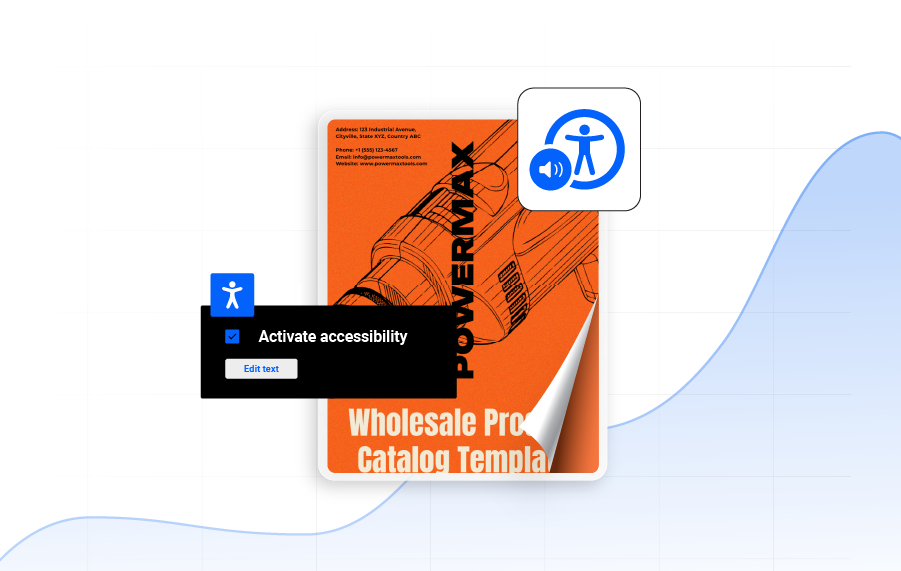
Additionally, increased accessibility helps businesses expand their market reach beyond geographical limitations, making it easier to attract international clients regardless of their abilities and capabilities. Accessible digital catalogs ensure that all customers have access to your offer wherever they are around the world, allowing you to tap into new markets.
2. Lower costs and greater operational efficiency
Switching to digital catalogs offers considerable cost savings and environmental benefits. The costs of printing, shipping, and distributing physical catalogs are eliminated. Additionally, digital catalogs reduce the environmental impact by saving paper and decreasing carbon footprints associated with producing and transporting printed materials. While digital catalogs support more sustainable business practices, they still require energy to operate. Even so, removing printing and shipping costs significantly reduces overall expenses, making digital catalogs a far more cost-effective option for modern marketing strategies.
While digital catalogs eliminate most printing needs, wholesale teams can still export a print-ready PDF when required. Flipsnack allows you to export in CMYK color mode at 300 DPI resolution, including bleed and crop marks. All interactive elements are automaticallvy removed, ensuring a clean, press-ready file for professional printing.
3. Always up-to-date product information
Outdated catalogs lead to incorrect orders, pricing confusion, and damaged trust. For wholesalers managing large or frequently changing inventories, even small errors can have significant financial consequences.
Digital catalogs eliminate this risk by serving as a centralized, always-current source of product information. Pricing, SKUs, product descriptions, and availability can be updated instantly and reflected across every shared link. Buyers and sales teams always access the most recent version, without needing new files or re-distribution.
4. Better buying decisions through rich visuals and interactivity
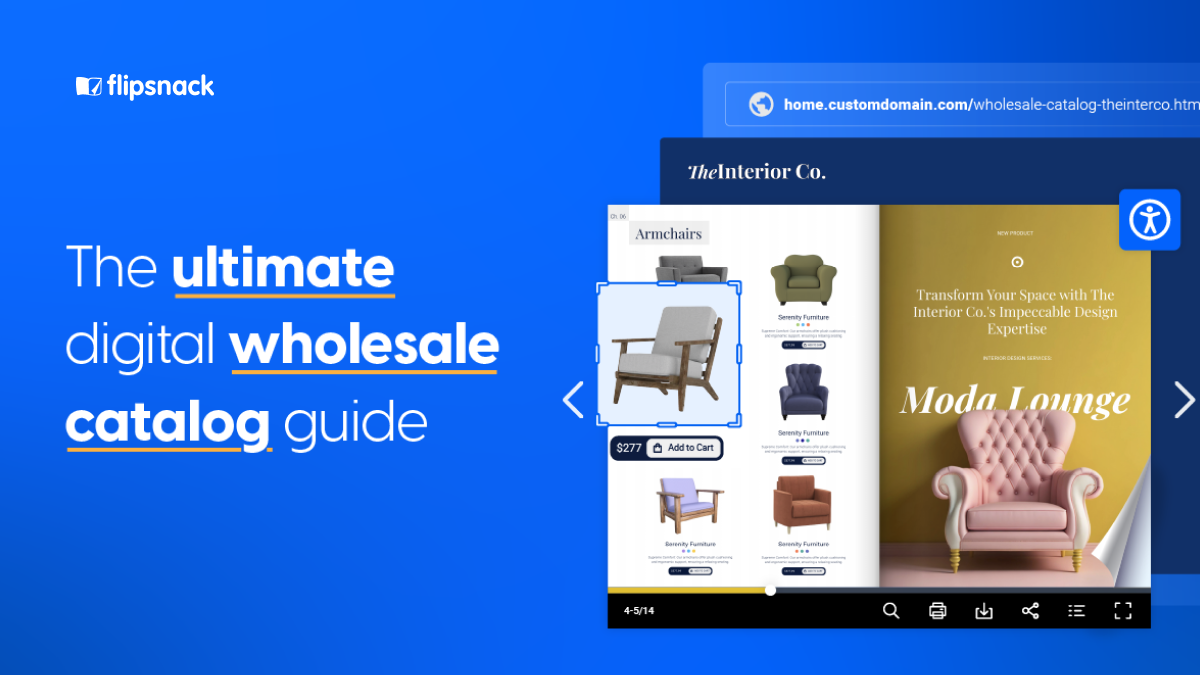
Digital wholesale catalogs offer a superior customer experience through interactive features and multimedia content. Unlike static printed catalogs, digital versions can include videos, clickable links, and interactive elements that engage users and provide a richer browsing experience. For example, videos can demonstrate product features, while clickable links can direct users to additional resources or facilitate instant purchases.
These interactive features help to keep buyers engaged, provide them with more comprehensive product information, and streamline the purchasing process.
In summary, digital wholesale catalogs are essential tools for modern B2B transactions and direct marketing. They offer enhanced reach and accessibility, cost-effectiveness, environmental benefits, and an improved customer experience through interactivity and multimedia.
By adopting digital catalogs, businesses can stay competitive, meet the expectations of today’s buyers, and contribute to a more sustainable future.
5. Improved product information management
Digital wholesale catalogs also improve internal workflows by turning product data into a single, reliable source of truth. By structuring product information in a consistent, searchable format, they act as a lightweight product information management (PIM) layer that connects internal systems with customer-facing catalogs.
With platforms like Flipsnack, businesses can sync product data from their ERP or PIM directly into digital catalogs, ensuring that pricing, SKUs, and descriptions remain accurate and up to date. This reduces manual work, prevents errors, and ensures consistency across all distribution channels.
Creating a digital wholesale catalog
Creating a digital wholesale catalog involves several steps to guarantee its effectiveness as a marketing tool. Start with planning and organizing your content once you have identified your target audience and tailored the content to their specific needs. Follow-up with applying the design principles that convert readers into buyers and guarantee a smooth experience. The following section will act as a brief guide into digital wholesale catalog creation.
1. Planning and organizing content
Planning and organizing content are necessary for an effective digital marketing strategy. These critical steps help in identifying your target, tailoring your content to their needs, and ensuring the offer is appealing to retailers, distributors, and other bulk purchasers. Prepare your content into categories and subcategories for clear and logical navigation and to provide an overall exquisite shopping experience for buyers.
Identify your target audience
Before creating a digital product catalog, it’s crucial to understand who your target audience is. For wholesale businesses, this often includes retailers, distributors, and other businesses looking to purchase products in bulk. Knowing your audience will help tailor the content to meet their specific needs and preferences.
Gather product information
Compile detailed information about each product, including descriptions, specifications, pricing, and SKU numbers. Ensure that all product details are accurate and up-to-date. This information will form the backbone of your catalog.
Organize content logically
Arrange products into categories and subcategories for easy navigation. A well-organized catalog helps buyers quickly find the needed products, enhancing their shopping experience. Consider using an index or table of contents for large catalogs.
2. Respecting principles: Layout, visuals, and branding
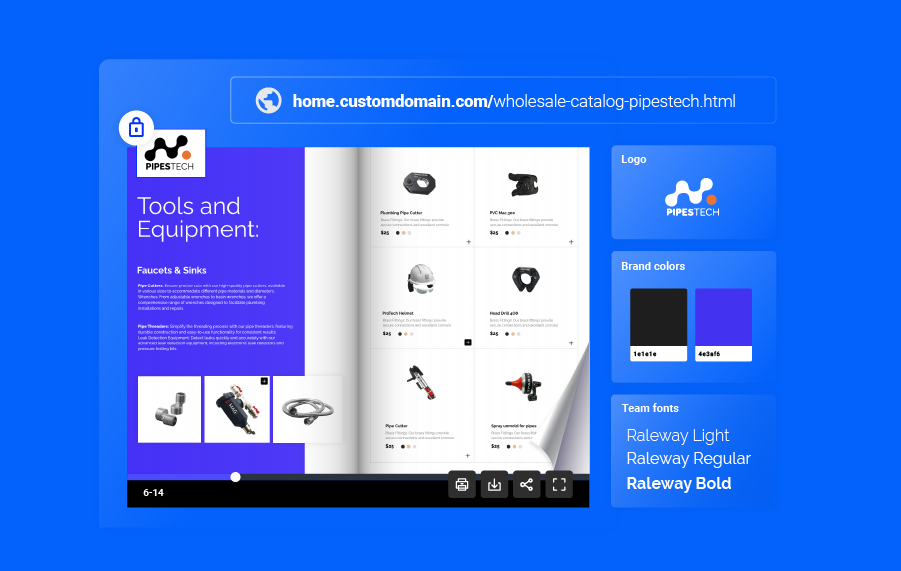
To capture the attention of potential buyers and ensure a smooth user experience, the design of your digital catalog is pivotal. Clean and intuitive layouts guide users through the catalog with consistent formatting styles, helping your brand consistency throughout your marketing materials. The following design elements collectively enhance the overall appeal and functionality of the digital wholesale catalog.
Layout
Choose a clean and intuitive layout that seamlessly guides the user through the catalog. Prioritize ease of navigation with clear sections and consistent formatting. Use grids and columns to maintain alignment and balance on each page.
Visuals
High-quality visuals are essential for creating an engaging digital catalog. Use professional images and videos to showcase your products from various angles. Ensure that visuals are consistent in style and quality to maintain a professional appearance.
Branding
Incorporate your brand’s colors, fonts, and logos throughout the catalog to reinforce brand identity. Consistent branding helps create a cohesive look and feel, making your catalog instantly recognizable.
For organizations with a lot of info or strict brand standards, Flipsnack’s design team can step in and create a custom flipbook template fully aligned with your visual identity and content structure. This is ideal if you don’t want the stress of building layouts yourself or you’re looking for a seamless, ready-to-use solution.
3. Track and measure ROI from your digital wholesale catalog
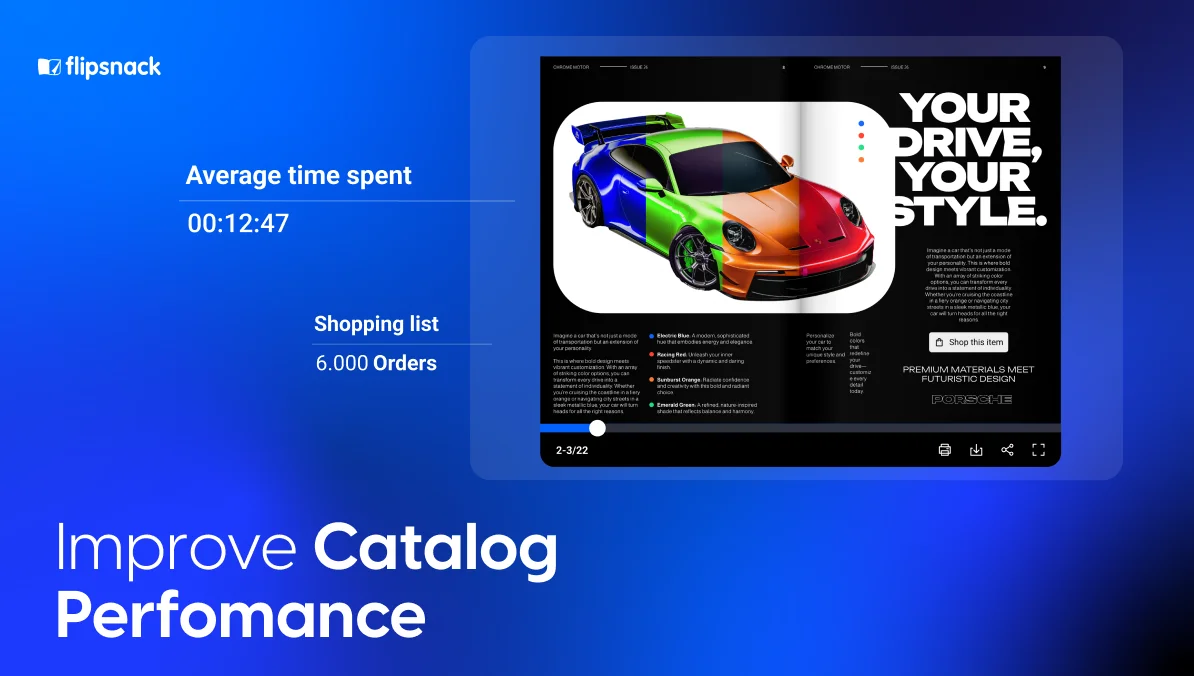
Unlike print catalogs, digital wholesale catalogs provide clear visibility into how buyers interact with your products. With Flipsnack Analytics, you can track:
- Catalog views and impressions to understand reach
- Time spent per catalog and page to measure buyer interest
- Clicks on products and interactive elements to see what drives engagement
- Heatmaps to identify the most viewed and interacted-with catalog pages
- Product-level performance (views, added to list, ordered products)
- Orders and revenue generated directly from the catalog
- Lead capture and form submissions tied to catalog interactions
These catalog-specific insights help sales and marketing teams optimize layouts, prioritize high-performing products, and directly link catalog engagement to revenue and ROI.
Top digital software options for wholesale catalogs
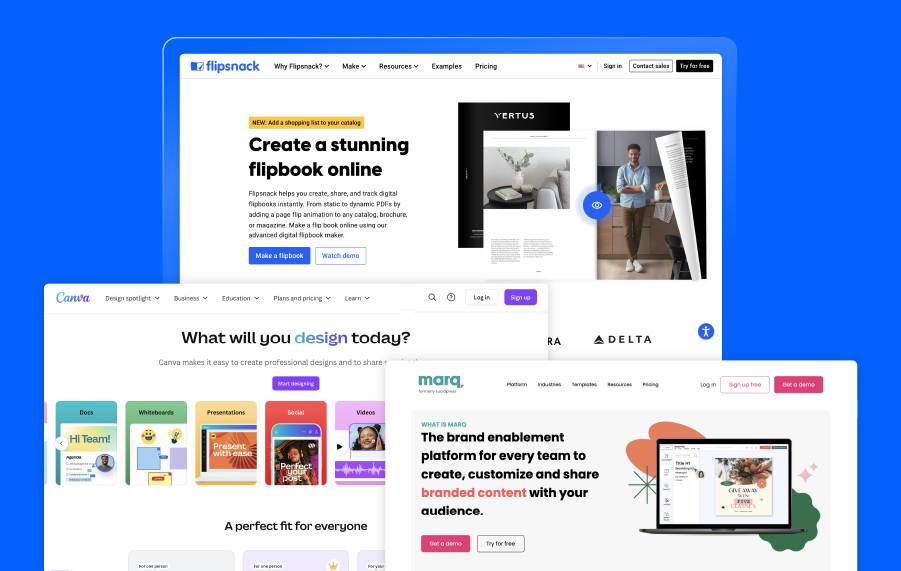
Choosing the right tools and software is important for an effective digital wholesale catalog. While many platforms offer templates or basic interactivity, not all are built to handle the complexity of wholesale use cases, such as large product assortments, frequent updates, data accuracy, and performance tracking.
Below are four of the most relevant digital catalog tools for wholesale businesses today, starting with the most comprehensive option.
Flipsnack – The most complete digital wholesale catalog solution
Flipsnack stands out as an exceptional catalog maker for creating digital product catalogs tailored to meet the needs of modern businesses. Its user-friendly interface ensures that even those with minimal design experience can easily create professional-looking catalogs.
Flipsnack offers a wide range of customizable catalog templates, allowing businesses to craft unique and visually appealing catalogs that resonate with their brand identity. These templates, once customized, can be saved as locked, branded templates for future use to ensure consistency.
Also, Flipsnack enables wholesale businesses to have:
Automated catalog creation from ERP and PIM data
Connect your ERP or PIM system to Flipsnack or generate catalogs automatically. Product data, pricing, and SKUs stay accurate without manual exports or spreadsheets.
Real-time updates without re-publishing
Update products, prices, availability, or page layouts instantly. You can edit the PDF directly in the browser—replace visuals, adjust text, add SKUs, or refine product details—without recreating or redistributing the file. Every shared catalog link automatically shows the latest version, reducing errors and rework.
Scalable catalogs for large product inventories
Manage hundreds or thousands of SKUs across multiple catalogs, regions, or customer segments without slowing down production.
Interactive features that support B2B buying
Add product tags, shopping lists, videos, links, and forms to help buyers explore products and build orders faster.
Living visuals (AI-powered micro-motion)
Turn static product images into subtle, auto-playing motion inside the catalog to guide attention and increase measurable engagement, no video production required.
Performance tracking and measurable ROI
Track views, time spent, product interactions, and orders. Use heatmaps and AI-driven insights to improve layouts and connect catalog engagement to revenue.
By combining automation, scalability, interactivity, and analytics in one platform, Flipsnack transforms catalogs from static marketing materials into dynamic sales and operations tools. This makes it particularly well-suited for wholesale businesses that need speed, accuracy, and measurable results from their digital catalogs.
FlippingBook – Strong PDF-based flipbooks for distribution
FlippingBook is known for turning static PDFs into digital flipbooks with a realistic page-turning effect. It offers branding options, basic interactivity, and offline access, making it a solid choice for companies that prioritize presentation and controlled distribution.
However, FlippingBook is more limited when it comes to advanced catalog workflows. It focuses primarily on PDF publishing rather than full catalog management, automation, or product-level analytics, which can be a constraint for growing wholesale teams.
DCatalog – B2B digital catalogs with ordering features
DCatalog is designed for B2B and wholesale businesses that need interactive catalogs with built-in ordering functionality. It’s commonly used by manufacturers and distributors who want to connect product data with sales catalogs.
While powerful, dCatalog often requires a more complex setup and data management. This can make it better suited for teams with dedicated technical or design resources rather than those looking for fast, self-service catalog creation and frequent updates.
iPaper – Conversion-focused interactive digital catalogs
iPaper is a digital catalog platform designed to turn catalogs into interactive, conversion-driven experiences. It focuses heavily on in-catalog shopping features, allowing users to create shoppable catalogs where buyers can interact with products, add items to carts, and move toward purchase directly from the catalog.
The platform is particularly suited for brands and retailers that prioritize e-commerce performance and want to bridge the gap between inspiration and conversion. With support for interactive elements and shopping integrations, iPaper works well for B2C and hybrid B2B use cases where the primary goal is driving online sales.
However, iPaper is less focused on internal catalog workflows such as large-scale automation, ERP, or PIM data syncing, and complex catalog management. For wholesale teams managing frequent updates, multiple price lists, or extensive product inventories, these limitations can make it harder to scale efficiently without additional tools or manual processes.
Best practices for using wholesale catalogs
There are several best practices, or tips and tricks, if you will, for those wanting to create an outstanding catalog for their audiences. The following tips are sure to increase the chances of your digital wholesale catalog getting into the right hands.
Optimizing for search engines
Incorporate relevant keywords strategically throughout your catalogs to enhance search engine optimization (SEO). Utilize a keyword ranking tracker to monitor keyword performance and adjust your strategy accordingly.
Create compelling meta descriptions and alt text for images to improve accessibility and visibility.
Understand customer data
Personalize your catalogs based on customer preferences and behavior, highlighting products of interest and offering tailored recommendations. Use analytics to refine and continuously improve your content.
Maintaining updated content
Regularly update your catalogs to reflect inventory, pricing, and promotion changes. Real-time updates ensure all stakeholders have access to the latest information, enhancing decision-making and customer satisfaction.
By following these best practices, you can create effective, engaging, and optimized wholesale catalogs that reach a wider audience, enhance the customer experience, drive engagement, and ultimately boost your sales.
Start using Flipsnack for your product catalogs
If you’re starting from scratch, Flipsnack’s wholesale catalog templates offer the perfect foundation for new catalogs, providing a structured layout with essential design elements. For businesses with large inventories, the product catalog generator simplifies the process by converting a spreadsheet into a structured digital catalog, reducing manual data entry and ensuring accuracy.
Get started with a wholesale catalog template
Flipsnack provides professionally designed templates tailored for wholesale catalogs. These templates offer a structured foundation with customizable design elements, allowing you to incorporate product details, SKUs, pricing, and descriptions. You can easily adjust the layout to match your branding, making a visually appealing and mobile-friendly catalog.
Automate catalog creation with the product catalog generator
Flipsnack’s product catalog generator is an intuitive solution for transforming your CSV product feed into a professional digital catalog in just seconds. This automation minimizes manual data entry, enhances accuracy, and makes sure your catalog is always up-to-date. Additionally, you can enrich your catalogs with interactive elements like videos, product tags, and clickable links to engage your audience.
How Melissa & Doug increased sales by 30% and with digital wholesale catalogs
Overview: Melissa & Doug, a leading toy manufacturer, needed an innovative way to showcase their extensive product line to retailers and customers. Traditional printed catalogs were costly and lacked interactivity. They transitioned to using Flipsnack to create engaging, interactive digital catalogs.
We created the format of the catalog internally from scratch. Flipsnack’s automation feature not only made it easy to upload product information, but we were able to display it exactly how we envisioned it. This will make the flow into our 2024 catalog an easy and pain-free process!
Tracy Bubeck
Sales Administrator
Implementation: Melissa & Doug utilized Flipsnack to design digital catalogs featuring vibrant images, detailed product descriptions, and embedded videos demonstrating product features. They leveraged Flipsnack’s customization options to ensure their catalogs reflected their brand’s playful and educational ethos.
Results:
- Increased sales: Melissa & Doug saw a 30% increase in sales inquiries and orders within six months of switching to digital catalogs.
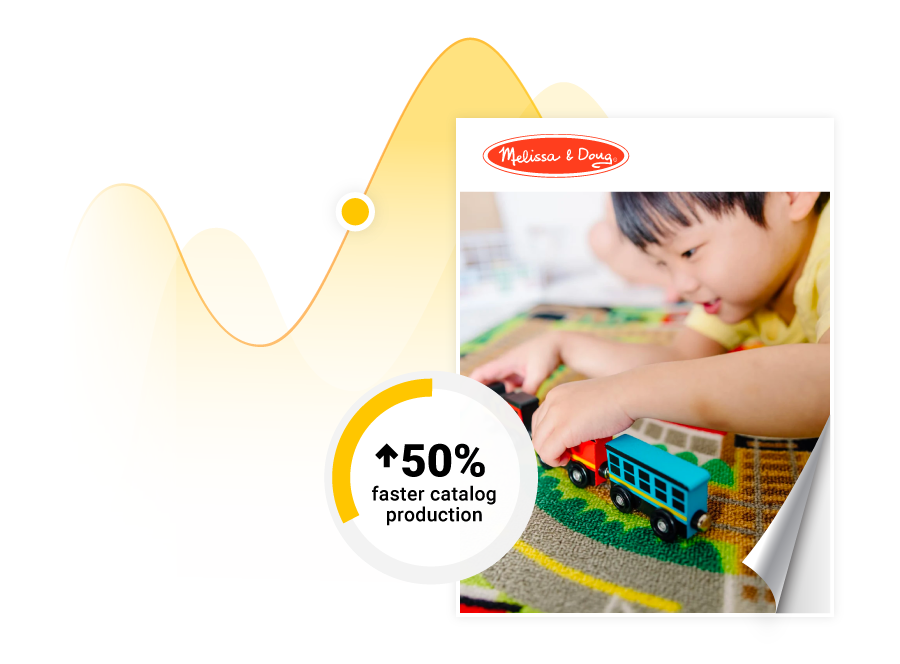
- Customer engagement: The interactive elements led to a 50% increase in the time spent by customers on their catalogs.
- Cost efficiency: Transitioning to digital catalogs reduced their marketing and distribution costs by 35%.
Drive growth from your digital wholesale catalogs with Flipsnack
Digital wholesale catalogs are now essential for B2B businesses. They offer unparalleled benefits, such as enhanced reach and accessibility, cost-effectiveness, and improved customer experiences through interactivity and multimedia. By transitioning from traditional printed catalogs to digital formats, businesses can stay competitive, meet the expectations of today’s buyers, and contribute to a more sustainable future.
Flipsnack stands out as a great platform for creating and managing digital catalogs, providing features that streamline the process and enhance functionality. With easy sharing options, interactive elements, robust branding tools, and top-notch privacy and security measures,
We encourage mid and top-management in the wholesale and manufacturing industries to adopt digital catalogs to elevate their marketing efforts and drive growth. Explore Flipsnack’s comprehensive features and start creating your own wholesale catalogs today to experience the numerous benefits of digital transformation.
FAQ about digital wholesale catalogs
1. Do I need technical skills or developers to get started?
No. Digital catalog platforms like Flipsnack are designed for non-technical teams. Marketing, sales, or channel managers can create and manage catalogs without coding or design expertise. Technical integrations, such as ERP or PIM connections, are optional and can be added later if needed.
2. Can I connect my ERP or PIM system to a digital catalog?
Yes. Many modern digital catalog tools support ERP and PIM integrations. With platforms like Flipsnack, product data such as SKUs, pricing, and descriptions can be synced directly into catalogs, reducing manual work and ensuring information stays accurate.
3. Are digital wholesale catalogs secure?
Yes. Digital catalogs can be protected with features such as private sharing, password protection, and access controls. This is especially important for wholesale businesses that share sensitive pricing or customer-specific information.
4. Can digital catalogs support large product inventories?
Absolutely. Digital catalogs are built to handle hundreds or even thousands of products. In Flipsnack, you can easily create multiple catalogs for different regions, customer segments, or product lines while maintaining consistency and control.