![How to Make a Travel Brochure That Gets People to Book [Templates Included]](https://blog.flipsnack.com/wp-content/uploads/2022/12/make-travel-brochure-with-Flipsnack.png.webp "make travel brochure with Flipsnack")
How to Make a Travel Brochure That Gets People to Book [Templates Included]
Published on: December 7, 2022
Last update: July 28, 2026
Travelers pick up brochures more than most agencies assume. A Bentley University survey found that 79% of visitors grab a printed brochure during a trip, and 73% said one could change their plans entirely (Bentley University, Visitor Survey, 2018). That’s real influence sitting in a rack or a lobby.
Run a travel agency, work solo as an independent agent, or promote a single attraction: a strong brochure moves people from curious to booked. This guide covers how to build one, digital and print, plus five free templates to start from.
Table of contents
- What is a travel brochure?
- Digital vs. print travel brochures
- How to design a travel brochure that works
- Quick comparison: choose your ideal travel brochure template
- What customers say about Flipsnack templates
- Travel brochure templates to customize
- How to make a travel brochure with Flipsnack templates
- Turn destination inspiration into bookings
- FAQs on travel brochures
What is a travel brochure?
A travel brochure is a promotional tool used in tourism marketing. It works as both a visual and informational guide. The goal is to inspire potential travelers and give them the information they need to make a decision.
A good travel brochure answers the questions tourists actually ask. How is the weather? What can you do there? How do you get around? What does it cost? Clear answers to these questions, paired with strong visuals, make up the core of any effective travel brochure.
If you know how to make a travel brochure, you can move people from curious to booked. The right mix of images and copy gives readers a real feel for the destination and pushes them to act.
Understanding the purpose of a travel brochure can be the difference between a successful brochure marketing strategy and losses in revenue. To exemplify what a great travel brochure might look like and better illustrate the meaning of a travel brochure, I’m going to mention the brochures from Bookatrekking.com, a hiking company that meets the needs of people interested in visiting famous mountains around the world. It comes as a branded travel brochure with travel destination services.
Digital vs. print travel brochures
Print brochures work when you need something physical. Hotel lobbies, travel expos, tourism offices, airport racks. People pick them up, flip through them, and take them home. They’re tangible, and that matters when someone is browsing without a plan.
Digital brochures work everywhere else. They’re shareable via link or email, embeddable on your website, and trackable so you know who’s reading and what they’re interested in. Add videos, booking links, and contact forms and your brochure goes from inspiration to conversion in one click.
The smart move is both. Design once in Flipsnack, share it digitally, and download the same file as a print-ready PDF. Same brochure, two formats, twice the reach.
How to design a travel brochure that works
Travel agencies and visitor centers always have printed materials on display. That is not going away. But printed travel brochures have a short life. People leave them behind, toss them out, or forget them. By the next season, they are already waste.
Digital travel brochures avoid that problem entirely. They live on your devices. They are always on hand, always accessible, and easy to update. No stacks to collect, no copies to discard, no outdated content floating around. You just edit and republish.
When you create a travel brochure in digital form, you also gain flexibility. You can reach people who plan their trips online, which is most travelers today. Printed materials still make sense for information centers and agencies. But for everything else, digital is the smarter choice.
The good news is that learning how to make a travel brochure has never been easier. You do not need design experience. You can upload a PDF, explore the available features, and have a professional-looking result in no time. A quick guide is all it takes to get started.
1. Plan before you make your travel brochure
Travel brochures are a core part of any tourism marketing strategy. Their job is not just to list services. It is to make those services feel real and tangible. Traveling cannot be tested before you book. There is no trial version. That is exactly what a travel brochure is for.
Write about what you actually know. Basing your content on a quick Google search will not cut it. First-hand experience gives your copy authenticity that no amount of research can replicate. Explore the destination yourself. Stay in the hotels. Try the activities. A client can find basic information anywhere. What they cannot find elsewhere is the feeling your experience gives them.
A travel brochure is not just about great images or a clever color scheme. It needs all of that, yes, but centered on the customer’s needs. Digital travel brochures take it further with videos and interactive features. The goal is to put readers inside the experience before they have even booked.
2. Build a buyer persona
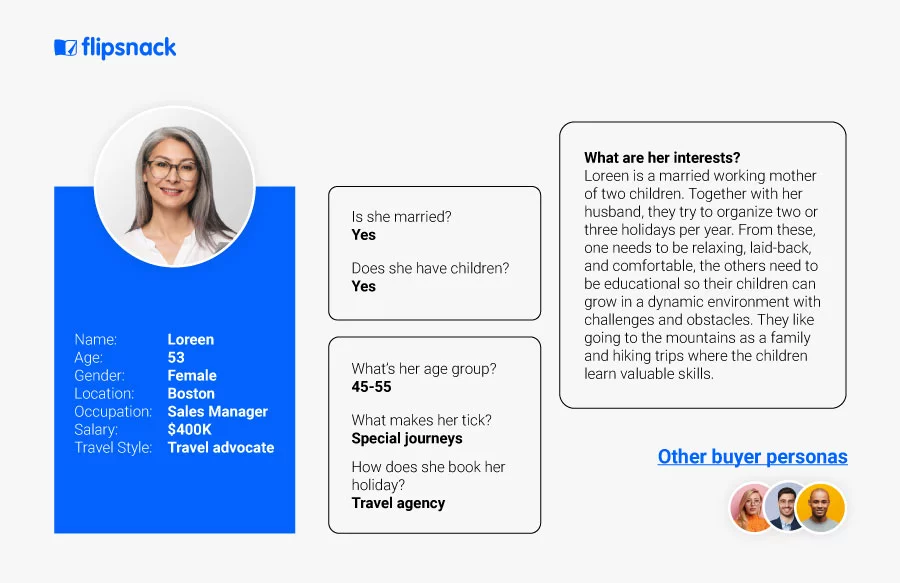
Knowing what you write is just as important as knowing who you are writing for. A buyer persona is a profile of your ideal customer. It is built on your services, your data, and the characteristics of the people most likely to buy.
Ask yourself:
- Are they traveling solo or with family?
- What is their age group?
- What activities do they enjoy?
- How do they typically book a trip?
The more specific you get, the better. When in doubt, create at least three buyer personas, because you will rarely have just one type of customer.
Think of it like writing a character for a story. If you do not understand the character, the story falls flat. Use reviews, testimonials, and customer data to build yours. You can also use templates online for designing your buyer persona.
Once your buyer persona is clear, you will know exactly what to put in a travel brochure to speak directly to them.
3. Organize your ideas
Before you start building your travel brochure, you need a plan. Think about what you want it to look like and what story you want it to tell. A good travel brochure does not just inform. It immerses readers in an experience and gives them a taste of what is waiting for them.
Start by listing everything you want to cover. Then organize it into a flow that makes sense. Open with an emotion on the front page. Follow with an intro that pulls readers deeper. Then move into the main attractions and what visitors can expect to experience there.
Your buyer persona is your target audience. You need to excite them. Readers respond to a good storyline, so think of yourself as the storyteller. Give them a reason to keep reading. Make it hard for them to scroll past your offer.
At the same time, keep it tight. Simple words carry the strongest emotions. Your core message should run through the entire brochure, building as readers move from page to page. By the end, they should feel ready to book.
4. Choose the right format
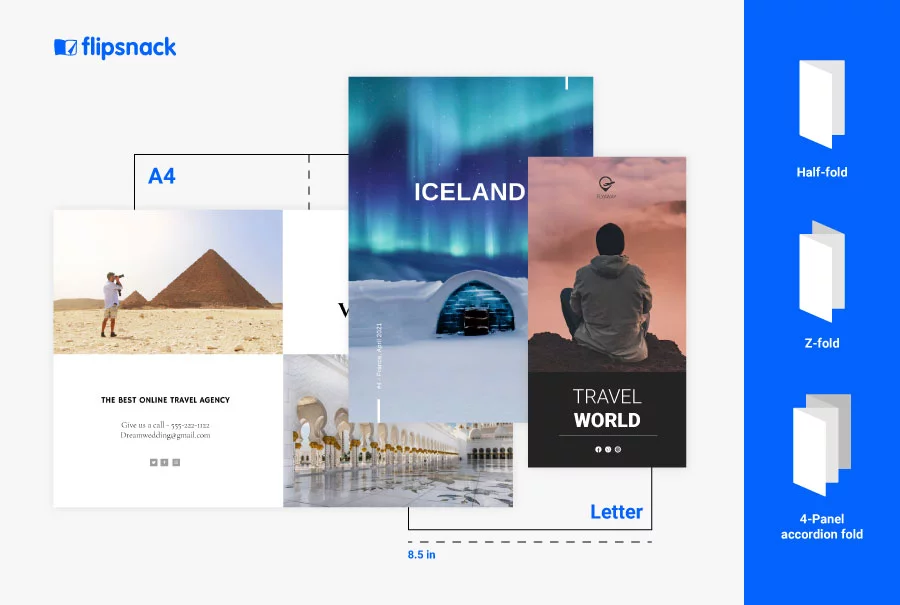
Once you know your content and your audience, it is time to think about travel brochure format. This applies to both print and digital, so it is worth getting right from the start.
For printed travel brochure designs, folding style is a key decision. Common options include the single fold, concertina fold, cross fold, open-gate fold, couple-gate fold, and roll fold. You can even make origami if you want to stand out, though heavy folding can work against your visuals. Standard dimensions are A4, A5, and DL. Custom shapes are possible but will cost more to produce.
For digital, you have more freedom. An A4 layout works as a base. From there, you can go wider with the letter format (916 x 1056 px), larger with the tabloid (1632 x 1056 px), or smaller with the flyer (416 x 865 px) or booklet format (793 x 793 px). Digital travel brochures are not limited by paper, ink, or budget, so you can go deeper on content without the usual print constraints.
If you plan to use both formats, design digitally first. Browse travel brochure templates built for different folding styles, or compare travel brochure makers side by side if you’re still weighing tools.
5. Write a compelling copy
Copy is the most time-consuming part of how to make a travel brochure. Do not rush it.
For any travel brochure template, the basics apply: check your grammar, watch your punctuation, and keep sentences short. Great images cannot save weak copy. The two work together like heart and lungs.
Write like you are talking to a friend. Be descriptive. Paint a picture of the destination. Make readers feel like they are already there. Enthusiasm is contagious, and it comes through in the words you choose.
End with a clear call to action. Something like “Plan your adventure now,” “Sign up for the latest offers,” or simply “Book.” Once the copy draws them in, the right visual will close the deal.
6. Make it visually appealing
Travel brochure images are the first thing people notice. If the visuals are dull, no one will read the copy, no matter how good it is.
When people look at travel brochure examples, they are drawn to images that show real experiences. People exploring, having fun, and enjoying local food. Choose visuals that give readers a taste of the destination and make them want to be there.
We respond to visuals emotionally before we engage with text. A stunning landscape can trigger longing all on its own. Use that to your advantage.
For digital travel brochures, you can go further. Embed videos, add a virtual tour, and include interactive features that turn a passive read into an experience. Just keep it accurate. Do not sell something you cannot deliver.
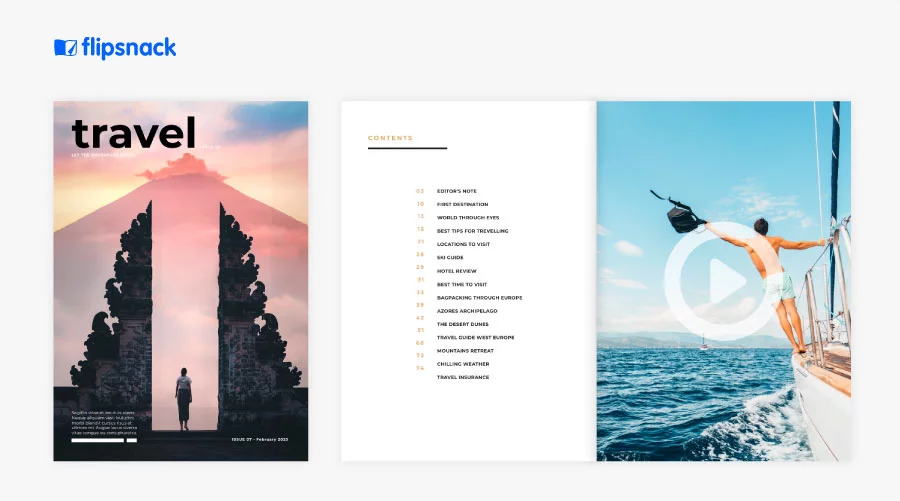
7. Include branding elements
Think of the tourism brands you recognize instantly. A logo, a slogan, a color. That kind of recognition does not happen by accident.
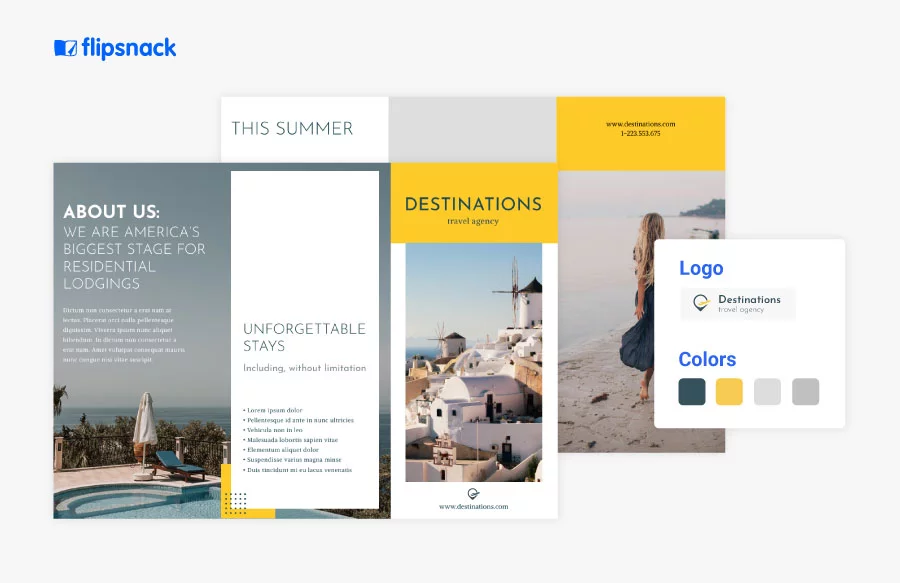
Branding in your travel brochures goes beyond a logo on the cover. It includes your typography, font pairings, color palette, tone of voice, and the overall feeling your materials give off. Every element should connect back to who you are as a brand.
Brand consistency across your marketing materials builds loyalty. If clients have a great experience and your branding is memorable, they come back. Use a branding kit to keep everything aligned across your travel brochure design, social posts, and email campaigns.
Keep your brand present throughout. Work with your colors, your typography, and the feeling your brand gives off. If your palette is pastels, stick to those. If it is black and white, think carefully before adding color. Whatever it is, make it consistent and make it yours.
Quick comparison: choose your ideal travel brochure template
| Template Name | Primary Industry | Best For | Main Focus | Key Benefits |
|---|---|---|---|---|
| Blue Sea Tourism Brochure Template | Tourism / Hospitality | Travel agencies, tourism boards, hospitality brands | Beach destinations, coastal experiences | Turquoise color palette throughout; cohesive accent colors; logo, image, and text replacement; print-ready and digital. |
| Pattern Themed Travel Brochure Example | Tourism / Travel | Boutique tour companies, experiential travel brands | Experiential trips, activity-focused destinations | Diary photo album design; polaroid-style photos with cursive titles; warm, personal journal aesthetic; print and digital. |
| Adventure Trip Brochure Template | Tourism / Travel | Tour operators, travel agencies, destination marketers | Adventure destinations, guided tours, multi-activity trips | Front-and-back immersive design; foldable print or digital format; attractions, hotels, and restaurants sections. |
| Informative Travel Brochure Idea | Tourism / Travel | Travel agencies, tour operators running teaser campaigns | Lead generation, teaser promotions, initial outreach | Minimal content, visual-first approach; elegant fonts and cool colors; lead capture form; drag-and-drop editing; print and digital. |
| Double Gate Fold Holiday Promotion Brochure Template | Tourism / Hospitality | Resorts, travel agencies, hospitality brands running seasonal campaigns | Holiday promotions, seasonal packages, destination reveals | Layered gate-fold format; seamless image continuation across panels; pricing and accommodation sections; print-focused PDF download. |
What customers say about Flipsnack templates
The best flipbook tool I have used
Flipsnack is easy to use and offers all the features a small business needs, at a very affordable price. There are plenty of templates to choose from to speed up the project. Each template is easily tailored to your needs. The support is good and fast through the chat function, and they also provide a phone number (infrequently these days) in case you prefer a phone call.
Leonardo Soto, President of SotoNets Cloud Solutions
Reviewed on G2
Travel brochure templates to customize
From here on out, we’re done with the technical aspects of digital travel brochures. Now we’ll show you that we don’t only talk the talk but also walk the walk. Below are a few travel brochure ideas that you can use to inspire your next project.
Blue Sea Tourism Brochure Template
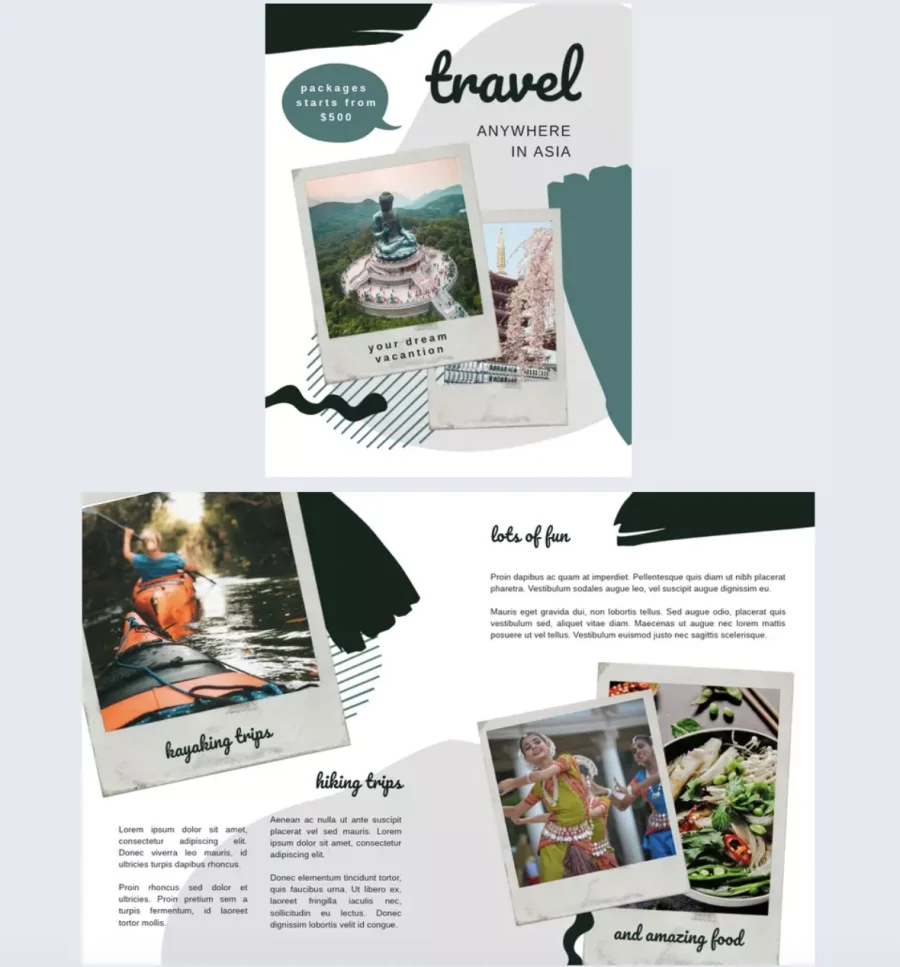
One stunning image can sell a destination faster than a paragraph ever could. This template leads with exactly that: a breathtaking coastal landscape with turquoise water and sky tones woven throughout every page. The color carries through backgrounds, page numbers, and design accents, creating a cohesive visual experience that puts the destination front and center.
Best for: Tourism boards, travel agencies, and hospitality brands promoting beach destinations or coastal experiences. Works for print and digital distribution.
Real-world application: A travel agency promoting Greek island packages can use this template to let the visuals do the selling. Replace the cover image with your destination’s best shot, match the accent colors to complement the new imagery, and carry that palette through the full brochure. Add your logo, swap in your own travel photos and text, include contact details, and add interactive elements to capture attention. The result is a print-ready or digital brochure built in minutes, not days.
Common mistake to avoid: Don’t use low-quality or overused stock photos on a travel brochure. The image is doing 90% of the work. If the cover photo doesn’t make someone wish they were there, no amount of good copy will save it.
Customize in Flipsnack’s Design Studio. Add your logo, replace images and text, change accent colors, and add interactions. Download and print or share digitally.
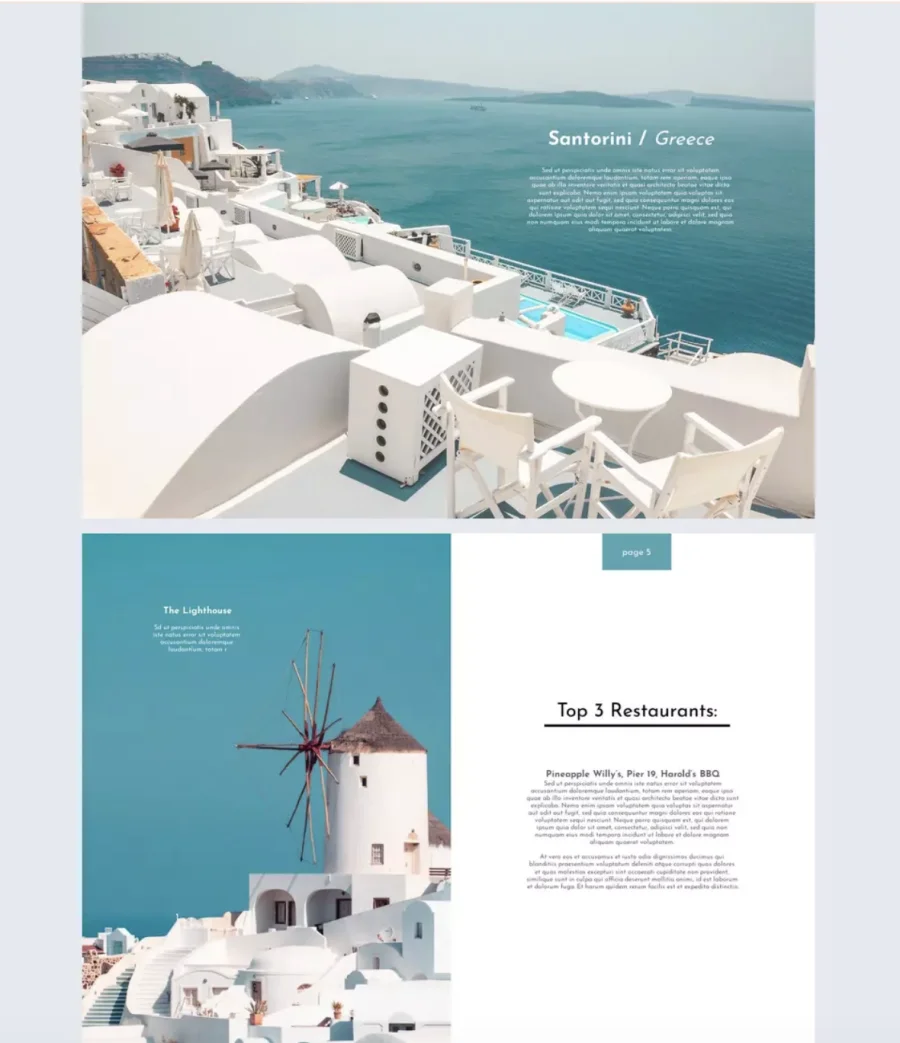

Pattern Themed Travel Brochure Example
Not every travel brochure needs to look corporate. This one feels personal. The design mimics a diary photo album with polaroid-style photographs and cursive titles that make it read like a travel journal rather than a sales piece. That personal touch bridges the gap between a destination the reader hasn’t visited yet and the feeling of already being there.
Best for: Travel agencies, tour operators, and destination marketers who want their travel brochure template to feel warm, nostalgic, and personal rather than polished and promotional.
Real-world application: A boutique tour company promoting experiential trips can use this sample travel brochure to showcase activities and destinations in a way that feels curated, not catalog-like. The pattern-themed design keeps things simple so the spotlight stays on the experiences. Replace the polaroid photos with your own destination shots, update the cursive titles with your activity names, and let the journal-style layout do the storytelling. Among travel brochure examples, this one stands out because it connects emotionally before it sells.
Common mistake to avoid: Don’t overload a personal, journal-style layout with corporate copy and sales language. If the design feels like a diary, the writing should match. Keep descriptions short, conversational, and experiential. Stiff marketing speak breaks the illusion that makes this travel brochure design work.
Adventure Trip Brochure Template
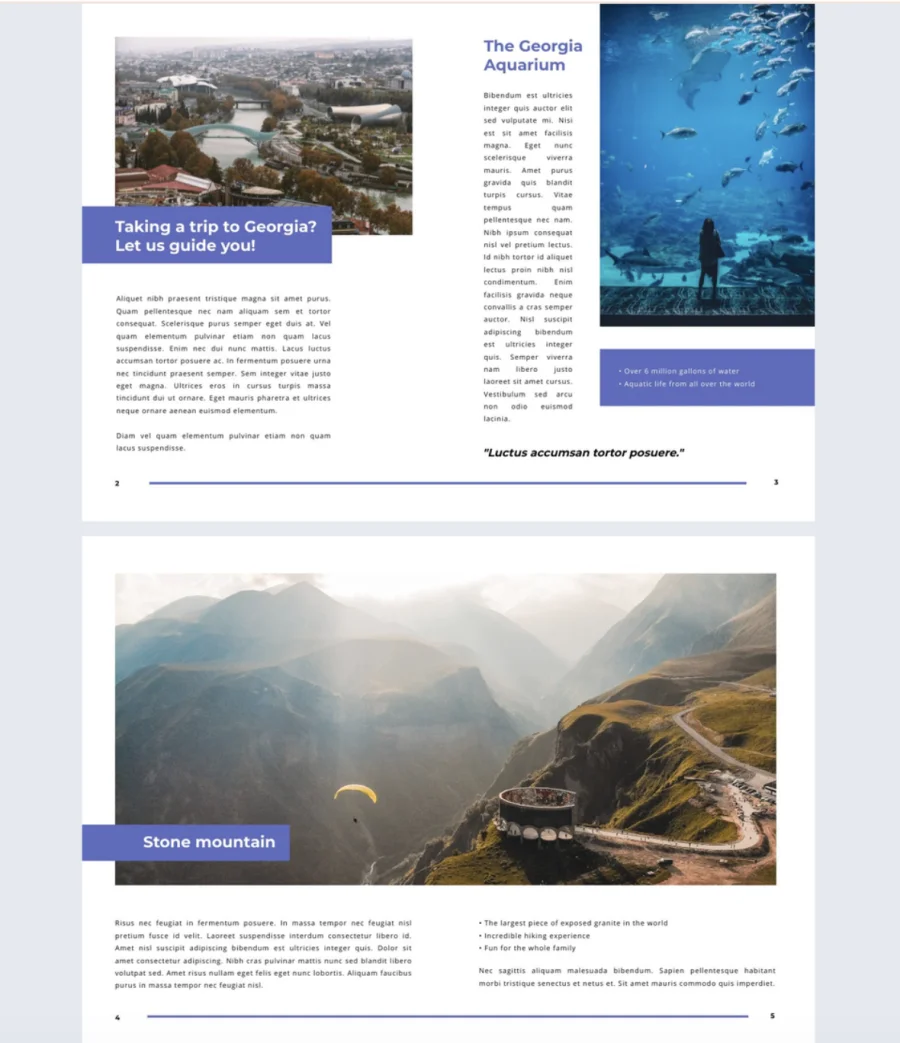
Some travel brochures sit on a rack. This one makes people pick it up. The front-and-back design gives an immersive visual experience where destination imagery continues beyond the page, pulling readers into the trip before they’ve even booked it. Works as a foldable print piece or a digital brochure for easy online distribution.
Best for: Tour operators, travel agencies, and destination marketers who need a travel brochure template that works in both print and digital formats. Ideal for promoting adventure destinations, guided tours, or multi-activity trips.
Real-world application: A travel agency promoting an adventure destination can use this sample travel brochure to highlight the top attractions, best-reviewed hotels, and highest-scoring restaurants in one compact format. Lead with the destination’s main draw on the cover to spark curiosity, then fill the inside with practical details like accommodation, transportation, and local culture. The foldable format makes it easy to hand out at travel expos or tourism offices, while the digital version works for email campaigns and website embeds.
Common mistake to avoid: Don’t cram every attraction and hotel into one brochure. Pick the highlights that generate the most interest and link to a full guide or booking page for the rest. A travel brochure that tries to cover everything ends up selling nothing.
Informative Travel Brochure Idea
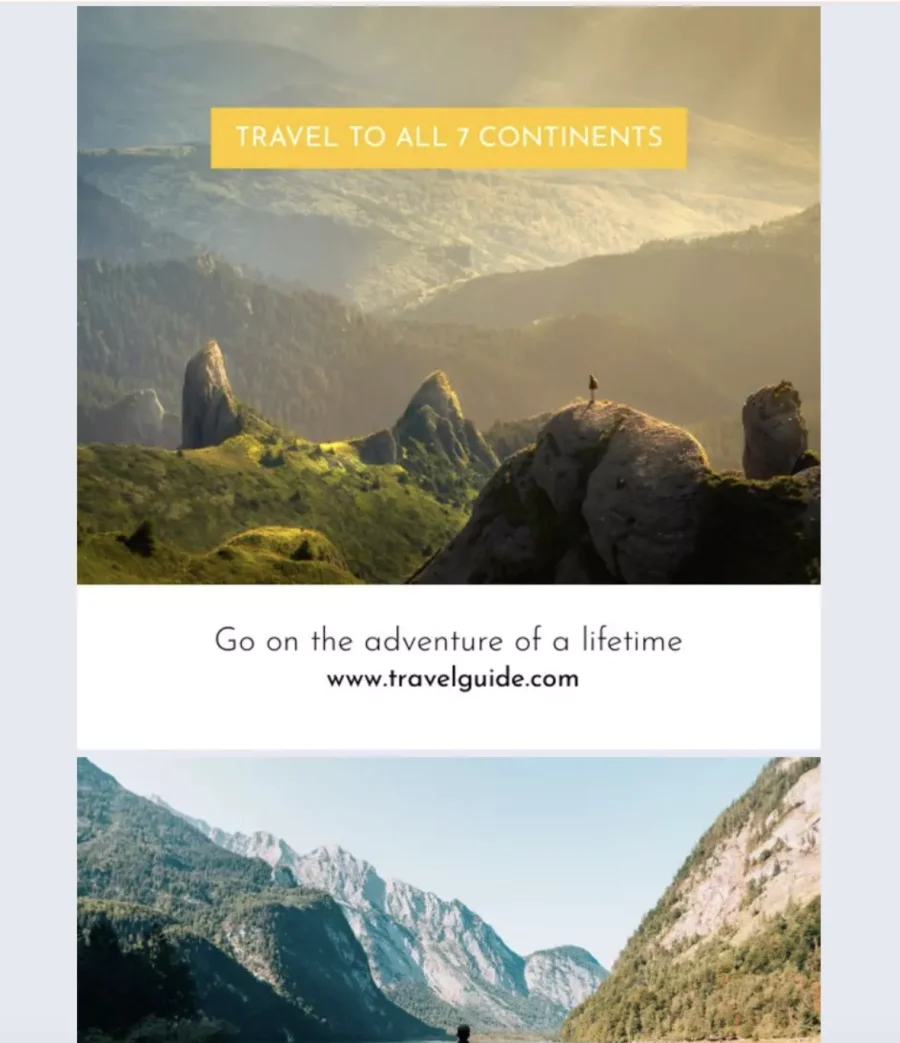
Sometimes the best travel brochures are the ones that don’t say too much. This template takes the teaser approach: give readers just enough to spark curiosity and make them want more. Stunning photos, cool colors, and elegant fonts do the heavy lifting while the content stays minimal and intentional.
Best for: Travel agencies and tour operators who want a short, visually driven travel brochure template that generates leads rather than overloads with information. Perfect for teaser campaigns or initial outreach.
Real-world application: A travel agency running a campaign for a new destination can use this informative travel brochure to tease the experience with a few carefully chosen images and short descriptions. Keep the front and back focused on sparking interest, then activate a form inside to capture contact information from curious readers. If you need more depth, add a few pages between the front and back covers. But the power of this travel brochure example is in its restraint: show just enough to make people reach out.
Common mistake to avoid: Don’t use a teaser format and then forget the call to action. If the whole point is to spark curiosity, you need to give readers a clear way to act on it. A contact form, a phone number, a booking link. Without that, curiosity fades and leads disappear.
Double Gate Fold Holiday Promotion Brochure Template
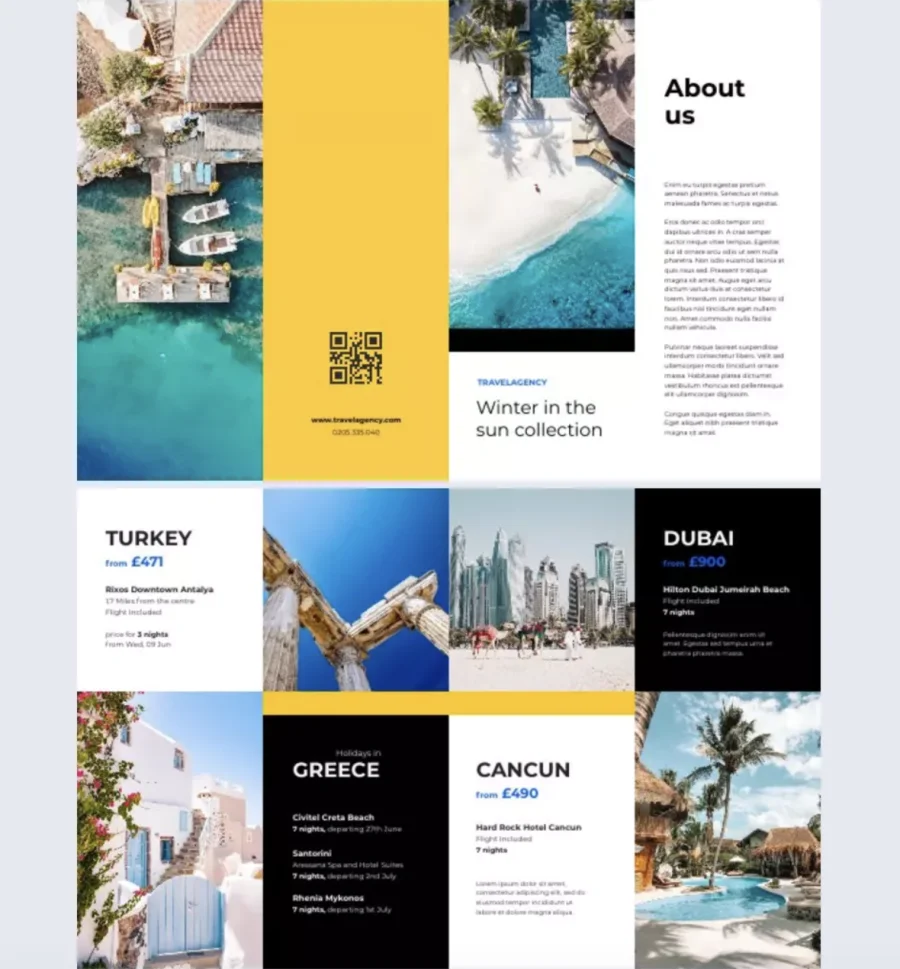
This travel brochure template unfolds like a story. On the outside, you set the scene. Open once, the story begins. Open again, the full picture reveals itself. Each layer pulls the reader deeper into the destination, giving more detail with every fold.
Best for: Travel agencies, resorts, and hospitality brands running holiday promotions or seasonal campaigns. The double-gate fold format works best for print distribution at travel expos, hotel lobbies, or tourism offices.
Real-world application: A resort promoting a holiday package can use this travel brochure example to build anticipation with every fold. The front cover hooks with one breathtaking image that continues seamlessly onto the inside panels. Once fully open, showcase different locations worth visiting, include price points, accommodation options, and specific details that close the deal. The layered format naturally guides readers from curiosity to consideration to action without overwhelming them on any single panel.
Common mistake to avoid: Don’t treat each fold as a separate piece. The whole point of a gate fold travel brochure is the reveal. If the panels don’t build on each other, the format loses its impact. Plan the content so each layer adds something new and pulls the reader forward.
How to make a travel brochure with Flipsnack templates
1. Start with a template
Browse Flipsnack’s library of travel brochure templates. From full-page coastal spreads to foldable gate-fold designs, you’ll find layouts for beach destinations, adventure trips, city guides, and more. Pick the one that matches your destination’s vibe and start editing, or choose one from this list.
2. Lock in your branding
Consistent branding is what makes a travel brochure look professional instead of generic. Set up a brand kit with your logo, brand colors, and fonts, then apply it across every travel brochure template you use. This keeps your tourism board, hotel, or travel agency’s visual identity consistent from the cover page to the last spread — no more re-uploading the same logo or re-typing hex codes for every new brochure.
What to prepare before you start: your logo (SVG or PNG with a transparent background), your primary and accent brand colors, and your heading + body fonts. Save them once as a brand kit, and every travel brochure template will pick them up automatically.
3. Customize every detail
Use Flipsnack’s Design Studio to make the template yours. Replace placeholder images with your best destination photos and update the text with your offers and details. Adjust accent colors to complement your imagery so the whole brochure feels cohesive. Upload your own visuals, pull from Flipsnack’s stock image library, or generate an image with AI directly from the Design Studio.
4. Add interactive elements
If you’re going digital, make your travel brochure more than a flat document. Add clickable links to booking pages, embed videos of the destination, include contact forms to capture leads, and use go-to-page buttons for smooth navigation. Interactive travel brochures convert interest into bookings faster than static ones.
5. Share or print
Flipsnack gives you full flexibility. Download your brochure as a PDF for print and distribute it at travel expos, hotel lobbies, or tourism offices. Or share it digitally via link, email, or social media. Embed it on your website for always-on visibility. For private distribution, use password-protected links. Track engagement with Flipsnack’s built-in statistics to see which destinations and offers get the most attention.
Turn destination inspiration into bookings
A travel brochure only works if it makes someone picture themselves there. The right image, a clear offer, and a simple path to booking are all it takes. Whether you’re promoting a beach resort, an adventure tour, or a city break, the templates above give you a professional starting point you can customize in minutes.
Pick a template, add your destination photos and details, and share it digitally or in print. If you’re going digital, make it interactive with videos, booking links, and lead capture forms so your brochure doesn’t just inspire trips but actually books them.
Start creating your travel brochure today with Flipsnack’s free templates.
FAQs on travel brochures
A well-made travel brochure typically includes:
– High-quality destination photos
– A short, compelling description of the experience
– Key attractions and activities
– Practical details like pricing, accommodation, and transport
– Contact information or a booking link
– Your brand’s logo and consistent design
A travel brochure is a short, promotional piece designed to sell a destination or package. A travel guide is longer and more detailed, covering everything a traveler needs to know once they’ve decided to go. Brochures spark interest. Guides provide depth.
Common sizes include:
– A4 or letter for full-page brochures
– Tri-fold (letter-sized paper folded into thirds) for rack displays
– Gate fold for layered, reveal-style designs
– Square formats for a modern, distinctive look
Common mistakes include:
– Using low-quality or generic stock photos
– Cramming too much information onto too few pages
– Writing long paragraphs instead of short, scannable descriptions
– Forgetting to include a clear call to action
– Designing for print only when most readers will see it on a screen
– Not including contact details or a booking link
AI speeds up the first draft: generating layout options, drafting rough copy, or resizing images across formats. Flipsnack’s Design Studio builds AI assistance directly into travel brochure templates, so you customize a layout fast, then add booking links, virtual tours, and lead forms that AI alone can’t produce. Word, PowerPoint, and Google Docs each offer basic brochure templates too, but none track engagement or convert a static file into a bookable experience.
Canva works well for a quick, template-based first draft, especially if you already have a Canva habit. Where it falls short for travel content is distribution and tracking: no built-in analytics on who opens your brochure, no interactive booking links, no way to convert one file into both a shareable digital link and a print PDF. See our full Flipsnack vs. Canva breakdown for the detailed comparison.

Perfect